Published : 05 Feb 2019, 12:32 PM
Updated : 08 Apr 2022, 02:01 PM


The subpoena seeks documents related to all of the committee’s donors and guests; any benefits handed out, including tickets and photo opportunities with the president; federal disclosure filings; vendors; contracts; and more, one of the people said.
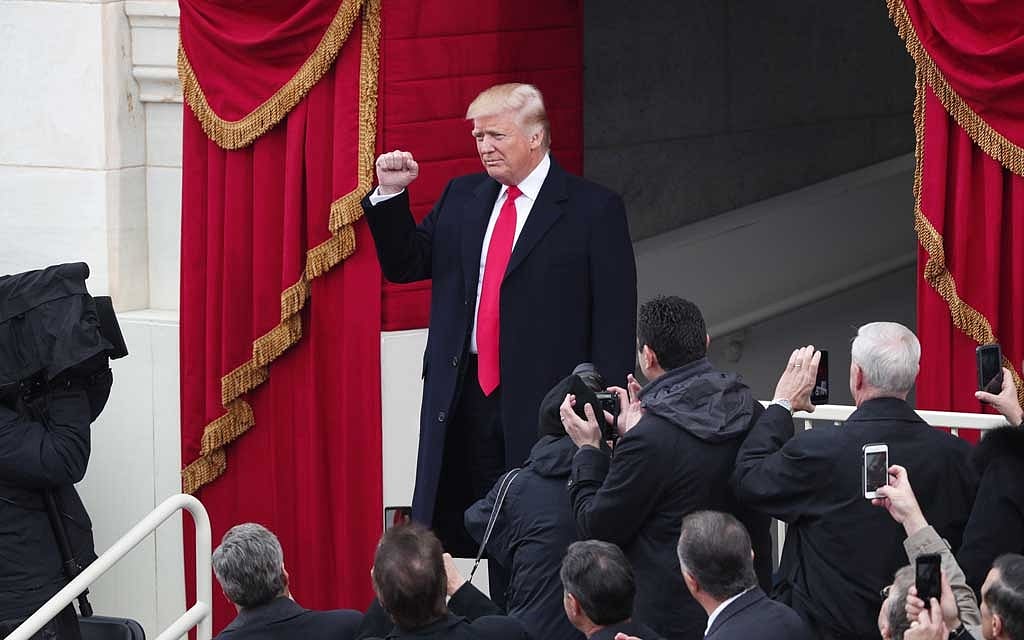
The new requests expand an investigation prosecutors opened late last year amid a flurry of scrutiny of the inaugural committee. And they showed that the investigations surrounding Trump, once centred on potential ties to Russia during the 2016 presidential election, have spread far beyond the special counsel’s office to include virtually all aspects of his adult life: his business, his campaign, his inauguration and his presidency.
In the subpoena, investigators also showed interest in whether any foreigners illegally donated to the committee, as well as whether committee staff members knew that such donations were illegal, asking for documents laying out legal requirements for donations. Federal law prohibits foreign contributions to federal campaigns, political action committees and inaugural funds.
Prosecutors also requested all documents related to vendors and contractors with the inaugural committee, which raised a record $107 million and spent lavishly.
People familiar with the subpoena said prosecutors are interested in potential money laundering as well as election fraud, though it is possible that the prosecutors do not suspect the inaugural committee of such violations. The prosecutors cited those crimes in the subpoena simply as justification for their demand for documents, those people said.
Only one individual was named as part of the subpoena’s demand for documents: Imaad Zuberi, a former fundraiser for President Barack Obama and Hillary Clinton who was seeking inroads with Trump, and whose company, Avenue Ventures, gave $900,000 to the inaugural committee. The subpoena also seeks documents related to his company.
A spokesman, Steve Rabinowitz, said Zuberi was unaware of having been named in the subpoena, and noted that he gave “generously and directly” to the inaugural committee, along with many others who donated more.
Another entity that the subpoena seeks documents on is Stripe, which created technology to help process credit card transactions. According to published reports, the company counts Josh Kushner, the brother of Trump’s son-in-law, Jared Kushner, among its investors. Josh Kushner is not named in the subpoena, and a spokesman for him declined to comment.
A spokesman for the inaugural committee said it was still reviewing the subpoena and intended to cooperate with the investigation. A spokesman for the US attorney’s office in Manhattan declined to comment. ABC first reported that a subpoena was in the works.
Prosecutors in Manhattan have pursued the possibility that the inaugural committee made false statements to the Federal Election Commission, according to people familiar with the matter. It can be a crime to knowingly make false or fraudulent statements to a federal agency.
The inaugural committee disclosed a list of its donors to the commission, and the prosecutors are examining whether that list is complete and accurate, the person said. If a donor was omitted from the report, prosecutors could take an interest in that, as well.
The inaugural committee’s chairman was Thomas J. Barrack, a close friend of the president’s. Barrack’s close aide working on the committee was Rick Gates, the former deputy to Paul Manafort, the former Trump campaign chairman who has been convicted of and pleaded guilty to several crimes in connection with the investigation by the special counsel, Robert Mueller. Gates has pleaded guilty to financial fraud and lying to the FBI, and has cooperated with Mueller’s team for nearly a year.
No one who worked for the committee has been accused of wrongdoing, and a subpoena is an initial step in the inquiry. Barrack and other inaugural committee officials are not named in it.
The US attorney’s office in Brooklyn is separately investigating whether inaugural officials helped foreigners illegally funnel donations to Trump’s inaugural committee using so-called straw donors to disguise their donations, people briefed on that inquiry said.
As part of their own inquiry, the prosecutors in Manhattan are questioning whether foreign nationals illegally donated to Trump’s inaugural committee.
The Manhattan investigation into the inaugural committee grew out of the investigation into Michael Cohen, Trump’s former personal lawyer and fixer. Cohen’s case was a referral from Mueller’s team to Manhattan federal prosecutors.
Cohen is due to begin a prison sentence next month after pleading guilty last year to a range of crimes, including one campaign finance-related charge, in which he implicated the president.
Cohen has spent more than 70 hours with investigators with the Manhattan prosecutors, as well as Mueller’s team.
In raids of Cohen’s office, home and hotel room in April, FBI agents seized his cellphones, which included many dozens of voice recordings, mostly voicemail messages, according to people briefed on the seized material. On one recording, Trump spoke to Cohen about a payment to a woman who had claimed to have had an affair with Trump, which he has denied.
On another, Cohen spoke to Stephanie Winston Wolkoff, who was a top official on the inaugural committee. Winston Wolkoff was fired as an adviser to the first lady, Melania Trump, in early 2018, after the committee released its financial disclosures showing that entities controlled by Winston Wolkoff were paid $26 million. The vast majority of those funds went to a subcontractor.
Winston Wolkoff’s company made a $1.6 million commission from that $26 million, which officials have previously said went to pay 14 people.