


Published : 13 May 2019, 05:27 AM
Updated : 17 Oct 2022, 11:40 AM


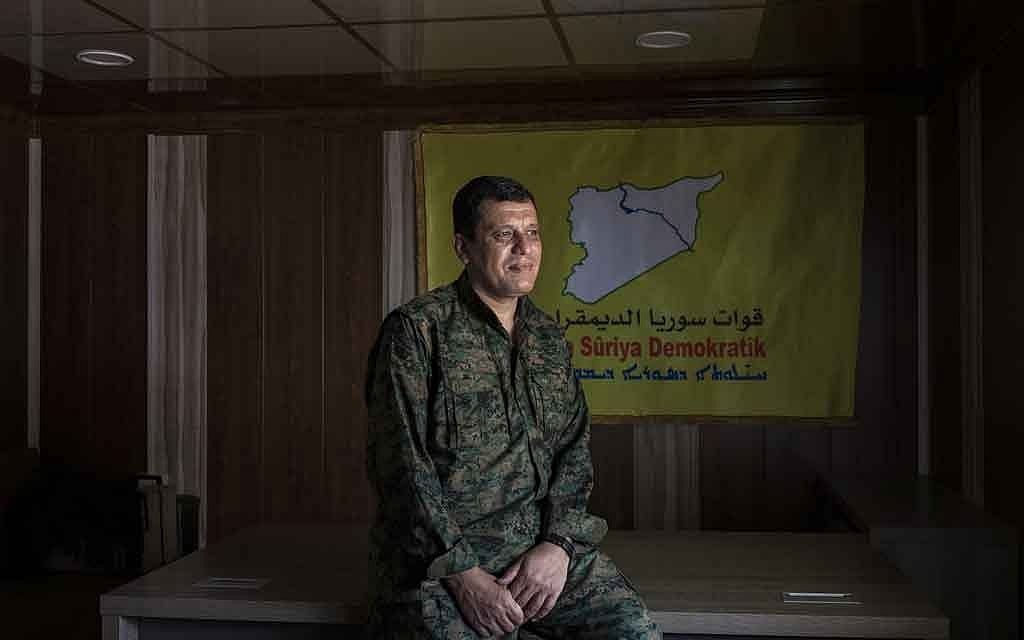
The Kurdish leader of the Syrian Democratic Forces, known by the nom de guerre Mazlum Kobani, praised his alliance with the United States in a rare interview recently and said he hoped US troops would stay in Syria.
But if they do not, he said, he is still fully prepared to defend his militia’s hard-fought gains during years of fighting the terrorist group.
“We were comrades in arms — we are on the same front fighting ISIS,” he said of the Americans, sitting in a furnished trailer in a compound that once belonged to the Syrian state oil company.
Now he is worried about a swift withdrawal, pointing to the US departure from Iraq in 2011, which was followed by the rise of Islamic State.
“They must not make the same mistake,” he warned.
As commander of the US-backed militia that fought the Islamic State, Mazlum now oversees forces controlling one-third of Syria and sits at the nexus of clashing international interests in the jihadis’ former lands.
The Syrian government has threatened to take the territory back — by force, if necessary. Thousands of Islamic State fighters have gone underground to launch new attacks and plot their comeback.
And neighboring Turkey, which has fought Kurdish separatists at home for decades, is openly hostile to the Syrian Kurds along its border who have gained territory, sophisticated weapons and powerful alliances as a result of Syria’s eight-year civil war.
That puts Mazlum and the Kurdish forces that form the backbone of the SDF at a crossroads. They have a historic militancy toward Turkey, but also an interest in preserving the power they have gained in Syria, said Dareen Khalifa, a senior Syria analyst with the International Crisis Group who has met with Mazlum in Syria.
Then there is the United States.
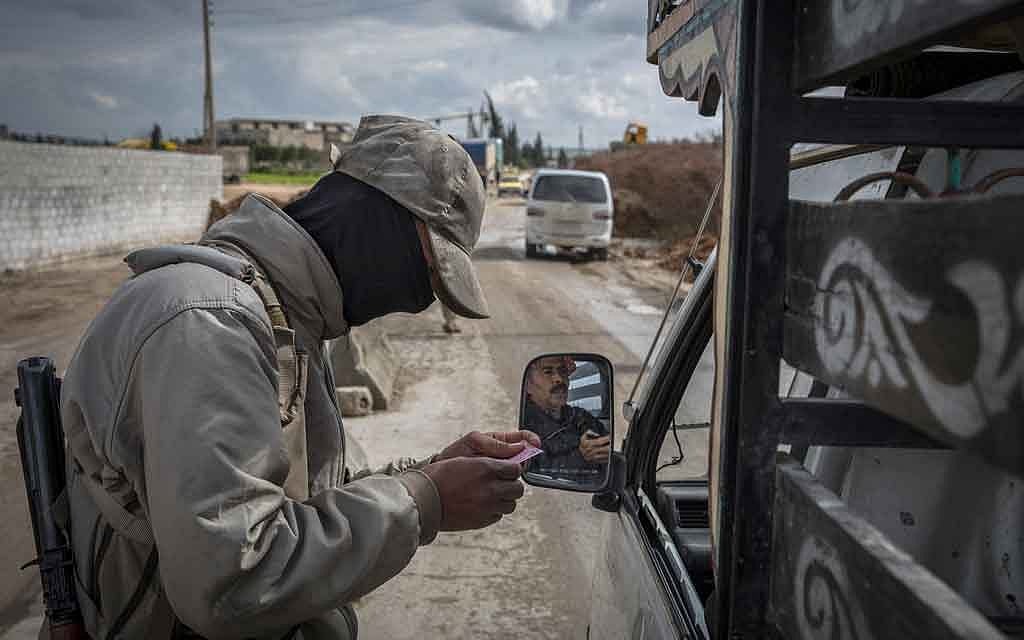
A soldier attached to the Syrian Democratic Forces, checks IDs at a checkpoint on the outskirts of the northern city of Manbij, Syria, April 1, 2019. The commander of the U.S.-backed Syrian Democratic Forces hopes American forces will stay in Syria. But if they don’t, he is prepared to defend his militia’s hard-fought gains. (Ivor Prickett/The New York Times)
“They have gained in Syria what they are not going to be able to get anywhere else,” Khalifa said of the SDF, “so they want to preserve that.”
AN ESSENTIAL US ALLY
The partnership between Mazlum’s forces and the United States was born of necessity during a crisis.
In 2014, after seizing large parts of Syria and Iraq, the Islamic State surrounded the Kurdish town of Kobani in northern Syria, along the Turkish border. To fend off the assault, the United States armed the region’s main Syrian Kurdish militia while bombing heavily from the air.
The strategy worked, and the United States found a new partner in Syria, the Kurdish militia known as the People’s Protection Units, or YPG. The militia was a Syrian offshoot of the Kurdistan Workers’ Party, or PKK, which has long fought for Kurdish autonomy in Turkey.
Unlike Syria’s Arab rebels, the Kurds were happy to fight the Islamic State instead of the Syrian government. And as a secular movement, they raised no concerns that they might harbor sympathies with Islamist extremists.
With backing from the United States and its allies, the group pushed the jihadis from other parts of Syria and built ties with other militias. In 2015, under prompting from the United States, it rebranded itself as the Syrian Democratic Forces — a mix of Kurdish, Arab and other fighters.
In the process, Mazlum became essential to the United States.
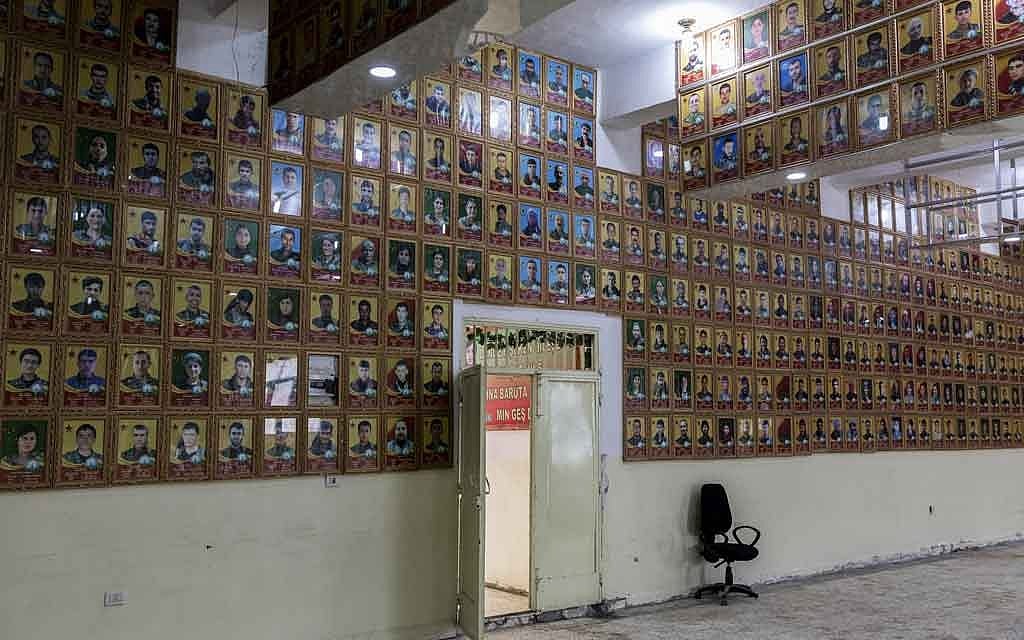
Photographs commemorate the men and women from Kobani, Syria, who died in the fight against ISIS, April 2, 2019. The commander of the US-backed Syrian Democratic Forces hopes American forces will stay in Syria. But if they don’t, he is prepared to defend his militia’s hard-fought gains. (Ivor Prickett/The New York Times)
Since then, US plans have changed repeatedly, most recently calling for a drawdown to 1,000 troops followed by a reassessment. Mazlum said he hoped the United States would remain to help take on the Islamic State fighters who have gone underground and to oversee a restructuring of the SDF into an internal security force.
TWO RADICALLY DIFFERENT VIEWS OF THE SAME PERSON
Mazlum Kobani, 52, remains a mysterious figure, with basic facts about him subject to debate, including his real name. When asked directly, he acknowledged that he that he had been a longtime member of the PKK, which the United States and Turkey consider a terrorist organisation.
That is history, he said.
“The Turks are focused on the period before 2011,” he said, “but we are looking ahead.”
He offered only snippets about his background, saying he was arrested repeatedly by the Syrian government and later went to Europe for “political work,” followed by “military work” in Iraq.
Officials from the United States and Turkey speak about him as if describing two different people.
“He is a very educated, savvy politician and a very effective front-line soldier,” said another US official who has worked with Mazlum. “He is the head of a highly disciplined and, to some degree, ideological movement that is centrally controlled and has a long history of fighting.”
Turkey focuses on that history. Officials in the Turkish Foreign Ministry provided documents about his background, which included overseeing an armed wing that launched deadly attacks on Turkish security forces. Officials in Iraq provided similar details.
© 2019 New York Times News Service













