


Published : 06 Aug 2021, 06:52 PM
Updated : 14 Oct 2022, 06:56 PM


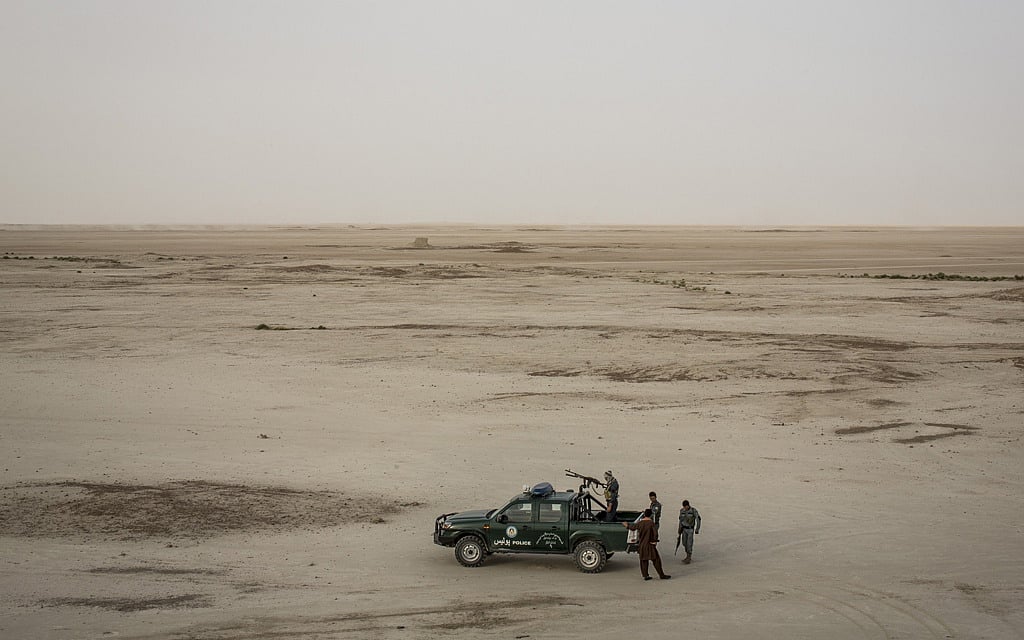
Zaranj, the provincial capital of Nimruz on the Afghanistan-Iran border, has collapsed and is now in the hands of the insurgents, according to Rohgul Khairzad, the deputy governor of Nimruz, and Haji Baz Mohammad Naser, the head of the provincial council.
It is the first provincial capital to be captured by the insurgent group since the Biden administration said it would completely withdraw US troops from Afghanistan in the coming weeks. The Taliban have besieged a host of such cities for weeks and the likely fall of Zaranj, a city of 160,000 people, is the Taliban’s first major breakthrough.
The city’s collapse occurred on the same day that a senior government official was assassinated in Kabul, the capital. It also came as the insurgents pressed hard into other provincial cities, in a day of bleak news for the government.
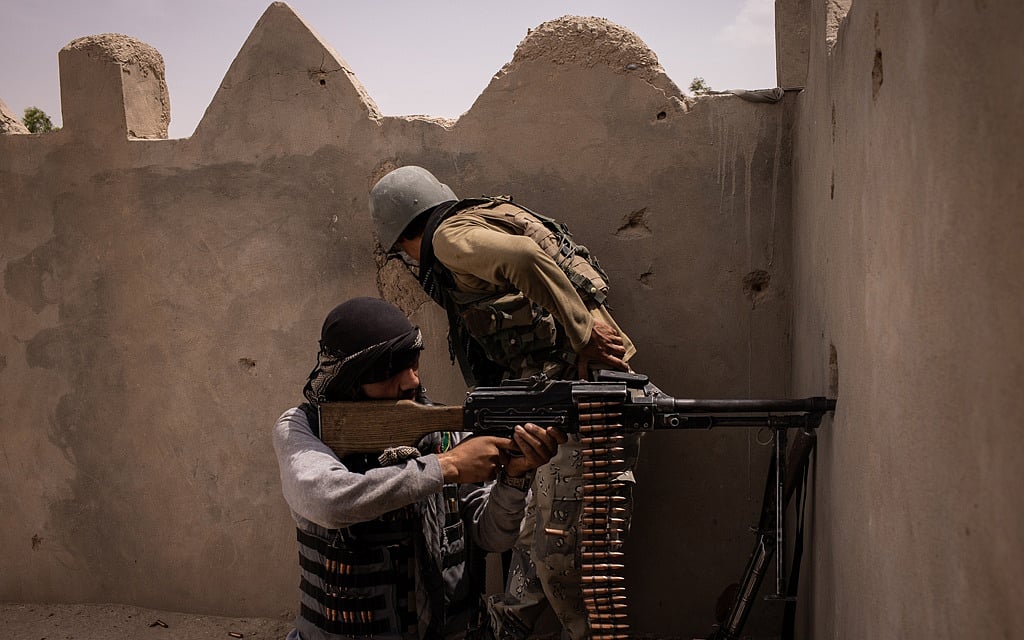
An Afghan soldier fires a machine gun at Taliban positions in Lashkar Gah, Afghanistan on May 10, 2021. The Taliban have captured the capital of one of Afghanistan’s western provinces, Afghan officials said on Friday, Aug. 6, 2021, a symbolic milestone in the insurgents’ relentless march to retake power in the country. (Jim Huylebroek/The New York Times)
Naser said the government had failed to send reinforcements to Zaranj and that officials had decided to abandon the city to avoid casualties. He denied that a deal had been struck with the Taliban.
Situated in the remote southwestern corner of the country, Zaranj is Afghanistan’s main hub for illegal migration. For decades, a steady flow of Afghans displaced by conflict and poverty have flocked to the city’s smuggler-owned hotels and brokered deals to cross through the mountains into Iran.
Since the Taliban began its military campaign in May, the city has buzzed with people looking to leave the country. In early July, around 450 pickup trucks carrying migrants snaked from Zaranj toward crossing points along the Iranian border each day — more than double the number of cars that made the trip in March, according to David Mansfield, a migration researcher with the British Overseas Development Institute.
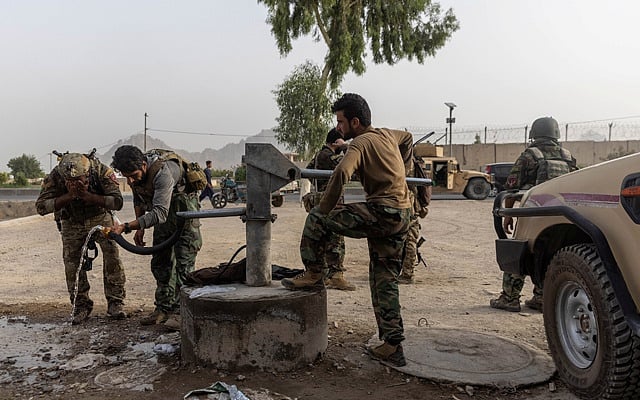
Members of Afghan Special Forces regroup after heavy clashes with Taliban during the rescue mission of a policeman besieged at a check post, in Kandahar province, Afghanistan, July 13, 2021. Reute
The 215th Corps of the Afghan National Army is responsible for security in both Zaranj and Lashkar Gah, the capital of neighbouring Helmand province, which has been under siege for several days. The 215th Corps’ leadership had shifted its focus to defending Lashkar Gah, leaving Zaranj vulnerable to capture.
The Taliban also took responsibility for the assassination Friday of a senior government official in Kabul. Dawa Khan Meenapal, the head of the government’s media and information centre, was gunned down in a targeted attack.
The assassination came days after a coordinated attack by the insurgent group on the residence of the acting defence minister that left eight people dead. That assault highlighted the Taliban’s ability to strike in the heart of the Afghan capital as they continue their sweeping military campaign.
In northern Afghanistan on Friday, the Taliban attacked another provincial capital, Sheberghan, from five directions, burning houses and wedding halls, and assaulting the police headquarters and the prison. There were numerous civilian casualties, said Halima Sadaf Karimi, a member of Parliament from Jowzjan province, of which Sheberghan is the capital.
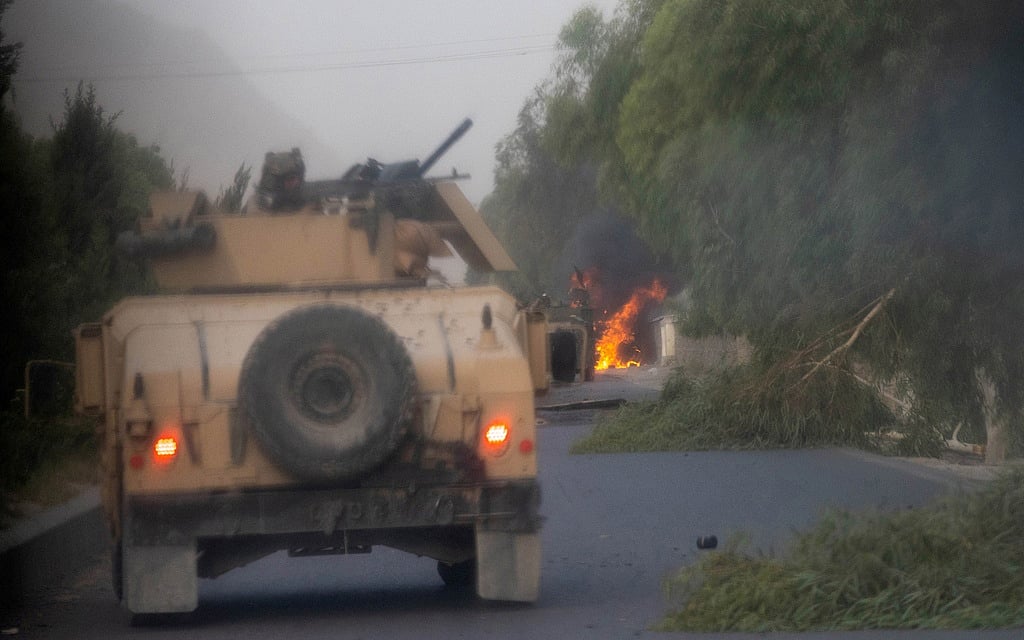
Humvees that belong to Afghan Special Forces are seen destroyed during heavy clashes with Taliban during the rescue mission of a police officer besieged at a check post, in Kandahar province, Afghanistan, July 13, 2021. Reuters
The government’s response to the insurgents’ recent victories has been piecemeal. Afghan forces have retaken some districts, but both the Afghan air force and its commando forces — which have been deployed to hold what territory remains as regular army and police units retreat, surrender or refuse to fight — are exhausted.
In the security forces’ stead, the government has once more looked to local militias to fill the gaps, a move reminiscent of the chaotic and ethnically divided civil war of the 1990s that many Afghans now fear will return.
In recent weeks, the US military has increased airstrikes on Taliban positions around key cities in an effort to give Afghan forces on the ground time to regroup. The strikes alone do little to change the situation on the ground, but have slowed Taliban advances.
The United States is supposed to complete its withdrawal by Aug. 31, at which point the Biden administration has said its military operations will end. That would give the Afghan government mere weeks to reconstitute its security forces to defend the cities and territory still under its control.
©2021 The New York Times Company













