Published : 16 Jan 2019, 12:56 PM
Updated : 08 Apr 2022, 01:59 PM


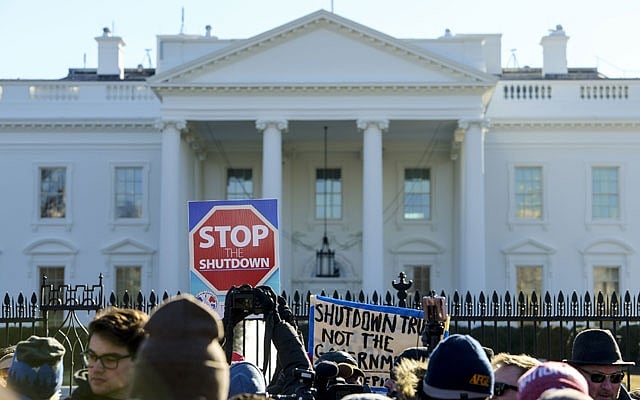
The revised estimates from the Council of Economic Advisers show that the shutdown, now in its fourth week, is beginning to have real economic consequences. The analysis, and other projections from outside the White House, suggests that the shutdown has already weighed significantly on growth and could ultimately push the US economy into a contraction.
While Vice President Mike Pence previously played down the shutdown’s effects amid a “roaring” economy, White House officials are now cautioning Trump about the toll it could take on a sustained economic expansion. To blunt the shutdown’s effects, the administration on Tuesday called tens of thousands of employees back to work, without pay, to process tax returns, ensure flight safety and inspect food and drugs.
For now, the White House shows no signs of being ready to relent, and Kevin Hassett, the chairman of the Council of Economic Advisers, continued to blame Democrats for the economic damage. “Congress needs to look at the harms that we’re talking about,” Hassett said, “and address them.”
Hassett said on Tuesday that the administration now calculates that the shutdown reduces quarterly economic growth by 0.13 percentage points for every week that it lasts — the cumulative effect of lost work from contractors and furloughed federal employees who are not getting paid and who are investing and spending less as a result. That means that the economy has already lost nearly half a percentage point of growth from the four-week shutdown. (Last year, economic growth for the first quarter totaled 2.2 percent.)
The impasse has left 800,000 federal employees furloughed or working without pay, along with throwing thousands of government contractors at least temporarily off the job. While federal workers are likely to receive back pay once the furlough ends, most government contractors will not.
The shutdown “is threatening to derail this economic expansion,” Bernard Baumohl, chief global economist for the Economic Outlook Group, said in a research note Tuesday. Its effect on federal workers’ spending plans is particularly worrisome for the automotive and housing markets, he said.
© 2019 New York Times News Service