


Published : 17 Sep 2019, 02:01 PM
Updated : 27 Jul 2022, 07:53 PM


A Pakistani and three Indians were sentenced to five years in prison, said Anand Shrestha, an official at the Kathmandu District Court. A fifth man, a Nepali citizen, was given 2 1/2 years for trafficking the two chimpanzees, which were taken from Nigeria and smuggled through Turkey before arriving in Nepal in 2017.
In recent years, Nepal has arrested hundreds of smugglers who have taken advantage of its porous borders with India and China — as well as corruption in law enforcement and relaxed customs rules — to illegally transport rhinoceros horns, wool from Tibetan antelopes, rare owls and endangered apes.
Smuggling of apes has become a lucrative, multimillion-dollar business. Wildlife activists say thousands of gorillas, chimpanzees and orangutans are sold on the black market every year to zoos, exotic-pet owners and even brothels.
The case against the smugglers in Nepal was filed in December 2017 and initially included 20 suspects.
To get through customs at Nepal’s international airport, the smugglers had stuffed the baby chimpanzees in the centre of a trapdoor crate, surrounding them with dozens of parrots, pheasants and monkeys to disguise their presence.
The crate was then transported to the home of Sanjib Bhari, a Nepalese man who ran a bird store on Kathmandu’s outskirts and was convicted of trying to sell the chimpanzees to wealthy Indians.
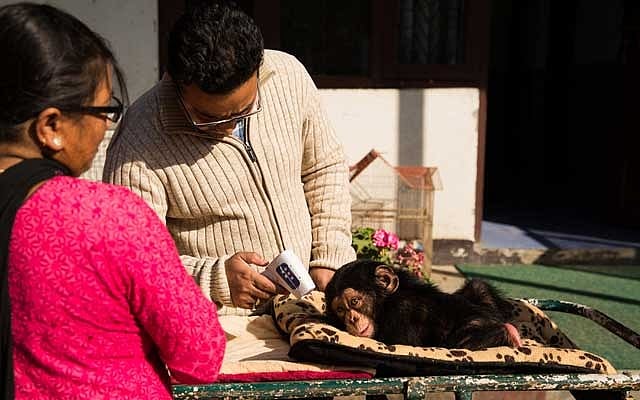
Working off information provided by an informant who had embedded with smugglers, the investigators burst into Bhari’s house in 2017, where the chimpanzees were found wailing. The animals, which were less than a year old, had lost nearly half their body weight and had pneumonia.
In addition to Bhari, the court convicted Jawaid Aslam Khan, a prominent Pakistani animal smuggler, and three Indians: Chadbabu Mohammad Sharif Saheed, Mohammed Usman and Mohammad Faim.
Since the chimpanzees were rescued in October 2017, they have been kept at Nepal’s Central Zoo, where attendants named them Champa and Chimpu. Shrestha said the court was deliberating whether to return them to Nigeria or not.
Though difficult to enforce, the Convention on International Trade in Endangered Species of Wild Fauna and Flora, a multinational treaty, states that countries are required to send confiscated animals back to their places of origin or to accredited rescue centres.
National and international conventions protect all great apes, including gorillas, orangutans and chimpanzees. While it is illegal to kill or catch them, they are threatened by poaching and the destruction of habitat.
© 2019 New York Times News Service













