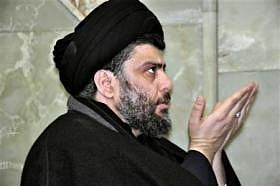
Sadr says to resist any US presence in Iraq
Anti-US Shi'ite cleric Moqtada al-Sadr said Thursday he would resist any American presence in Iraq, including a civilian one, beyond year-end when all US forces depart nearly nine years after the invasion that toppled Saddam Hussein.
bdnews24.com News Service
bdnews24.com
Published :
04 Nov 2011, 04:50 AM
Updated :
10 Aug 2022, 05:45 PM
BAGHDAD, Nov 04 (bdnews24.com/Reuters) - Anti-US Shi'ite cleric Moqtada al-Sadr said Thursday he would resist any American presence in Iraq, including a civilian one, beyond year-end when all US forces depart nearly nine years after the invasion that toppled Saddam Hussein.
Sadr, whose Mehdi Army militia once battled US and Iraqi troops, has opposed any US military footprint and his bloc is a key part of Iraqi Prime Minister Nuri al-Maliki's fragile coalition.
"We do not accept any kind of US presence in Iraq, whether it is military or not," Sadr said in an interview aired on al-Arabiya television.
"If they stay in Iraq, through a military or non-military (presence) ... we will consider them an occupation and we will resist them whatever the price will be. Even a civilian presence, we reject it," the cleric said.
United States President Barack Obama said on October 21 all remaining US troops, currently around 33,000, would be withdrawn from Iraq by December 31 after Washington and Baghdad failed to agree on immunity for American soldiers.
But a huge US embassy will be maintained in Baghdad along with consular operations in Arbil in the northern Kurdish zone and in the southern oil city Basra.
Thousands of private contractors will also work as guards and trainers for Iraqi troops using US hardware such as tanks and F-16 fighters.
Sadr galvanized anti-US sentiment after the overthrow of Sunni dictator Saddam and led two uprisings against US forces in 2004.
His Mehdi Army was crushed by Maliki in 2008 and has for the most part been demobilized, although US officials say splinter groups have continued to attack US soldiers.
In September, Sadr called on his followers to suspend attacks against US troops to ensure they leave Iraq by the year-end deadline.
Although overall violence in Iraq has fallen from the peak of sectarian fighting in 2006-7, Iraqi security forces continue to battle a stubborn Sunni insurgency and Shi'ite militias still capable of lethal attacks.
October was the bloodiest month this year, with 161 civilians, 55 police officers and 42 soldiers killed in a series of major attacks.
Thursday, six people were killed and dozens wounded when two bombs exploded in the northern city of Baquba while 12 people died and at least 70 others were wounded in triple explosions in Basra late Wednesday.
bdnews24.com/cr/1050 h.