Published : 06 Nov 2014, 01:37 AM
Updated : 19 Oct 2022, 07:43 PM



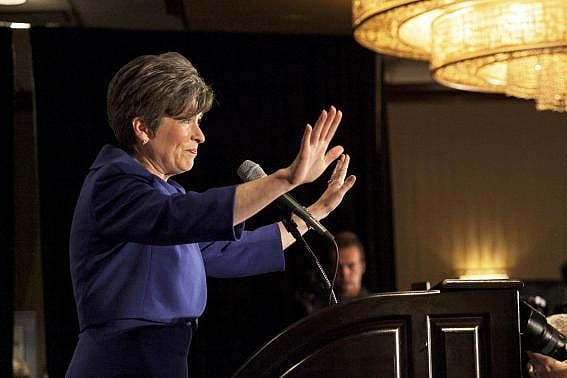
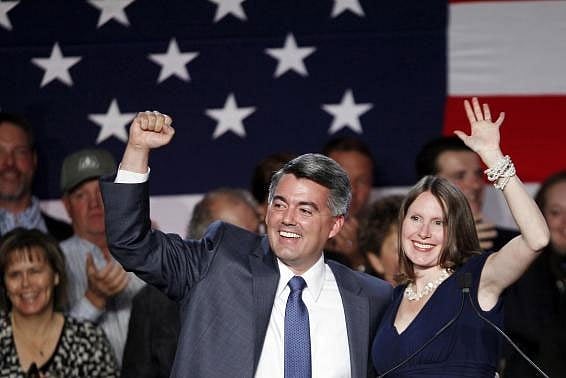
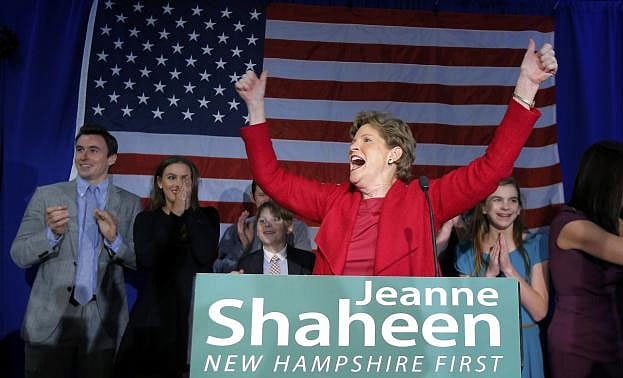
Tuesday's midterm elections gave Republicans control of both houses of Congress for the first time since elections in 2006 and the first time since Obama entered the White House nearly six years ago.
The president, who has lurched from crisis to crisis and whose unpopularity made him unwelcome to many fellow Democrats running for office, scheduled a news conference for 2:50pm EST on Wednesday.
He called a series of Democratic and Republican lawmakers on Tuesday night, the White House said, though the list did not include Kentucky Senator Mitch McConnell, who is poised to become the Senate's new majority leader and with whom Obama has a frosty relationship.
Obama plans to meet with congressional leaders from both parties at the White House on Friday to take stock of the new political landscape.
It was "a pretty ugly night" for Democrats, said Representative Steve Israel, chairman of the Democratic Congressional Campaign Committee, speaking on MSNBC.
Mitch McConnell waves to supporters with his wife, former United States Secretary of Labor Elaine Chao, at his midterm election night rally in Louisville, Kentucky, November 4, 2014. Credit: Reuters
The White House tried in advance to portray the results as not being a repudiation of Obama's leadership, but Democrats were stunned by the extent of the Republican gains even in governors' races that had favoured Democrats.
Despite the Republican gains, the election was not necessarily an endorsement of their policies.
Initiatives championed by Democrats to raise the minimum wage and legalise possession of small amounts of marijuana succeeded in a handful of states where they were on the ballot.
When the new Congress convenes in January, Republicans will be armed with their biggest majority in the House since Democratic president Harry Truman's first term in the late 1940s.
With some races yet to be decided, NBC News projected Republicans would win at least 244 seats in the 435-seat chamber.
The Republican takeover will force Obama to scale back his ambitions to either executive actions that do not require legislative approval, or items that might gain bipartisan support, such as trade agreements and tax reform.
It also will test his ability to compromise with newly empowered political opponents who have been resisting his legislative agenda since he was first elected in 2008.
Americans elected him to a second and final four-year term in 2012.
Energy to-do list
In stock market reaction to the results, the energy sector gained on bets that new legislative measures could be favourable.
One of the first tests could be a bill to approve the Keystone XL crude oil pipeline from Canada, a project about which Obama has voiced reservations.
Tina Spann, 49, displays a 'I Voted Today' sticker on her sweatshirt with a President Barack Obama logo, after she greeted Democrat challenger for Pennsylvania Governor Tom Wolf, on election day morning in Philadelphia, Pennsylvania November 4, 2014. Credit: Reuters
"It's really a good chance to see if the president's willing to work with us," Hoeven said.
The S&P Energy sector rose more than 1.5 percent on hopes Republican control of the Senate will lead to reform of crude and natural gas export laws and motivate the Obama administration to include those energy exports in new, or broader, trade agreements.
New Jersey Governor Chris Christie, a possible presidential candidate in 2016 who campaigned for fellow Republicans around the country, said the Senate results put the burden on Obama.
"We need to get things done ... and put things on the president's desk and make the president make some decisions," Christie said on "CBS This Morning".
He cited tax reform, a national energy policy and job stimulation as pressing needs.
A one-term senator before he became president, Obama has often been faulted for not developing closer relations with lawmakers, particularly with McConnell, who won a tough re-election battle against Democrat Alison Lundergan Grimes.
McConnell will replace Democrat Harry Reid as Senate majority leader.
Reid has been one of Obama's top political allies and helped steer the president's signature healthcare law through the Senate in 2010.
A supporter of Mitch McConnell raises a sign at his midterm election night rally in Louisville, Kentucky November 4, 2014. Credit: Reuters
Toss-ups become Republican wins
In Tuesday's rout, Republicans won in places where Democrats were favoured, pulled out victories where the going was tough and swept a number of governors' races in states where Democrats were favoured, including Obama's home state of Illinois.
Republicans needed six seats to win control of the 100-member Senate.
By early on Wednesday, Republican candidates had picked up seven Democratic seats: Arkansas, Colorado, Iowa, Montana, North Carolina, South Dakota and West Virginia.
Democrats had dominated Republicans in the Senate, 53-45 with two independents, going into the election but Republicans will now outnumber them 52-45 with two independents.
Louisiana's US Senate race will be decided in a Dec 6 runoff.
In the House, Republicans had held a 233-199 advantage before Tuesday's vote.
Supporters of Scott Brown watch returns come in at Brown's midterm election night rally in Manchester, New Hampshire November 4, 2014. Credit: Reuters
The last time Republicans controlled both houses of Congress under a Democratic president was 1995-97 during Bill Clinton's administration.
Once the euphoria of their victory ebbs, Republicans will be under pressure to show Americans they are capable of governing after drawing scorn a year ago for shutting down the government in a budget fight.
That will be a factor in their ambitions to take back the White House in 2016.
Partisan battles could erupt over immigration reform, with Obama poised to issue executive actions by year's end to defer deportations of some undocumented immigrants.