Published : 06 Mar 2022, 11:48 PM
Updated : 03 Aug 2022, 11:36 AM


Some were returning to join the Ukrainian army. Some wanted to rescue relatives. Others missed their families and wanted to be close to them, even if it meant risking death. Two were Bosnian dog breeders who drove for two days from their home to rescue Ukrainian friends who are also dog breeders.
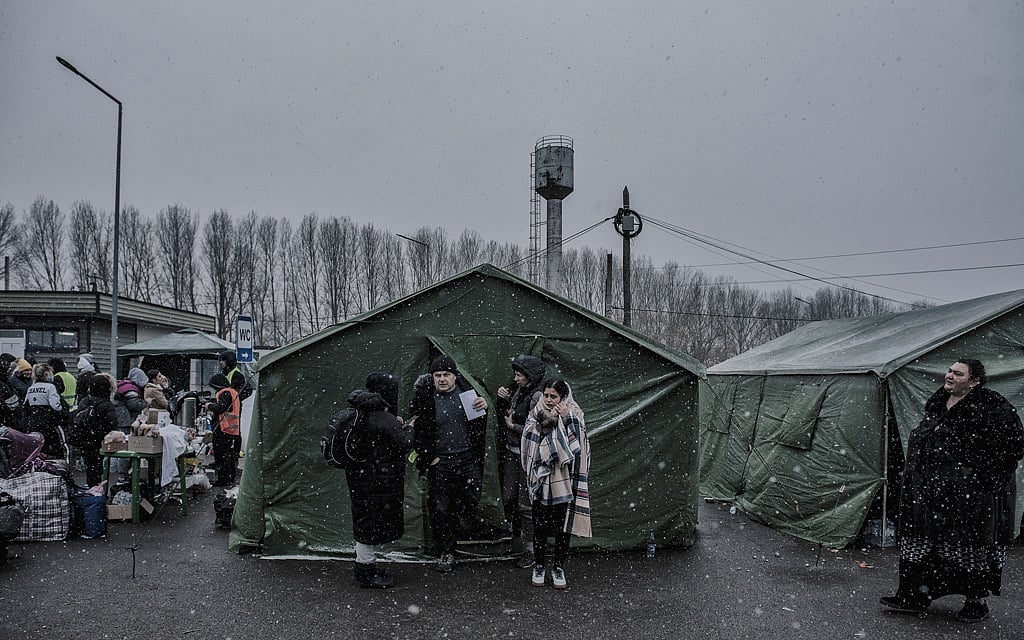
They were all among about 4,000 people who have crossed into Ukraine from Moldova since the start of the war, according to data provided by the Moldovan interior ministry. The UN refugee agency said Sunday that 1.5 million people had fled Ukraine in the 10 days since Russia’s invasion began.
“I’m going to fight for Ukraine,” said Alexander Rudskoi, a 40-year-old from Odessa, the closest major Ukrainian city to Palanca.
Ignoring further questions, he then drove into Ukraine, past a long line of women and children heading in the opposite direction.
A week ago, Tatiana Kozhukhak, a 29-year-old from Odessa, arrived in Moldova to leave her sister with relatives. On Sunday afternoon, Kozhukhak was plunging back into Ukraine to be closer to her husband, who had stayed in Odessa to fight.
It was a risk, Kozhukhak conceded.
“But at least I’ll be next to my husband,” she said, carrying two handbags on one arm and dragging a small purple suitcase with the other. “I was always proud of being Ukrainian. Now I feel more Ukrainian than ever.”
Igor Timer-Bulatov, a 61-year-old from Odessa, was heading back to Ukraine after evacuating his daughter and grandson to Moldova. He brought with him a parcel of medicines for a friend — supplies are running low in Odessa. Wasn’t he scared to return?
“Odessa is the city where I live,” Timer-Bulatov said. “I’m going to Odessa, no matter what.”
But others felt more conflicted about returning. Sveta Dibrova started crying as she drove back through the crossing point — she was desperate to rescue her 18-year-old son from Odessa but unsure how to do it. The government has barred all Ukrainian men ages 18 to 60 from leaving the country, except if they have medical conditions that inhibit their ability to fight.
Dibrova had heard Ukrainian border guards could be bribed to allow men to leave. But she didn’t know how much they charged or who to approach to find out.
“Do you know,” she asked two journalists through her car window, “how I can get him out?”
And then there were the Bosnian dog breeders, who had driven all the way from Banja Luka, a city in northern Bosnia that experienced heavy violence during the Balkan wars in the 1990s.
“We are not afraid,” said Dusan Markovic, 28, after presenting their Bosnian passports to a Moldovan border guard. “We had the same situation in Bosnia.”
© 2022 The New York Times Company