Published : 16 Feb 2020, 05:45 PM
Updated : 17 Oct 2022, 11:02 AM


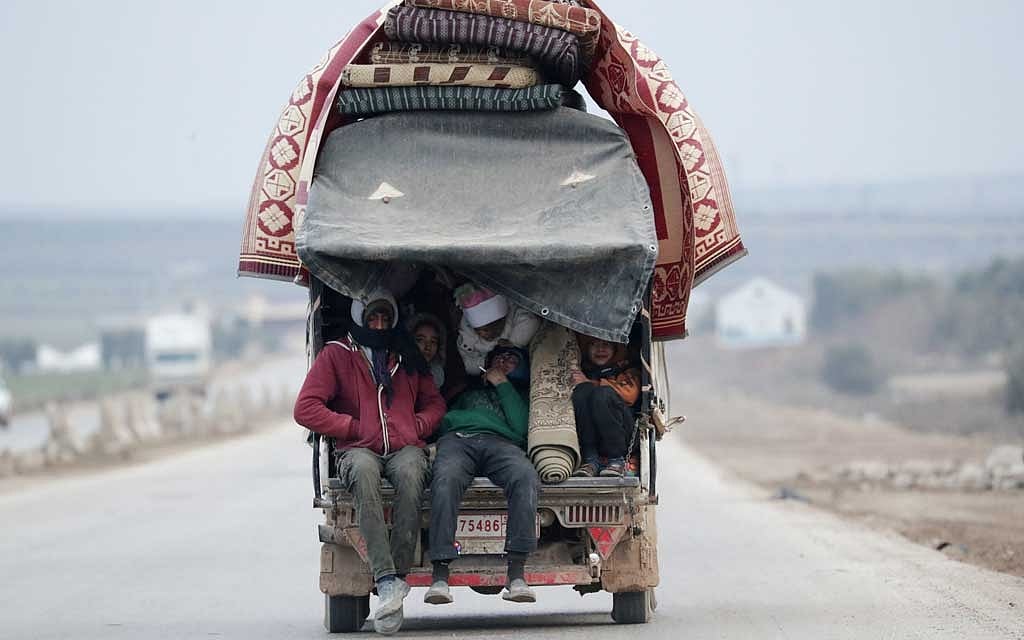
Hundreds of thousands of people — mostly women and children — are trying to escape relentless airstrikes in northwest Syria. Families have been separated. Some crawl ahead by car. Others go on foot.
It is a migration similar in scale to the Rohingya crisis of 2017. But here in Idlib, where pro-government forces are fighting to recapture the rebels’ last territory, many people are fleeing for the third or fourth time.
During nine years of civil war, millions of Syrians found safety in other countries — or in Idlib province. Idlib was the refuge of last resort.
But now there is nowhere left to go.
Turkey has closed its border. And as pro-government forces march further into Idlib, civilians are squeezed into a shrinking space between the border and the war.
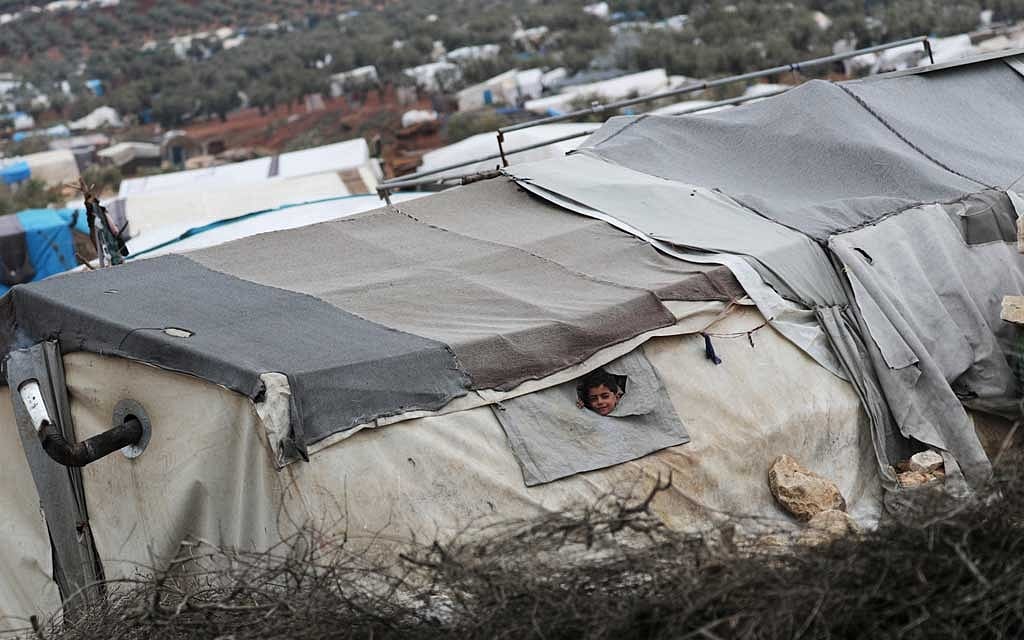
An internally displaced child looks out from a ten in Azaz, Syria Feb 15, 2020. REUTERS
His family has been uprooted multiple times during the war, moving farther and farther north. Now, as the fighting gets closer, he is preparing to flee again.
They are part of the exodus that started last year, after Syrian and Russian forces launched a new assault on rebel-held lands.
They hit hospitals, schools and bakeries. In many places, health care is out of reach. At least 1,700 civilians have been killed since the offensive began last spring.
The Syrian government and its allies have also hit people as they fled. A strike on one family’s van last week killed nine civilians, including seven women and children.
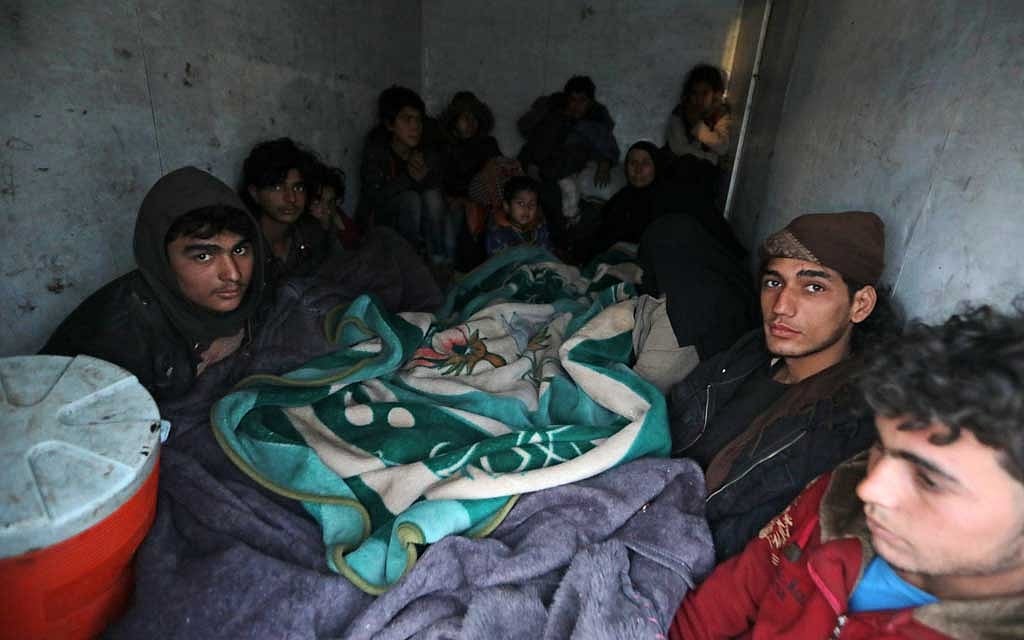
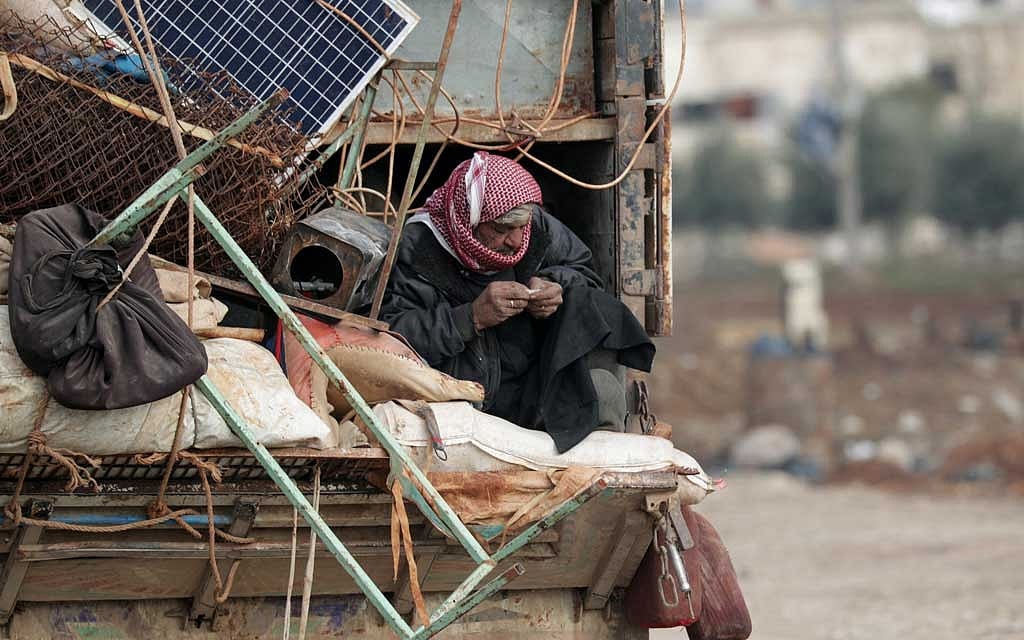
An internally displaced man, who fled from Idlib, rolls a cigarette as he rides on a pick up truck with belongings in Azaz, Syria Feb 15, 2020. REUTERS
The aim of the strikes, it appeared, was to clear people out. It worked.
If Idlib falls, Syrian President Bashar Assad will be close to recapturing the country’s last opposition-held territory for the first time since 2012.
Many people fleeing end up in bad conditions: camping in flimsy tents that flood over and over again. Some have been living there for months. Other families are out in the open, without shelter.
Internally displaced people, who fled from Idlib, ride on a pick-up truck with their belongings in Azaz, Syria Feb 15, 2020. REUTERS
Satellite images show the massive expansion of camps and temporary housing around that area over the past year. If the fighting continues, hundreds of thousands more will flee.
Near the Turkish border, brick housing is finally going up to shelter a small portion of the displaced. But it’s not enough.
Europe, Turkey, Lebanon, Jordan — everyone wants the refugee crisis to go away and for Syrians to return to Syria. But the country is so destroyed, its economy so ruined, that people may be living as refugees for years. Can Syrians ever go home?
© 2020 New York Times News Service