


Published : 09 Apr 2019, 01:59 PM
Updated : 08 Apr 2022, 02:07 PM


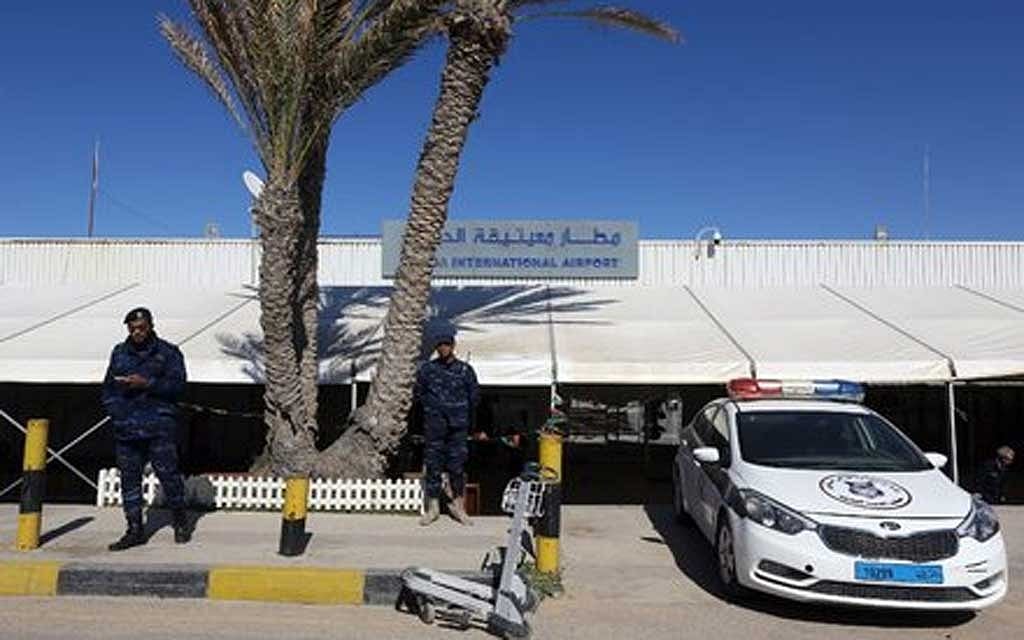
The Libyan National Army, a militia controlled by an aspiring strongman, Gen Khalifa Hifter, claimed responsibility for Monday’s airstrike on Mitiga International Airport in Tripoli, the capital. Ghassan Salame, the United Nation’s special representative for Libya, called the attack “a serious violation of international humanitarian law.”
Tripoli, Libya’s financial hub, is seen as the grand prize in a chaotic fight for control of the country that began in 2011, when dictator Col Moammar Gadhafi was ousted and killed during the Arab Spring revolts.
António Guterres, the United Nations secretary-general, condemned the airport attack and urged “the immediate halt of all military operations in order to de-escalate the situation and prevent an all-out conflict,” the UN said on Twitter.
Guterres also said that there was “no military solution” to the conflict, and called on all sides to find a political solution.
After Gadhafi’s fall, Libya collapsed into a patchwork of city-states, and multiple militias began competing for control of the country’s two largest cities, Benghazi in the east and Tripoli in the west.
The attack on Mitiga Airport came four days after forces under Hifter’s control made a surprise advance on Tripoli’s outskirts, setting up a battle with a coalition of armed factions that operate around the capital.
By Sunday, both sides had begun attacking from the air using small and primitive air forces, and the US military evacuated its small contingent of troops from Tripoli. Hifter’s air force bombed Mitiga International Airport on Monday, possibly in desperation, as his other forces retreated on several nearby fronts.
Ahmed Mismari, a spokesman for Hifter’s forces, told Reuters that the strike at the airport had not been directed at civilian planes, only at a Russian-built MiG fighter parked there. Agence France-Presse reported that the airstrike hit a runway but did not cause casualties.
It was not the first time a civilian airport was bombed in Libya. In 2014, pitched battles between feuding militias badly damaged most of Tripoli International Airport’s tower, runways and commercial airplanes. That airport, which has not operated for years, has been a site of clashes in recent days.
On Monday, The Associated Press reported that the combined combatant and civilian death toll from recent fighting around Tripoli had risen to at least 51. The UN said that recent fighting had displaced more than 3,400 people.
A UN spokesman, Stephane Dujarric, said in a statement that an unknown number of civilians had been unable to flee residential areas affected by the fighting around Tripoli. He called for a temporary truce to allow for emergency services and the voluntary passage of civilians.
The World Health Organisation also said that two doctors had been killed in Tripoli while providing critical services to civilians.
“These doctors risked their lives to evacuate wounded patients from conflict areas, and targeting them and health facilities at such times worsens the situation for civilians caught up in conflict,” Ahmed Al Mandhari, the WHO’s regional director for the Eastern Mediterranean, said in statement.
@2019 New York Times News Service













