


Published : 03 Nov 2019, 05:18 PM
Updated : 17 Oct 2022, 11:48 AM


For almost everyone who lives and works in the Amazon — as well for environmental activists around the globe — the fires are considered an unmitigated disaster, not only posing immediate health threats but also devastating huge swaths of a forest that plays an essential role in soaking up carbon dioxide and helping to keep global temperatures from rising further.
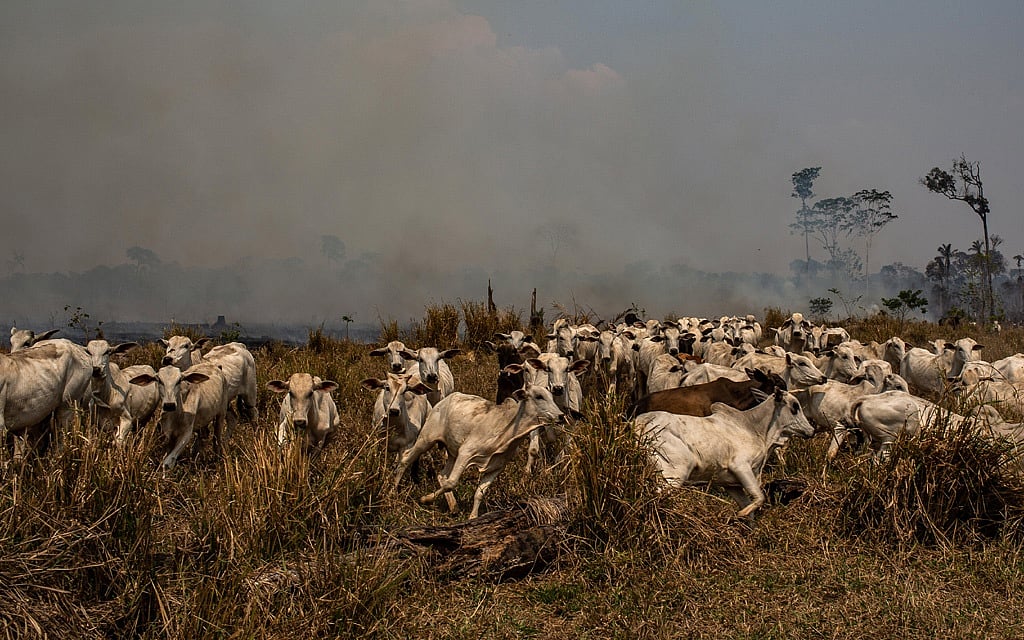
A burned forest area next to a cattle ranch in the state of Mato Grosso in Brazil on Aug 31, 2019. The New York Times
About 200 million head of cattle are raised in Brazil, with an estimated 173,746 square miles of forest converted to cattle pasture over recent decades, according to the Yale School of Forestry.
Experts blame cattle ranching for up to 80% of the Amazon’s deforestation in recent years, which has led to international environmental campaigns to pressure meatpackers to forsake purchasing cattle from ranches involved in such burnings.
The fires are a fast, and illegal, way to transform dense jungles into fields fit for grazing. Limited enforcement — and fines that when levied are rarely paid — make the risk-reward calculation of setting a blaze an easy one for the owners of large ranches, who typically live in cities hundreds of miles away from the smoke.
The owners of smaller spreads, who actually live on their farms, are less likely to engage in new acts of large-scale burning.
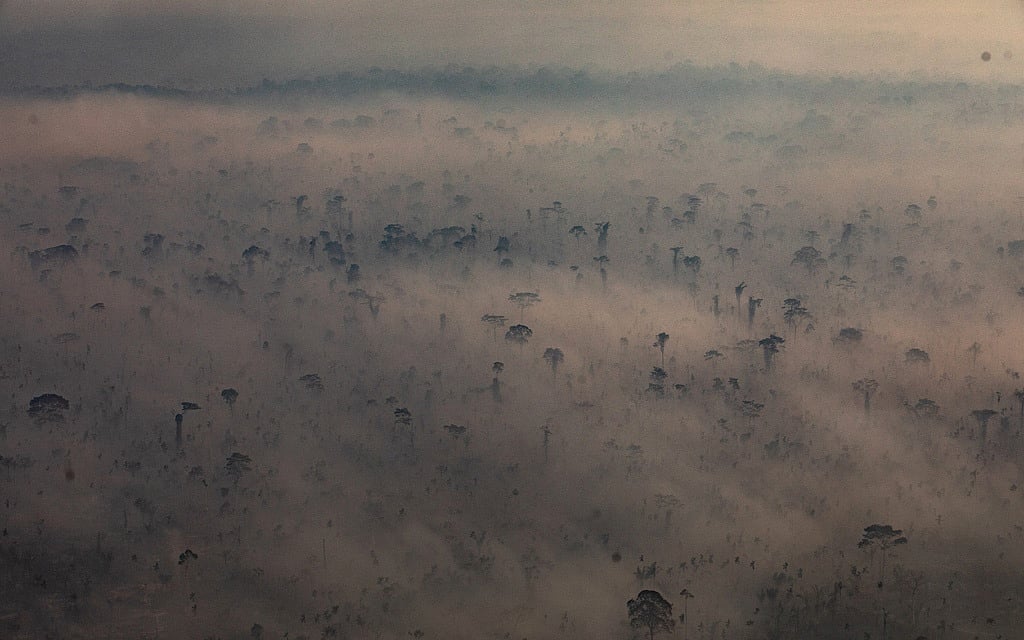
The Amazon canopy smoldering near a cattle ranch in Mato Grosso state in Brazil on Aug 31, 2019. The New York Times
“They think they can burn as much as they want,” he complained of his larger and more influential neighbours.
Among the cowboys and ranch hands who work the land for meager salaries, feelings about the fires are mixed, with some adamantly opposed to the practice, while others experience them as a necessary evil to stay employed.
“We wake up without being able to breathe properly,” said Roberto Carlos da Silva, a 48-year-old worker at a carefully groomed ranch named Fazenda Nossa Senhora in Pará state. “Opening up more land for the cattle only helps the rich. The poor only suffer from putting up with the smoke while they work hard putting out the fires.”
A half mile away, a blaze was spreading across a field. Workers at Fazenda Nossa Senhora insisted that the fire had spread from another ranch.
Miguel Pereira, a 52-year-old cowhand on the ranch, said he did not like the smoke from such blazes either, but he had a different take from da Silva, his co-worker.
“If you only protect the environment, then the farmers will go under from all the pressure of their expenses,” he said, while blue macaws shrieked as they fluttered around some shade trees. “If you can’t deforest a little, then there is no way you can raise more cattle. You need to create a situation where it’s good for both sides.”
There are government regulations that monitor and regulate deforestation by cattlemen and others, but they are haphazardly administered at best, with attempts at enforcement strained by the vastness and remoteness of the Amazon rainforest.
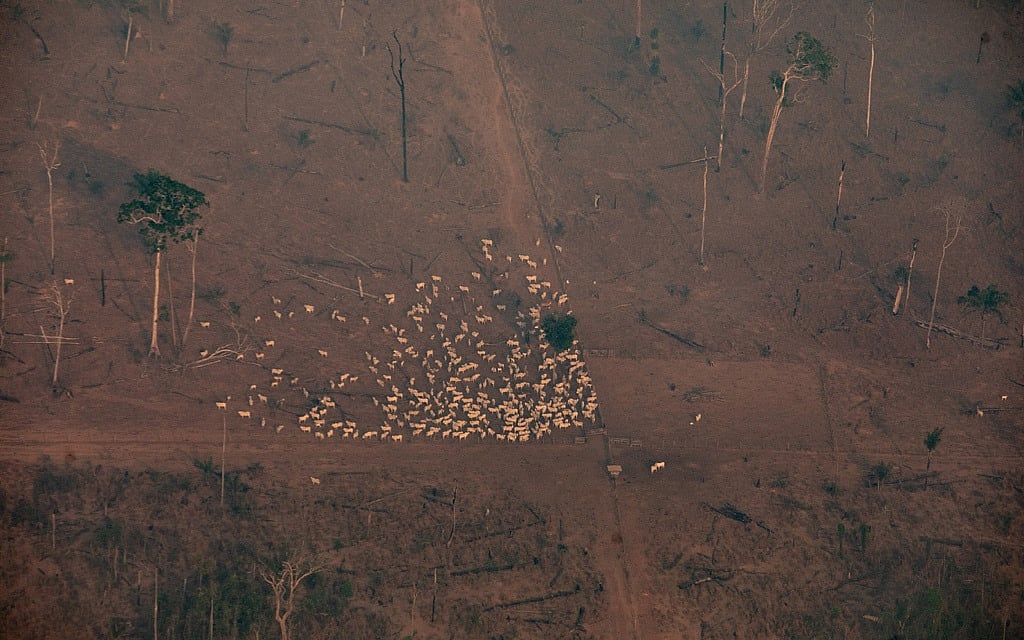
An aerial view of a cattle ranch in the state of Rondônia, Brazil that uses burning to expand its pasture land on Sep 17, 2019. The New York Times
That’s not to say there are no consequences for the ranchers who orchestrate these blazes. Brazil’s three largest meatpackers have all committed to not buying any cattle directly from farms using illegally deforested land.
But there is an enormous loophole around this promise: Cattle are frequently “laundered” in the supply chain, often born on a farm where the forest was illegally cleared, and fattened on another ranch recently formed by a fire, before being sold to a final ranch that abides by Brazilian law and international environmental conventions.
Most of the beef produced is consumed domestically, although there are substantial exports, especially to China.
While some laundering relies on middlemen to sell animals to the meatpackers, it can also take place within a single farming operation. Ranchers are known to move cows among their own properties and then submit paperwork to meatpackers listing only the name of the facility where their cattle are raised on permissible land.
At the Fazenda Nossa Senhora, a large property with 1,000 head of cattle, on one side of fencing there is land where cattle raising is permitted under a 2009 agreement between the major meatpackers and Greenpeace to halt deforestation — but not on the other side of the fence because of burning there in recent years.
Several people who live and work on the farm nonchalantly reported that cattle amble back and forth across the fence all the time.
“The cattle need to change pasture,” said Pereira, the cowhand. “When the grass on one side gets used up, you have to take the cattle to the other side.”
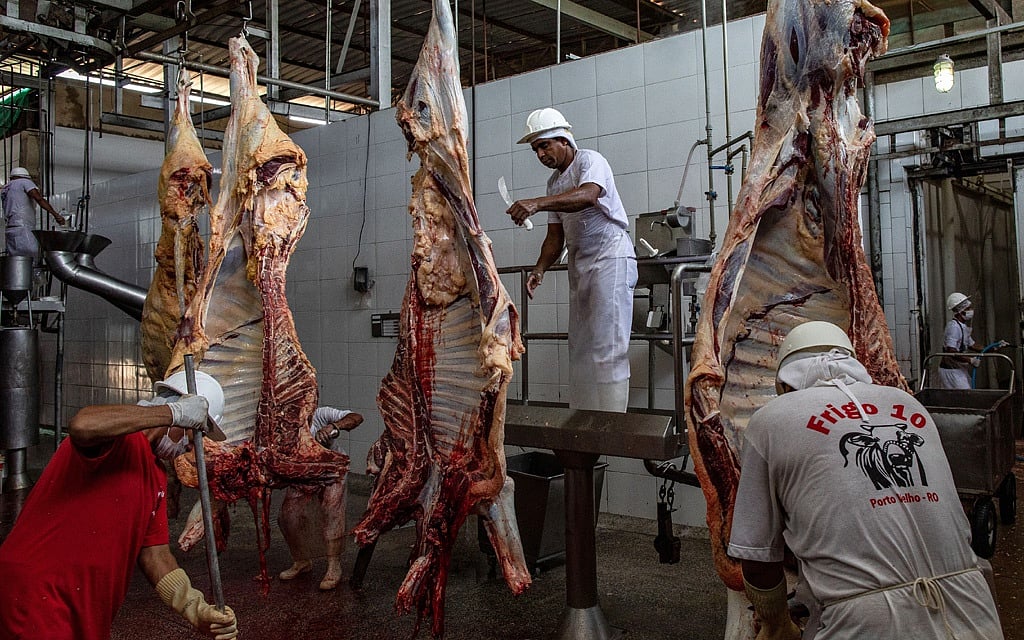
A slaughterhouse and meat packing plant in Porto Velho, the capital of Rondônia in Brazil on Sep 18, 2019. The New York Times
“I’m losing money because they won’t let me clear more trees,” said Valdemar Gamba, whose family owns Fazenda Gramado II, a 370-acre ranch with 200 head of cattle. “They talk so much about conserving the Amazon, but I’ve never seen a producer earn any money from this conservation.”
Whatever their stance on climate change and conservation, cattlemen are feeling the effects of a warming planet, and they worry about how all the burning is making life harder for them, and their animals.
“We live off the trees and the weather is getting hotter because there are fewer trees,” said Luis Rodriguez, a 53-year-old cowhand who looks after the 350-head herd at the Fazenda Universal ranch in Pará state. “Even the cattle are suffering because it’s getting drier.”
© 2019 New York Times News Service













