


Published : 05 Sep 2018, 10:57 AM
Updated : 08 Apr 2022, 03:17 PM


The order, just the latest attempt by the president to halt graft investigations that threaten his presidency, came four days after Morales announced that he would not renew the panel’s mandate when it expires in 12 months.
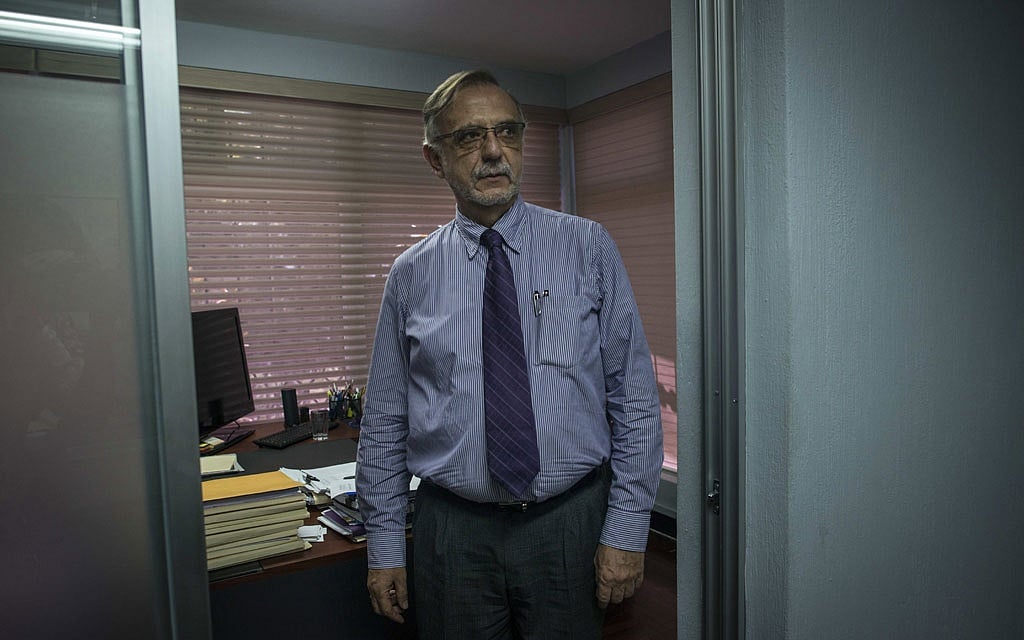
While that decision was within his authority as president, the order to block the entry of the Colombian prosecutor, Iván Velásquez, puts Morales in direct conflict with Guatemala’s highest court.
Velásquez, who has led the anticorruption panel since 2013, left Guatemala on Monday for meetings in Washington and New York. The government’s refusal to permit his return raises the stakes in a standoff between the prosecutor and the president over allegations that Morales broke campaign finance laws.
The conflict also threatens to overturn one of the most successful anticorruption efforts in Latin America, where citizens fed up with entrenched graft have demanded an end to impunity for politicians who siphon money from public accounts and cut deals with favored businesses in return for government contracts.
The president has made no secret of his desire to remove Velásquez, whose investigations have swept up a large part of Guatemala’s political elite. Morales’ predecessor has been jailed since 2015 on charges relating to a customs fraud scheme.
A year ago, Morales tried to expel Velásquez, but was blocked by Guatemala’s highest court, which ruled that the prosecutor was not subject to Guatemala’s immigration laws. Instead, the court said, his status is determined by the agreement Guatemala signed with the United Nations to establish the anticorruption panel 11 years ago.
Over the past year, Guatemalan lobbyists have attempted to end US funding for the commission, while government officials have tried to persuade Secretary General António Guterres of the United Nations to replace Velásquez.
On Tuesday, Morales repeated his demand that Guterres appoint somebody else to head the panel, called the International Commission Against Impunity in Guatemala. The commission works alongside the attorney general’s office to uncover corruption networks.
Among its investigations, the commission has steadily uncovered schemes of illegal campaign finance, including some $1 million in anonymous contributions to Morales’ presidential campaign.
Last month, Velásquez and Attorney General María Consuelo Porras asked the nation’s Congress to cancel Morales’ immunity from prosecution.
Morales’ efforts to remove Velásquez have now taken on a more threatening cast, as the president appears to be willing to back up his efforts with a show of force.
Last Friday, Morales was flanked by more than two dozen police and military officers as he announced that the commission’s mandate would not be renewed. In the hours before, a line of vehicles with machine-gun turrets took up a position outside the commission’s walled Guatemala City headquarters.
On Tuesday, military trucks rolled into Guatemala City’s central plaza, the site of giant protests three years ago that forced former President Otto Pérez Molina to resign after he was implicated in the customs fraud scheme. They left as evening fell.
In a country that spent most of the past century under brutal military rule, the symbolism of the military presence was unmistakable.
The Trump administration has supported the commission, and the United States Embassy in Guatemala said last week that the commission “is an important and effective partner to fight against impunity, improve governance and hold the corrupt accountable.” But there was no immediate response to the announcement Tuesday.
On Tuesday in Washington, Democrats threatened to cut aid to Guatemala if Velásquez was not allowed to return.
“We urge President Morales to reverse his ill-advised decision,” Reps Eliot L Engel of New York and Albio Sires of New Jersey said in a statement. “If he is unwilling to do so, Congress must do everything in our power to appropriately adjust US assistance to the Guatemalan government.”
© 2018 New York Times News Service







