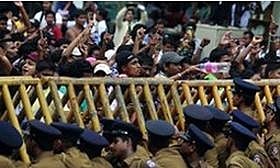
Govt shuts down universities in Sri Lanka
The academics have been on strike in Sri Lanka since early July demanding an end to what they call 'political meddling in campus life'
bdnews24.com News Service
bdnews24.com
Published :
23 Aug 2012, 11:01 AM
Updated :
09 Aug 2022, 04:09 PM
Dhaka, Aug 23 (bdnews24.com)� Sri Lankan government has closed down almost all universities for an indefinite period amid a row about the future of education in the island, reported the BBC Online.
Academics have been on strike for nearly two months, accusing the government of interference and demanding more be spent on the sector.
The BBC reported the authorities said teachers were putting students in a position of "darkness, without any hope".
For decades, university campuses have been a source of turmoil in Sri Lanka.
Students' problems helped trigger the Tamil insurgency as well as equally bloody Sinhalese insurrections in the 1970s and 80s.
Since early July academics have been on strike in Sri Lanka. They denounce government plans to partially privatise a tertiary education system that has always been state-funded and free.
BBC said the teachers wanted an end to what they say is 'political meddling in campus life'. They want much more spent on education and are demanding a salary increase.
The government responded by closing down 13 of Sri Lanka's 15 state-funded universities, apart from their medical faculties, with no indication of when they might reopen.
It also accused academics of trying to topple the government.
"Their [the trade union's] aim is to create instability and a political crisis leading to a regime change, we guess," the BBC quoted the Higher Education Minister SB Dissanayake as saying.
The government says it has already agreed to five of the academics' six main demands. But the spokesman for the academics' main union, Mahim Mendis, told the BBC this simply wasn't true.
He said that the "politicisation and militarisation" of universities must end. At the moment, he said, ministers were appointing their own loyalists to top university posts.
"To suggest we want regime change is frivolous. You need to understand, Futa [the union] includes academics from all political parties. This is a national struggle," the BBC quoted him.
He also denounced an edict compelling universities to use security companies run by the ministry of defence and criticised a two-week programme of military-led training which all university entrants now have to undergo.
Secondary education has also been in turmoil in Sri Lanka, with a large-scale scandal involving incompetence in the marking of school-leaving exam papers.
bdnews24.com/zk/nir/1629h