


Published : 03 Jan 2020, 01:19 AM
Updated : 03 Aug 2022, 02:33 PM


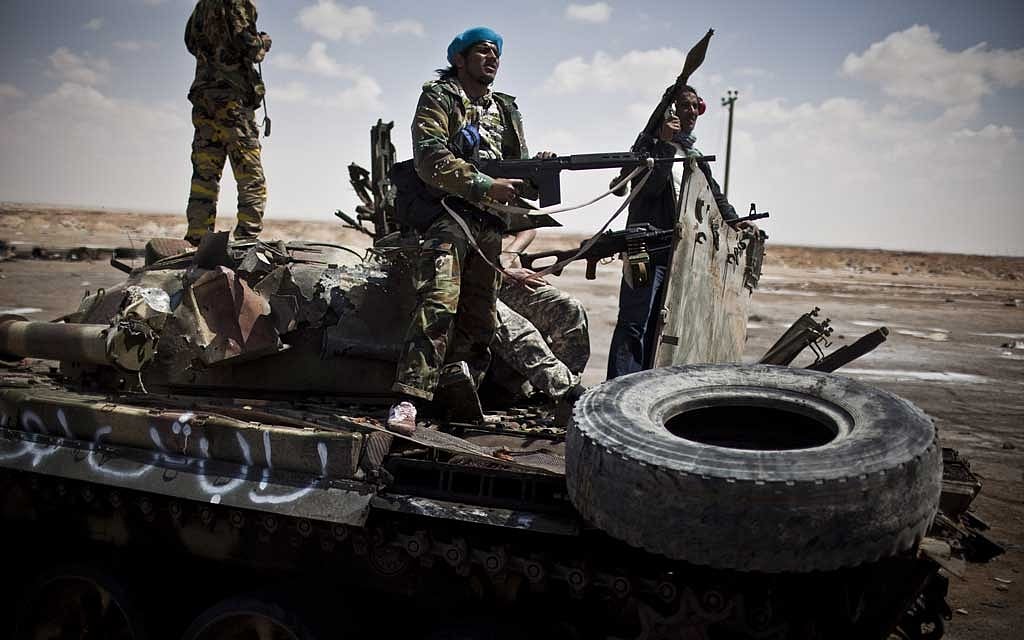
Coming just months after mounting a third military incursion into Syria, the Libya gambit is the latest example of Turkey’s growing self-confidence as a regional power, analysts say.
But some have begun to wonder why Erdogan is looking to get involved more deeply there now.
Erdogan has long held an ambition for a kind of restoration of the Ottoman Empire, reestablishing Turkey’s position of leadership in the Muslim world with an expansive foreign policy.
His regional stance, in alliance with the wealthy Gulf state of Qatar, has pitted Turkey against Saudi Arabia, Egypt and the United Arab Emirates. The opposing groups back rival proxy forces in Libya and Syria, and they represent a new fault line in the Middle East.
But domestic politics are also never far from Erdogan’s calculations, and his geopolitical aspirations for Turkey are popular at home. The mission in Libya, part of the former Ottoman domain, fits nearly into that vision.
His assertive foreign policy has given Erdogan a handy slate of challengers that he can point to abroad, helping him nurture nationalism and maintain his support at home, even as he aggressively pursues Turkish interests.
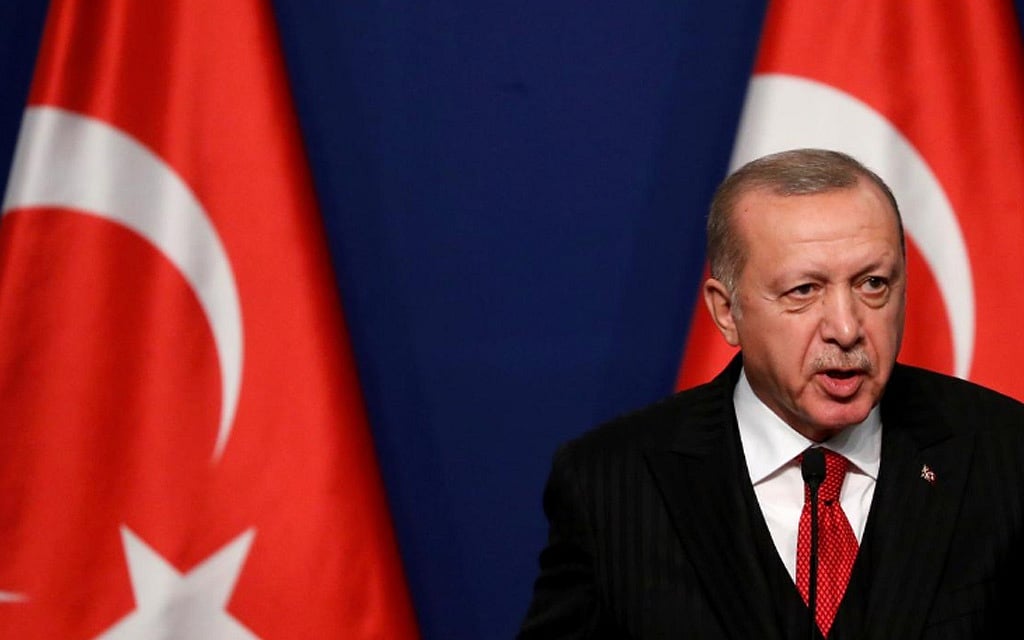
FILE PHOTO: Turkish President Recep Tayyip Erdogan attends a news conference with Hungarian Prime Minister Viktor Orban (not pictured) in Budapest, Hungary Nov 7, 2019. REUTERS
Although his term runs until 2023, his own slide in the polls and the splintering of his party are making him consider calling a snap election in the fall, Mehmet Ali Kulat, a political consultant and pollster in Ankara, said.
A faltering Turkish economy — anaemic growth, a weakening currency and worrying inflation and joblessness — may only add urgency to the president’s considerations.
A speech Erdogan made to the Turkish diaspora in London in December sounded much like a campaign speech.
“Turkey is in reliable hands,” he told the gathering. “Today there is a much more powerful Turkey than 17 years ago. It is not a country that can be easily played. There is this determined Turkey now, setting the rules of the game in its region and also preventing plots.”
With some justification Erdogan has argued that he has security interests in both Iraq and Syria, because Turkey shares a long border with both and has suffered from instability spilling over from their conflicts. With Libya he has made similar arguments, as well as historical ones.
Erdogan pointed out last week that Libya was the last of the Ottoman territories to be lost and that Turkey’s founder, Mustafa Kemal Ataturk, fought and was wounded there as a young officer.
“It’s not difficult to convince Turkish public about the need for an intervention in Libya in part because of the Ottoman legacy,” Asli Aydintasbas, a senior fellow of the European Council for Human Rights, said in written comments.
But there are Turkish interests at stake, too. Beneath Erdogan’s agreement with Libya is a desire to position Turkey to explore for oil and gas exploration in the eastern Mediterranean, off the coast of Cyprus, in competition with Greece, Cyprus, Egypt and Israel, analysts say.
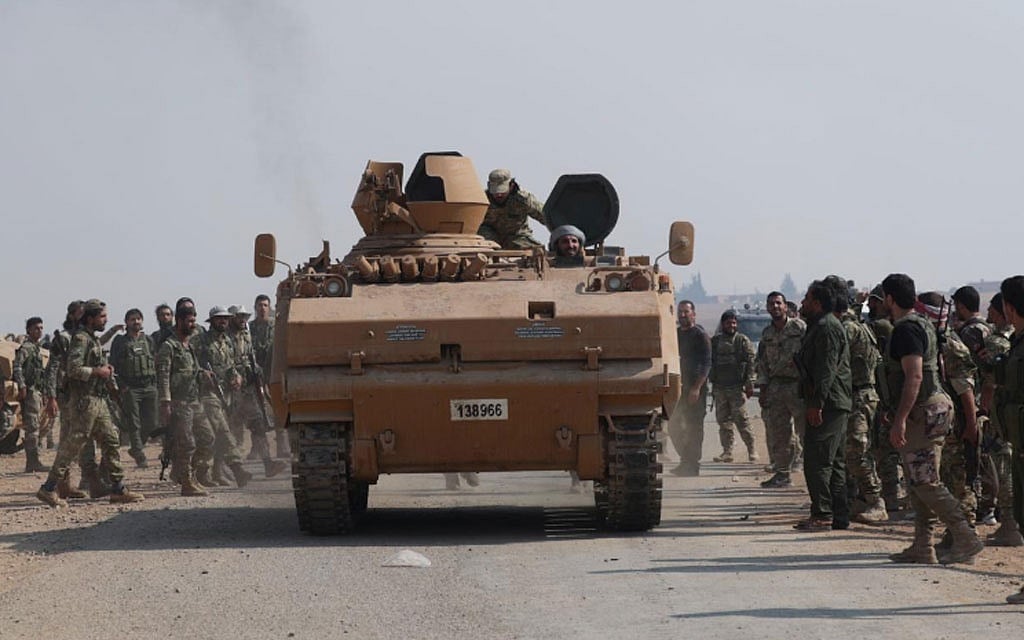
FILE PHOTO: Turkey-backed Syrian rebel fighters gather as a military vehicle advances near the border town of Tal Abyad, Syria Oct 24, 2019. REUTERS/Khalil Ashawi
The moves follow increased support this summer by Erdogan to Libya’s Government of National Accord, headed by Prime Minister Fayez Al-Sarraj.
Turkey sent military advisers, arms and a fleet of 20 drones to defend Tripoli from attack by the forces of Gen. Khalifa Hifter, who controls much of eastern Libya and is backed by Saudi Arabia, the United Arab Emirates and Egypt.
After Russia recently became involved, sending contract forces to support Hifter’s offensive, Erdogan upped the ante.
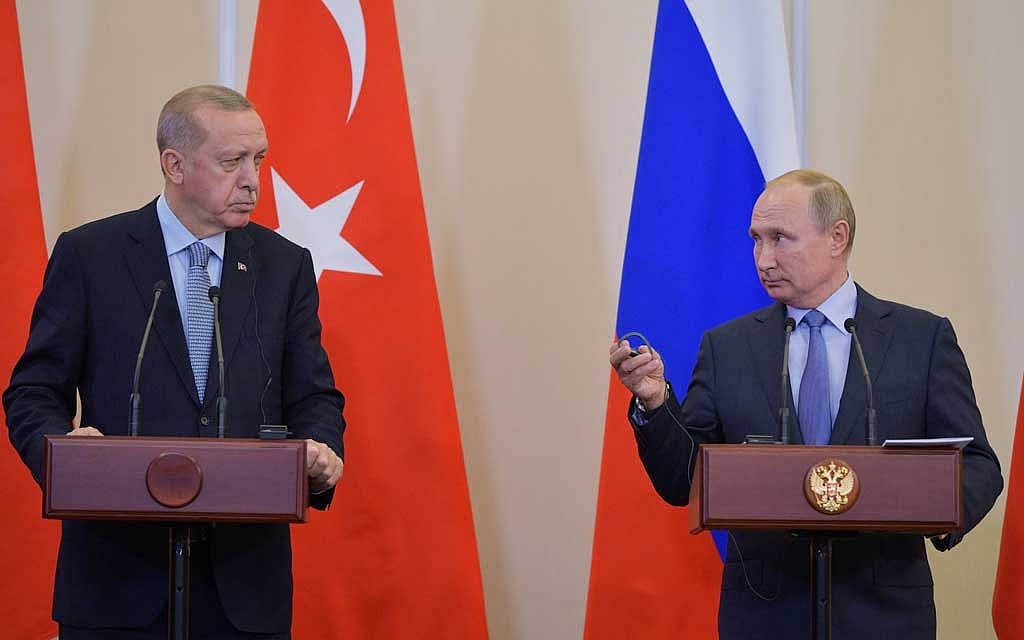
Russian President Vladimir Putin and Turkish President Tayyip Erdogan attend a news conference following their talks in Sochi, Russia October 22, 2019. Sputnik via REUTERS
“It now appears that Turkey will not only defend the GNA but influence their future security setup,” it said.
But Erdogan’s ever more aggressive angling has unnerved his neighbours, especially in Greece, who now openly worry about confrontation.
Diplomats in Athens and Brussels said that the situation was the most tense it has been in more than two decades, when the two neighbours exchanged fire in the Aegean in 1996.
Under pressure, Prime Minister Kyriakos Mitsotakis of Greece is poised to change decades of foreign policy, announcing Sunday that he was prepared to take Turkey to international arbitration at the International Court of Justice in The Hague.
But diplomats in Brussels readily admit that there is only so far they can press Turkey, considering how desperately they depend on Erdogan to control the flow of migrants to Europe, which was destabilised by the arrival of more than 1 million asylum-seekers in 2015.
Now, Erdogan faces the possibility of a new refugee crisis coming from Syria, where Russian and Syrian government forces have redoubled their offensive in Idlib, the last rebel-held province.
Seeking leverage from the potential for a crisis as Chancellor Angela Merkel of Germany prepares to visit Turkey this month, Erdogan has warned that he will be forced to open the gates for the refugees to enter Europe again.
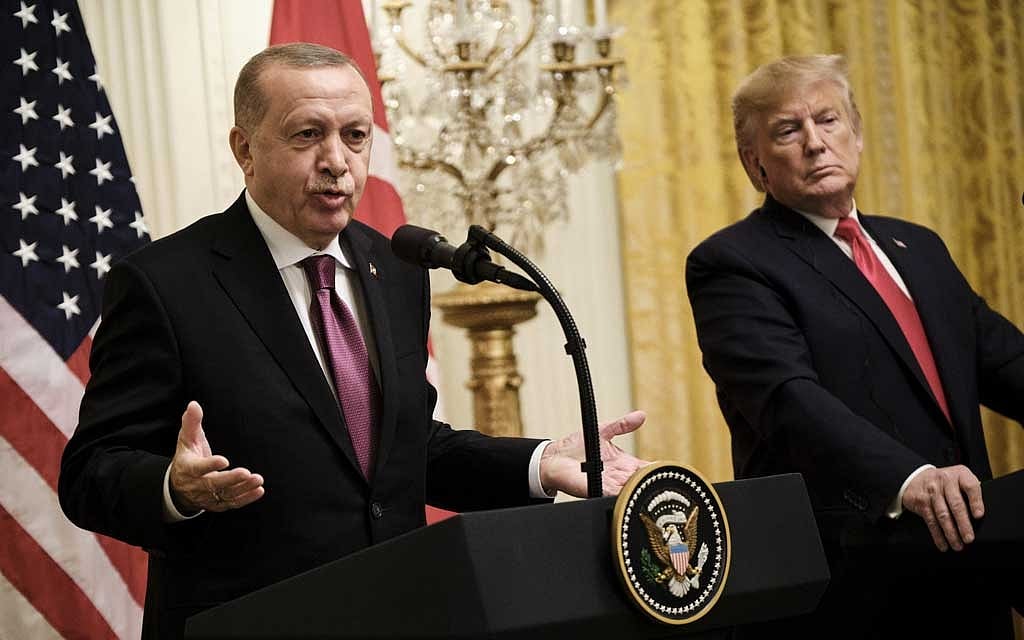
President Recep Tayyip Erdogan of Turkey and President Donald Trump hold a joint news conference at the White House in Washington, Nov 13, 2019. Erdogan says he returned a letter sent to him last month by Trump that had implored him not to be a “tough guy” or a “fool” as he embarked on an offensive against the Kurds living in northern Syria. (TJ Kirkpatrick/The New York Times)
“Of course, everyone is giving advice to us: ‘What are you doing in Syria?’ they say. ‘When will you leave Syria?’ ” Erdogan said in London.
“We have only one answer to them: ‘What are you doing in Syria? Do you have a border there? No. And, what are you doing there? You go there from a distance of 10,000 kilometres, 3,000, 5,000. But we have a 911-kilometer-long border.’ ”
c.2020 The New York Times Company







