


Published : 27 Aug 2021, 10:21 PM
Updated : 14 Oct 2022, 06:57 PM


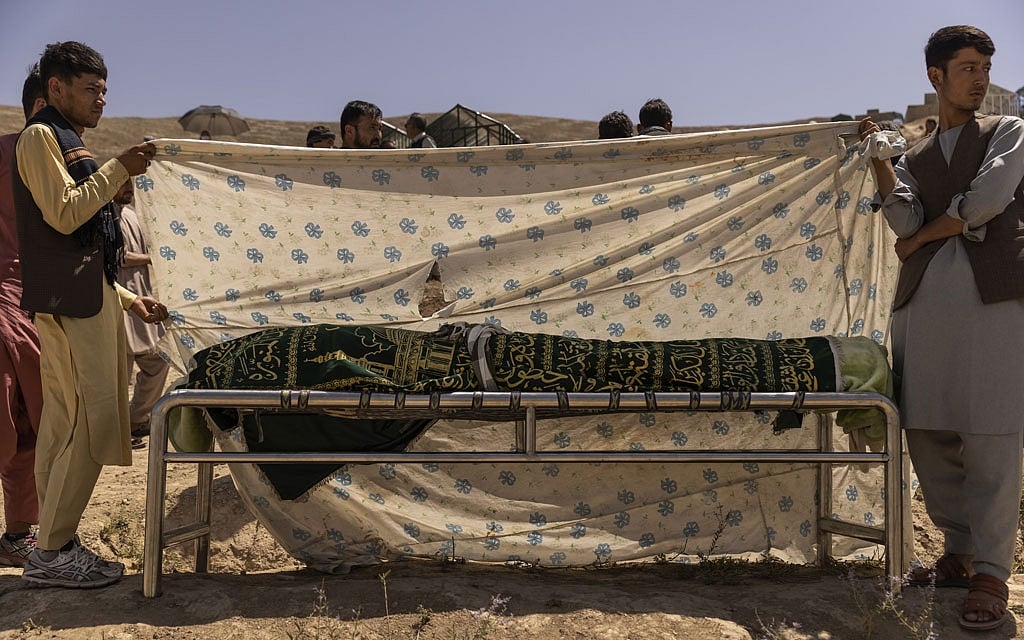
Health officials’ estimate of the number of bombing victims, which did not include the 13 US service members killed and 15 wounded, was supported by interviews with hospital officials. The officials, who requested anonymity because the Taliban had told them not to speak with the media, said some of the dead civilians were Afghan Americans with US citizenship.
The revised estimates made Thursday’s attack one of the deadliest in the nearly two decades since the US-led invasion.
At the airport and in the streets, the US military and the Taliban tried to exert what authority they could. Militants with Kalashnikov rifles kept crowds farther away from the airport’s entrance gates, guarding checkpoints with trucks and at least one Humvee parked in the roads. The US military resumed evacuation flights, and the White House said early Friday that 12,500 people had been evacuated from Afghanistan in the previous 24 hours, despite the attacks.
The waiting crowds, many standing by buses with bags at their sides, numbered in the hundreds, not the thousands of previous days. An estimated hundreds of thousands remain in the country who are desperate for escape from the Taliban rule of Afghanistan, but very few appeared to be getting to the airport gates Friday.
The airport itself appeared to be largely, if not entirely, locked down. At the airport’s southern and eastern gates, Taliban guards told a reporter that no one was allowed to go near the airport and that all entrance gates were closed. About 5,400 people remained inside awaiting evacuation, the Pentagon said Friday.
The grisly scenes Thursday, when children were among those killed in the crowds, illustrated the intense danger for those braving the high-risk journey to the airport.
On Friday, the US military revised its account of what happened at the airport a day earlier, with Maj. Gen. William Taylor of the Joint Staff saying, “we do not believe that there was a second explosion at or near the Baron Hotel, that it was one suicide bomber.” But many witnesses reported hearing two blasts.
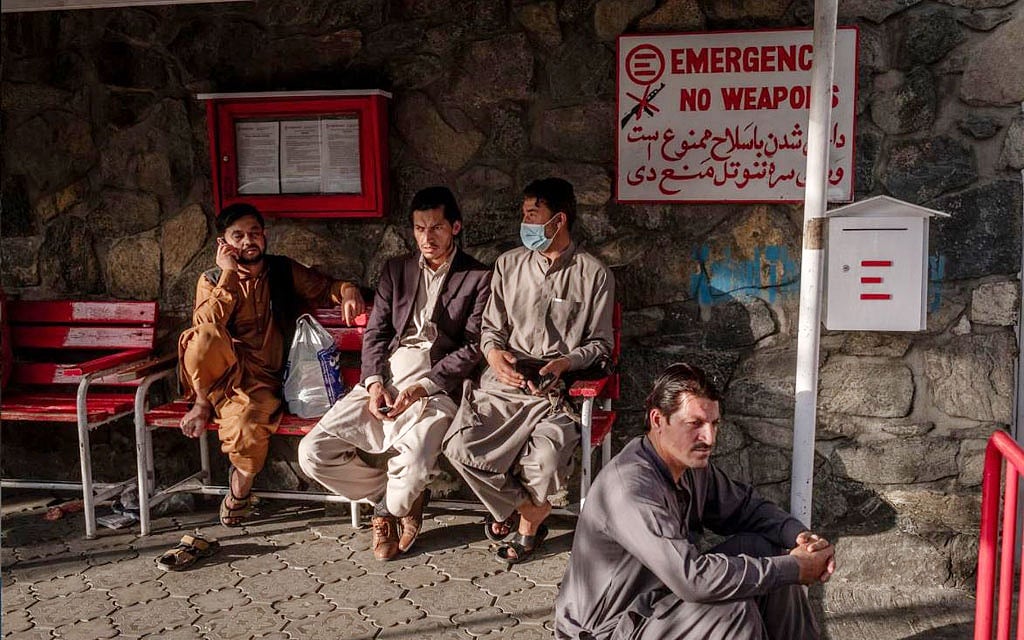
People sit outside a hospital in Kabul, Afghanistan on Friday, Aug. 27, 2021. The day after a pair of suicide bombings outside the Kabul airport killed American troops and Afghans, desperate crowds on Friday sought once again to leave. (Jim Huylebroek/The New York Times)
The task is becoming increasingly difficult.
Biden vowed retribution against the Afghan affiliate of the Islamic State group, which claimed responsibility for the attacks on behalf of its loyalists in Afghanistan. But there was little information on how the attacks would affect the immediate rescue operations, which had picked up speed in recent days but were still on pace to fall well short of providing an exit for everyone who wants to leave.
A man who identified himself as Mohammad, from Khost, said that he had hoped to fly out Friday but that he felt “stuck.” He was unable to get into the airport and said the Taliban had been looking for former soldiers and media workers.
“I don’t feel safe here anymore,” he said.
The violence at the airport has officials in Pakistan fearing that more people will try to cross into their country, despite an insistence that it will not accept more refugees.
Each day in typical times, about 4,000 to 8,000 people cross the border near Spin Boldak-Chaman, the only designated — and open — border crossing for refugees. Since the Taliban seized Kabul, the number of Afghans entering Pakistan has jumped threefold, according to Pakistani officials and tribal leaders.
The growing number of refugees may compel the Pakistan government to take further action. Officials have said repeatedly that they will not allow new refugees to enter Pakistan’s cities. The government instead plans to establish refugee camps near the border inside Afghanistan.
Taylor said some 111,000 people — American citizens, Afghan allies and foreign nationals — have been evacuated from the country since Kabul fell to the Taliban this month.
©2021 The New York Times Company













