Published : 28 Jul 2020, 02:18 PM
Updated : 08 Apr 2022, 02:38 AM


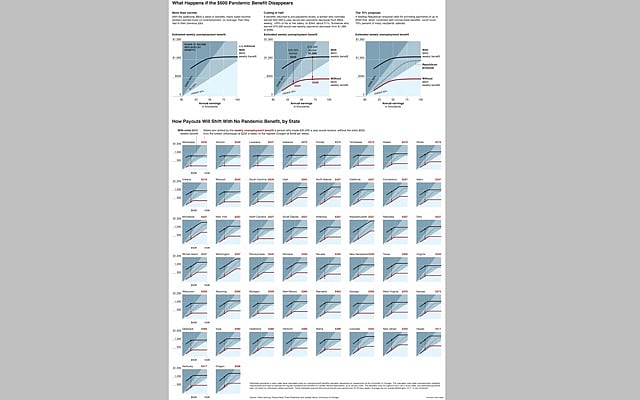
Depending on income and where someone lives, regular benefits replace only a portion of lost wages. We calculated how much of each person’s previous income is replaced by the unemployment payments they receive. It’s what economists call the replacement rate — the share of someone’s normal income that unemployment benefits make up.
When the $600 extra payments expire, lower-income workers who were benefiting the most from the lifeline will feel its loss most acutely.
Unemployment benefits are typically meant to keep people afloat while staying low enough to spur them to find a job. But as the economy hurtled into a recession this year, and the pandemic has kept many businesses closed or at limited capacity, jobs have disappeared for many.
The extra unemployment benefits passed by Congress this year have injected billions into the economy, and if those benefits shrink, that missing boost could cause widespread damage.
Lawmakers are negotiating a new relief package, but chances are slim that the additional lifeline will be extended. The payments have bitterly divided officials, and many Republicans have argued that the aid disincentivizes unemployed people from looking for jobs.
The idea of basing benefits on workers’ previous wages, which is central to the Republican plan, isn’t new. It’s a factor in how states determine the benefits they give out, which is one reason benefits may vary depending on the location.
© 2020 New York Times News Service