


Published : 10 Dec 2020, 11:08 AM
Updated : 08 Apr 2022, 02:51 AM


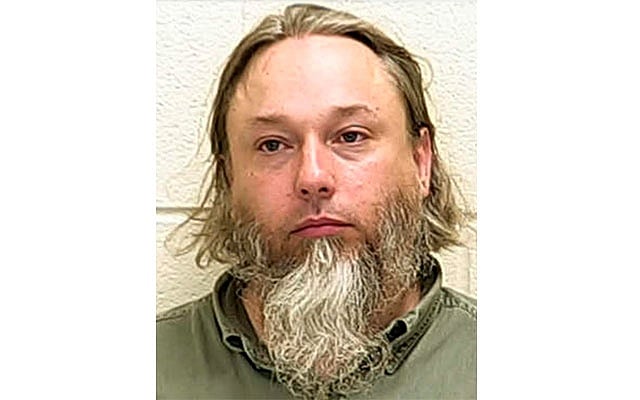
After a five-week trial, jurors in federal court in Minnesota found the man, Michael Hari, 49, guilty of five charges, including intentionally defacing, damaging and destroying religious property and intentionally obstructing and attempting to obstruct by force and threat of force the free exercise of religious belief.
Hari’s conviction came after two other defendants, Michael McWhorter and Joe Morris, had pleaded guilty in January 2019 to their roles in the bombing of the mosque, the Dar Al Farooq Islamic Center, in Bloomington, Minnesota. No one was injured in the attack on Aug 5, 2017, but the imam’s office was damaged, and the bombing spread fear throughout the community.
Hari, McWhorter and Morris each face mandatory minimum sentences of 35 years in prison when they are sentenced at a later date, according to the US attorney’s office in Minnesota.
Hari’s lawyers, James Becker and Shannon Elkins, did not immediately respond to messages Wednesday.
Prosecutors said Hari had started a militia group called the White Rabbits in the small town of Clarence, Illinois, and had recruited McWhorter and Morris to join the group, which he outfitted with paramilitary equipment and assault rifles.
During Hari’s trial, a prosecutor read passages from the White Rabbit Handbook, a manifesto for the group that contained anti-Muslim rhetoric and exhorted a return to “the good old days,” according to the US attorney’s office.
On Aug 4-5, 2017, prosecutors said, Hari, McWhorter and Morris drove a rented truck hundreds of miles from central Illinois to the Dar Al Farooq Islamic Centre, leaving their mobile phones behind and avoiding toll roads to evade detection.
They stopped along the way to buy diesel fuel and gasoline, which Hari mixed in a plastic container, prosecutors said.
About an hour before entering Minnesota, Hari told McWhorter and Morris that there was a pipe bomb in the truck, which they were going to use to bomb a mosque, prosecutors said.
At about 5 am on Aug 5, the men arrived at the Dar Al Farooq Islamic Centre, and Morris used a sledgehammer to break a window on the imam’s office and then threw the fuel container through the window, prosecutors said.
McWhorter then lit the fuse on the 20-pound black powder pipe bomb, which Hari had built, and threw it through the window, prosecutors said.
The bomb exploded, igniting the fuel mixture in the container and causing fire and smoke damage to the imam’s office, as well as water damage after the building’s sprinkler system activated.
McWhorter and Morris ran back to the truck, where Hari was waiting in the driver’s seat, and the three men drove back to Illinois, prosecutors said.
When the bomb exploded, congregants were in the mosque for morning prayers, prosecutors said, but the imam’s office was unoccupied.
Mark Dayton, the governor of Minnesota at the time, visited the centre after the bombing and denounced the attack as a “terrible, dastardly, cowardly” act of terrorism.
McWhorter told federal agents that the bombing had been Hari’s idea and the goal was to scare Muslims “out of the country” and show them, “Hey, you’re not welcome here,” according to court documents.
Erica H MacDonald, the US attorney for the District of Minnesota, praised members of the Dar Al Farooq Islamic Center for testifying at Hari’s trial, saying they had shown strength and resilience.
“Michael Hari’s goal in bombing the Dar Al Farooq Islamic Centre was to spread hatred, instill fear, and threaten the constitutionally protected right to freedom of religion,” MacDonald said in a statement Wednesday. “This act of violence, driven by hatred and ignorance, shook our community.”
The guilty verdicts represented a “condemnation of that hatred,” she added.
Imam Asad Zaman, the executive director of the Muslim American Society of Minnesota, said the jury had sent “a very clear message” to Hari that “your hate has been rejected and you are deemed a criminal, and this society does not agree with what you have done.”
The people of Minnesota “breathe a sigh of relief today,” he said, because this “affected our sense of safety and security.”
Zaman added, however, that it was important for law enforcement agencies to continue to dedicate resources and time to monitoring and disrupting white supremacist organisations that are planning violence.
“Our community continues to remain in fear at the possibility of these kind of attacks,” he said.
c.2020 The New York Times Company













