Published : 16 Feb 2022, 05:11 PM
Updated : 21 Oct 2022, 03:36 PM


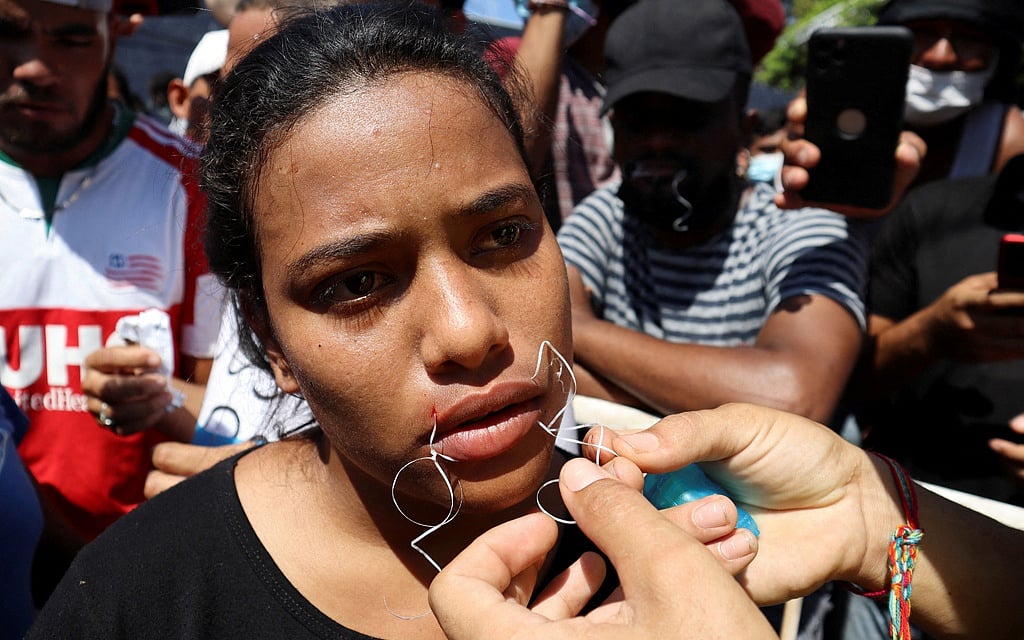
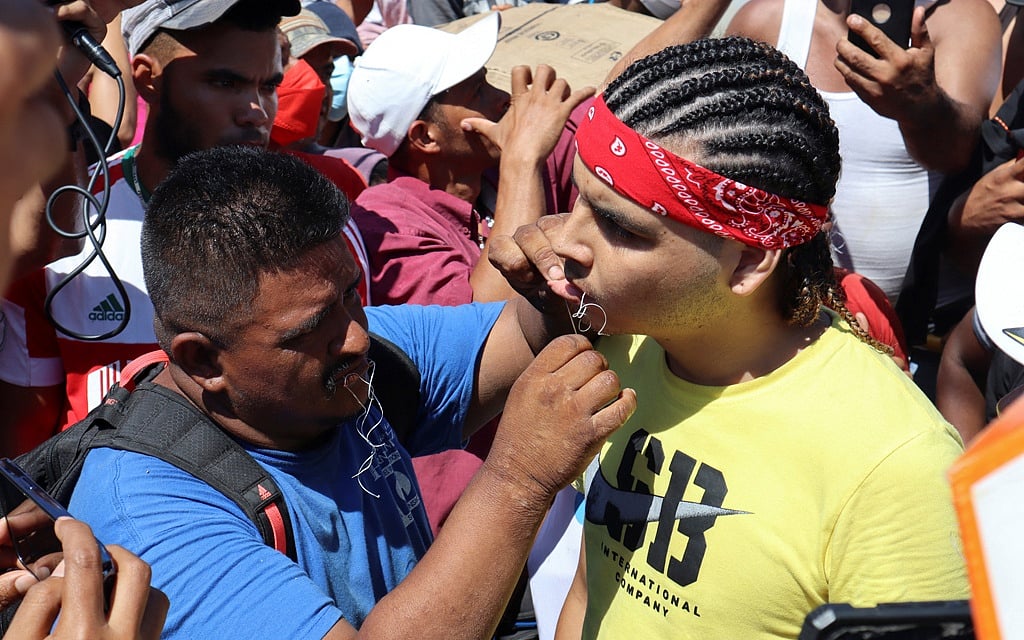
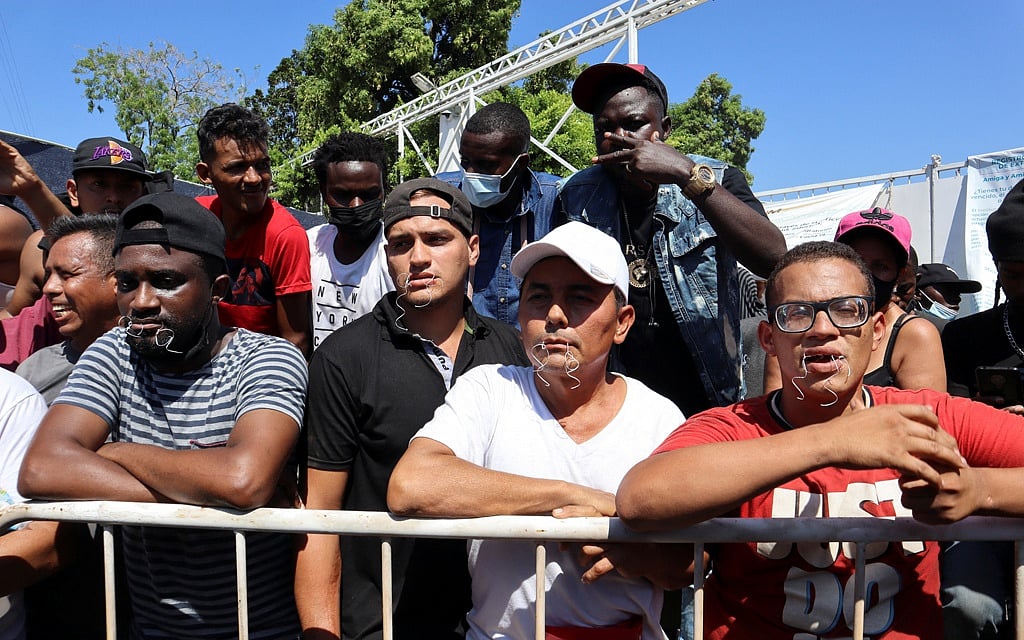
The migrants, mostly Central and South Americans, helped each other seal their lips using needles and plastic threads, leaving a small space to consume liquids and using alcohol to wipe away drops of blood from the stitches, Reuters images show. "The migrants are sewing their lips together as a sign of protest," said Irineo Mujica, an activist at the demonstration. "We hope that the National Migration Institute can see that they are bleeding, that they are human beings."
A migrant begins a hunger strike with their mouths sewed shut during a protest to demand free transit through the country outside the office of the National Migration Institute (INM) in Tapachula, Mexico February 15, 2022. REUTERS
Some were carrying their children when they staged the dramatic protest in Tapachula, a border city with Guatemala, which for months has been filled with thousands of migrants waiting for papers to be able to freely cross the country.
"I'm doing it for my daughter," said Yorgelis Rivera, a Venezuelan. "She has not eaten anything in the last few hours and I see no solution ... from the authorities."
"We are like prisoners here," Rivera said, adding she has been waiting for a response from Mexico's migration agency for more than a month.
The agency said it continues to attend cases, adding priority is has been given to those who make up vulnerable groups, such as children, adolescents, pregnant women, victims of crime, people with disabilities and the elderly.
Migrants begin a hunger strike with their mouths sewed shut during a protest to demand free transit through the country outside the office of the National Migration Institute (INM) in Tapachula, Mexico, February 15, 2022. REUTERS
In recent years, the number of migrants arriving in Mexico fleeing violence and poverty has jumped. In 2021, Mexico recorded an 87% increase in the number of asylum applications, mainly from Haitians and Hondurans.
The United Nations refugee agency (UNHCR) recently said Mexico should consider new aid programmes amid a surge in the arrival of foreigners, many of them Venezuelans, for whom Mexico now requires a visa.