


Published : 23 Feb 2022, 08:30 AM
Updated : 03 Aug 2022, 11:33 AM


Isabelle Jacques, an assistant deputy minister in Canada’s department of finance, told a House of Commons committee that the banks had begun unlocking accounts Monday and that no more finances would be locked up.
“The vast majority of assets are in the process of being unfrozen,” she said.
When Prime Minister Justin Trudeau decided a week ago to invoke his country’s Emergencies Act for the first time in Canadian history to quell the unrest, it gave police sweeping new powers to go after the finances of the protesters.
Jacques said that those measures are now being lifted because they were intended to pressure protesters to leave the city’s streets.
Some may now face long-term consequences, even with the freezes lifted.
But for one protest organiser who was arrested last week, the effect was more immediate. The organiser, Tamara Lich, said she had been frozen out of all her accounts and could come up with only 5,000 Canadian dollars (about $3,920) for bail.
The issue may be moot: On Tuesday, the court denied bail.
Justice Julie Bourgeois said she was not convinced that if freed, Lich would leave Ottawa or stop encouraging others to keep blocking roads. “You have had plenty of opportunities to remove yourself and even others from this criminal activity,” she said, “but obstinately chose not to and persistently counselled others not to either.”
Bourgeois noted that Lich likely faces a “lengthy” sentence if convicted.
About the time the bail hearing was taking place, lawmakers in the Canadian Senate began debate over Trudeau’s Emergencies Act order. The previous evening, overcoming opposition from Conservative members of Parliament, Trudeau persuaded the House of Commons to endorse his decision.
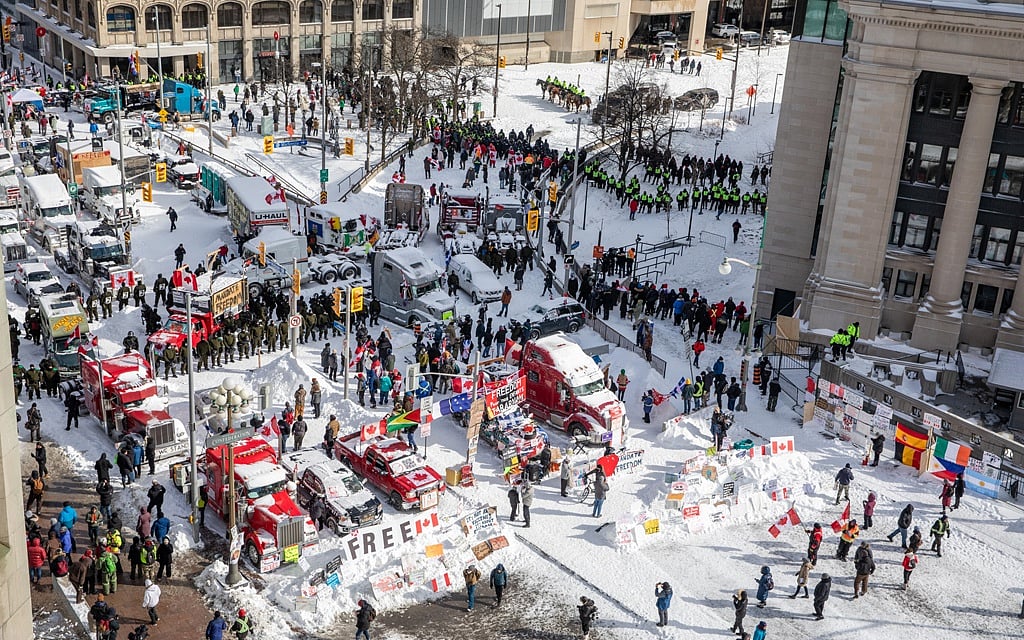
After the declaration was made, police began turning over the names of organisers and people who actively blocked Ottawa’s roads with their trucks and other vehicles during the blockade, which was set off by opposition to the government’s pandemic restrictions.
As of Sunday, the national police force said in a statement, 219 “financial products” had been frozen, 253 Bitcoin addresses related to protesters and organizers had been given to virtual currency exchange operators, and a bank had frozen 3.8 million Canadian dollars (about $3 million) held by a payment processor.
Lich, who is from Alberta, was the driving force behind a GoFundMe campaign that raised more than 10 million Canadian dollars (about $7.8 million) for the protest. About 1 million dollars ($784,000) was turned over to her before the crowdfunding site shut down the campaign. Authorities charged Lich on Thursday with counseling to commit mischief, a serious offense under Canadian criminal law.
All of the accounts that were frozen were to remain so for up to 30 days from Feb. 14, the date of the national emergency declaration. But the government could extend or shorten that period — and that is what it said it was doing late Tuesday.
Leah West, a professor specializing in national security law at Carleton University in Ottawa, said there would most likely be lasting effects for the protesters and organisers when it comes to their finances.
“Down the road,” West said, “banks may decide that these are not people they want to provide financial services to because they’ve engaged in illegal activity. Would someone want to give you a mortgage if you used your house to deal drugs? Probably not.”
In the face of the large-scale police operation that began clearing the streets Friday, many of the protesters drove away to avoid being arrested and having their vehicles seized. By Monday morning, police had arrested 196 people and accused them of either organizing the blockade or participating in it, and towed 115 vehicles. In the initial days of the protest, there were more than 400 vehicles occupying downtown streets.
Some of the protesters did not go very far.
After leaving the streets of the capital, one small group set up a new camp Sunday across from a truck stop on the Trans-Canada highway about 100 kilometres (about 62 miles) east of Ottawa. As participants were busy setting up food canteens and arranging firewood stockpiles, a leader who would only be identified as Eric declined to discuss their plans.
Trudeau told the House of Commons that there were two other small groups outside the city.
Ottawa’s acting police chief, Steve Bell, said last week that police would continue to work “for months” to track down protest participants.
“If you are involved in this protest, we will actively look to identify you and follow up with financial sanctions and criminal charges,” Bell said.
© 2022 The New York Times Company













