Published : 18 Feb 2022, 02:24 PM
Updated : 18 Jul 2022, 02:26 PM


About 36 hours before, they had been attacked as theyslept in tents in a vast camp that houses about 20,000 displaced people. Theyhad fled to that particular camp, called Plaine Savo, most within the lastmonth, thinking they would be protected from an anti-government militia byUnited Nations peacekeepers and Congolese army camps based only about 1 mileaway.
In a brazen move, the militia attacked anyway Tuesdaynight, firing guns and swinging machetes.
“There were shouts to stay inside our tents so wedidn’t move at first,” said Janine Lotsove, who had been sheltering in the campwith her seven children. “But then we heard the rebels tearing open other tentsnearby and starting to cut people with machetes. Those who stayed in theirtents were being massacred, so we started to run with our kids and they shot atus.”
The assault was one of the biggest in almost a year inthe country’s eastern region, which is plagued by violence, corruption andethnic tensions. Nearly 5.6 million Congolese have been displaced from theirhomes, according to a count in November by the UN refugee agency. More than 1million others have fled the country, which has a population of about 90million, seeking refuge in places like the United States and Europe.
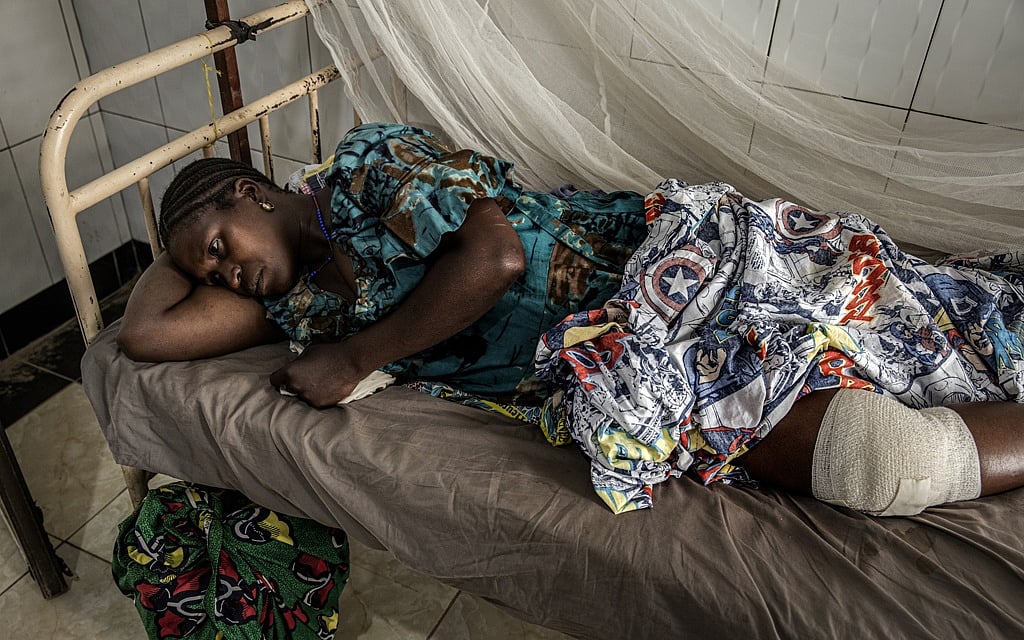
Janine Lotsove, 33, who was shot in the knee during a militia attack in the Democratic Republic of Congo, rests on a cot at the Salama Clinic in Bunia, the capital of Ituri province, on Thursday, Feb 3, 2022. Finbarr O'Reilly/The New York Times
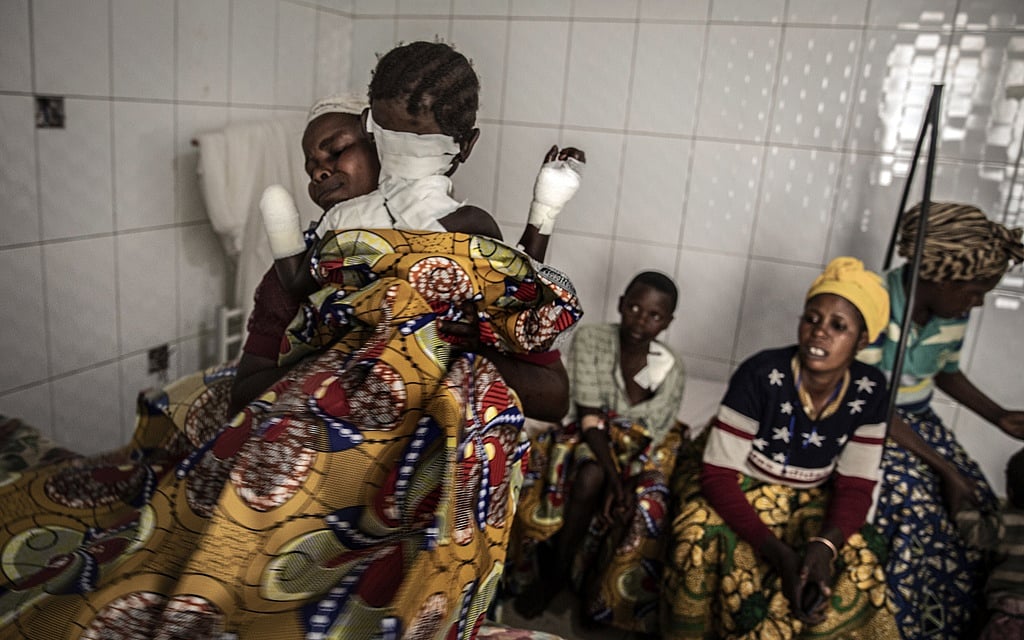
Twenty-one of the most severely injured were airliftedby helicopter to the Salama Clinic, which is supported by Doctors WithoutBorders — one of the few medical charities still working on the front lines asthe region has become less and less secure. There are as many as 120 differentmilitias terrorising this part of Congo.
Before the attack, I had just spent the previous twoweeks documenting survivors of war crimes from two decades ago for theInternational Criminal Court. I didn’t want to be taking pictures of freshattacks.
I have lived and worked in Congo off and on for thelast 20 years, and for the last two years have run a collaborative project witha dozen Congolese photographers to illustrate the vibrancy of life here beyondthe narrow scope of conflict. But from documenting war crimes past, I’velearned the importance of gathering evidence of atrocities as they happen totry, as hard as it is, to hold perpetrators accountable.
The militia group everyone calls CODECO — theCooperative for Development of Congo — was responsible for Tuesday’s assault,according to the government. It was one of the worst recent attacks, but theviolence has escalated since May when the government declared martial law inthe region: More than 800 deaths were recorded in Ituri in the last six monthsof 2021, according to Kivu Security Tracker, a human rights project.
At the clinic, working with an interpreter, we movedthrough the small cinder block rooms and found that most of the wounded werechildren, many unidentified, separated from their families in the chaoticscramble to airlift them for treatment. I counted three adults.
We asked them, “Do you want to tell your story aboutwhat happened? If so, I’m here to listen. If not, that’s OK.” But every adultwanted to speak and be photographed, and the adults gave consent for theirchildren to be photographed. They wanted their stories heard.
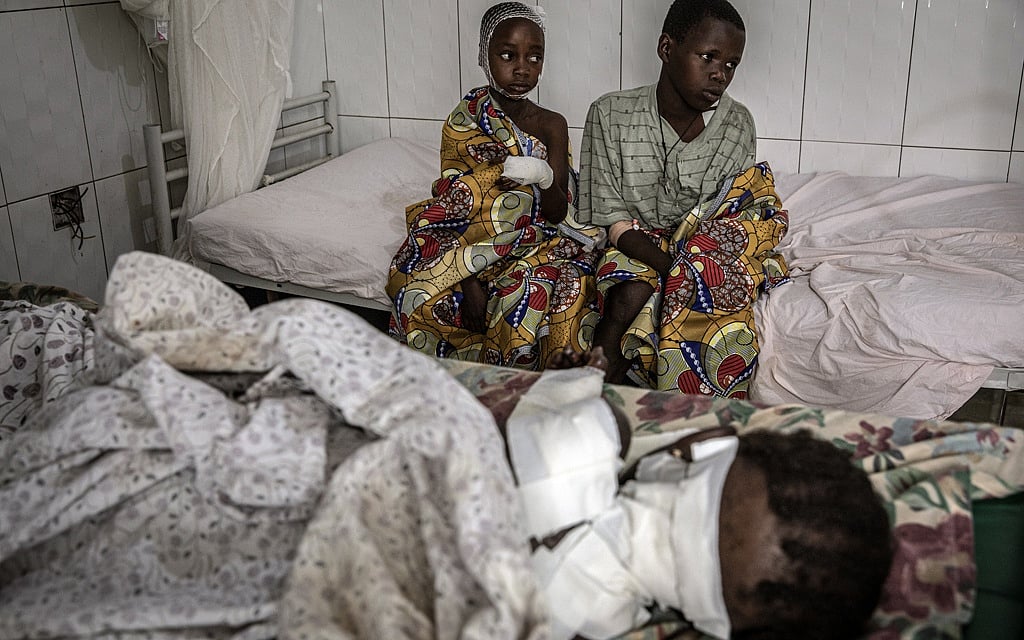
Rosinne Vive, seated at left, aged about 7, and Cecile Shukuru, 13, seated right, who were both struck by machetes during a militia attack, recover at the Salama Clinic in Bunia, the capital of Ituri province, on Thursday, Feb 3, 2022. Finbarr O'Reilly/The New York Times
Catherine, 11, Rosinne and Cecile’s cousin, drifted inand out of consciousness after coming out of surgery to repair a fistula causedby a bullet that had passed through her buttocks and genitals. Catherine andher mother, Lotsove, had both been shot while fleeing.
Several other children had wounds to their groins,including one girl under 10 who had been sexually assaulted during the attack.
“It looks as if they were targeting the girls andspecifically trying to shoot them in the genital area,” said Dr John KakuleNgendo, the director of the clinic.
Lotsove, 33, said that all seven of her childrensurvived the attack. She was being treated for a bullet wound to her knee. Butshe said her brother and his two children had been killed with machetes.
The night of the attack, she said, “People were runningin every direction. I hid in a nearby tent with my daughter and realised shehad been shot too.” She said that they hid there until the UN forces arrivedand drove the militia away.
Logo Lupka, 65, said he had been at the camp for onlya week. He was shot through the hip. His six children survived, but his wifewas killed after being struck by a bullet in the tent beside him.
“They will bury her today,” he said. “Only God canhelp me now.”
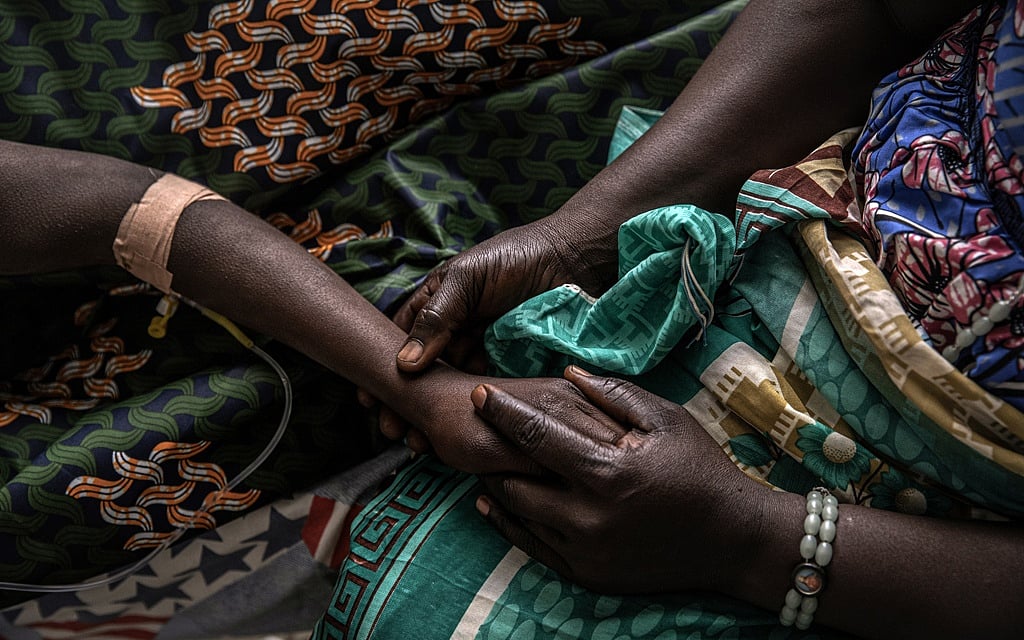
A woman holds the hand of Catherine Lotsove, 11, who was wounded in a militia attack, as she drifts in and out of consciousness at the Salama Clinic in Bunia, Democratic Republic of Congo, on Thursday, Feb 3, 2022. Finbarr O'Reilly/The New York Times
The attackers in the CODECO militia were from adifferent ethnic group, the Lendu. The Lendu, who tend to be farmers, have along-standing rivalry with Hema pastoralists, dating back to colonial rule —which exacerbated ethnic divisions.
When they first heard the shooting in the camp, “Wethought this can’t be Lendu coming for us,” Lonu said. “We are in a displacedcamp and there is an army camp and a MONUSCO base nearby,” he added, referringto the U.N. peacekeepers.
“I went out to see and someone was outside the doorand shot at me. The bullet missed and I went back inside, but then he firedinto the tent and I was hit in the leg. My 13-year-old boy was also hit in thearm.”
The militia fired into the tents. In the one besidehim, Lonu said, nine people were killed. “I had no way to defend myself, noteven a machete,” he said, “I thought I would just die.”
© 2022 The New York Times Company