Published : 01 Oct 2026, 08:21 PM
Updated : 01 Oct 2026, 08:21 PM


Greece said on Thursday the European Union should create an emergency mechanism to temporarily suspend asylum applications during major migration crises, citing the arrival of tens of thousands of people in the Spanish enclave of Ceuta in July.
Greece was on the front line of the 2015-16 migration crisis, when more than a million people from West Asia and Africa crossed into Europe. Arrivals have since fallen, although migrant boats from Libya have increased in recent years around Greece’s Aegean islands.
Migration Minister Thanos Plevris said an EU migration pact had helped reduce arrivals and increase migrant returns, but argued that measures taken so far were not enough to handle emergencies such as the surge into Ceuta.
Spain estimates that more than 72,000 migrants entered the North African enclave in late July. Most have since returned, but around 10,000 remain there.
“In such cases, there should be enhanced border surveillance and suspension of asylum,” Plevris said as he arrived for a meeting of EU justice and home affairs ministers in Luxembourg.
Athens halted processing asylum applications from migrants arriving by sea from North Africa for several months last year and passed legislation to speed up the deportation of rejected asylum seekers.
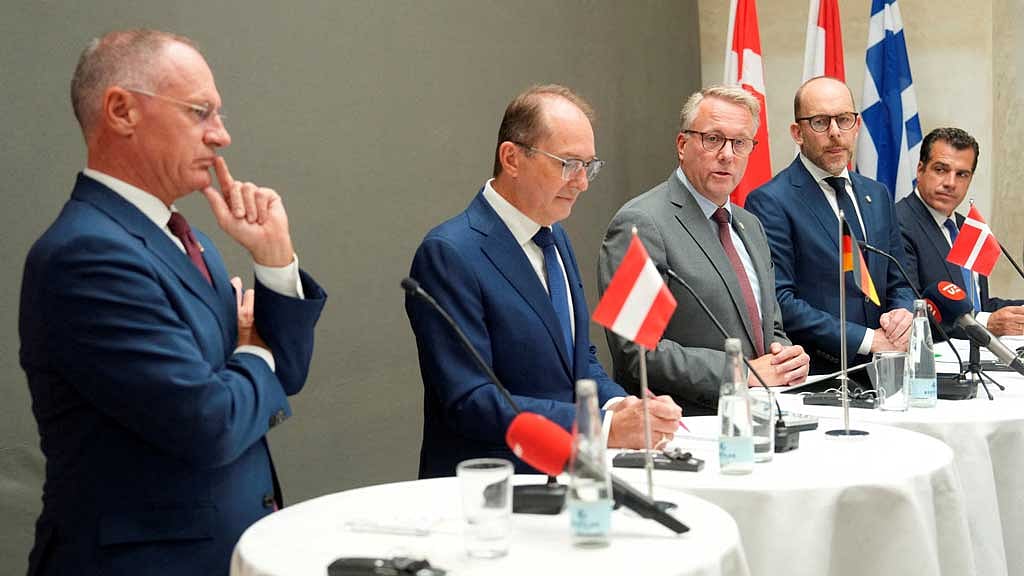
Greece, Germany, Austria, Denmark and the Netherlands, known as the Group of Five, also said they had agreed on concrete steps towards establishing return hubs in a non-EU country.
The initiative forms part of a broader European push to increase deportations and curb irregular migration.