Published : 06 Nov 2026, 12:54 PM
Updated : 06 Nov 2026, 12:54 PM


The rebuke President Donald Trump suffered in the US midterm elections could prompt him to step up efforts to re-engage North Korea, but any willingness to make major concessions risks creating friction with regional allies.
Analysts and officials in Asia expect Trump to focus on foreign policy as he seeks to build his legacy in the final two years of his term. With efforts to resolve the wars in Ukraine and Iran yet to produce breakthroughs, he is likely to turn to Asia, where he believes he has room to manoeuvre.
North Korean leader Kim Jong Un, with whom Trump has been eager to restart talks, is likely to be a key part of that effort, they say.
"Trump is likely to devote significant effort to achieving foreign policy successes, especially if he faces greater constraints on the domestic front," said Ban Kil-joo, international relations professor at the Korea National Diplomatic Academy in Seoul.
"Given Trump would want a successor to win in 2028, there is a strong possibility that engagement with North Korea would be part of that agenda," he said.
But there is little incentive at the moment for Kim to respond, analysts say.
Asked about Trump's plans for diplomacy with North Korea, the White House said Trump has restored American strength on the global stage and strengthened ties with world leaders. "His foreign policy decisions have never been motivated by politics," White House spokeswoman Anna Kelly said in emailed comments to Reuters.
"The Commander-in-Chief will always act in the best interest of the American people and our national security."
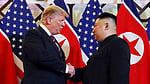
Trump met Kim three times during his first term after a war of words that raised fears of military conflict.
But their 2019 summit ended without agreement after they failed to reach a deal on North Korea's nuclear weapons programme and sanctions relief.
Seven years later, the stakes are higher. North Korea has expanded its nuclear and missile arsenal, while Pyongyang's ties with Russia and China are the best in years, giving Kim less incentive to negotiate and potentially increasing pressure on Trump to offer concessions.
Trump Calls Kim "Great Guy"
Trump has touted his relationship with Kim, calling him a "great guy" and saying that they "get along very well”.
Nonetheless, US and South Korean officials see fading chances of a meeting this year, with Washington receiving no response from Pyongyang ahead of a regional summit in China this month where they might have met.
Kim's influential sister, Kim Yo Jong, has said dialogue remains a path to peace but Pyongyang sees no need for talks now. She denounced what she called Washington's "hostile policy" while denying US accusations that North Korea stole more than $6 billion in virtual assets from Binance last week.
Her brother has previously said he was open to talks if Washington stopped insisting his country give up nuclear weapons. Regional allies South Korea and Japan are opposed to any such concession.
"A summit that shelves denuclearisation would undermine deterrence and create policy friction among Washington, Seoul and Tokyo," said Leif-Eric Easley, professor of international studies at Ewha Womans University in Seoul.
Officials in Japan and South Korea are concerned they could be "cut out of the loop" if Trump deals directly with Kim, with the quiet blessing of Beijing and Moscow, a senior Japanese official said, speaking on the condition of anonymity.
"(Japanese officials) are concerned about the lengths he will go to get a summit with North Korea’s Kim Jong Un, such as dropping the issue of denuclearisation."
'Biggest Change Since World War Two'
Trump has referred to North Korea as a nuclear power, a status that allies in the region and the West have refused to recognise despite the dozens of nuclear warheads Pyongyang is believed to have built and its stockpile of fissile material.
"If US-North Korea talks lead Washington to accept North Korea's nuclear status, the security environment in Asia would change dramatically," said Professor Kazuhiro Maeshima at Sophia University in Japan.
"The biggest change since World War Two could occur in the remaining two years of the Trump administration. It is a serious situation."
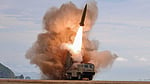
Kim now has a vastly more advanced arsenal than at the time of the 2018-2019 summits, including more weapons and missiles, hypersonic glide vehicles, a growing fleet of modern warships and submarines, and improved drone capabilities.
If Trump were to bring Kim back to the table, he might need to offer more than partial sanctions relief.
Such concessions could face hurdles at home from a Democratic-controlled Congress and Trump's limited time in office, said Moon Chung-in, a Yonsei University Professor in Seoul who served as a presidential adviser on national security.
"And what is important is North Korea's perception and calculation; if North Korea thinks that Trump has entered a lame-duck period and he cannot get the support from Congress... there's no reason for Kim Jong Un to come to dialogue," he said.
Former US Deputy Secretary of State Stephen Biegun, who led US negotiations with North Korea during Trump's first term, also said there were few incentives for Pyongyang currently.
"The North Koreans, I think, have very little upside to a meeting like this right now, and potentially some downside."