Published : 22 Nov 2026, 12:10 AM
Updated : 22 Nov 2026, 12:10 AM


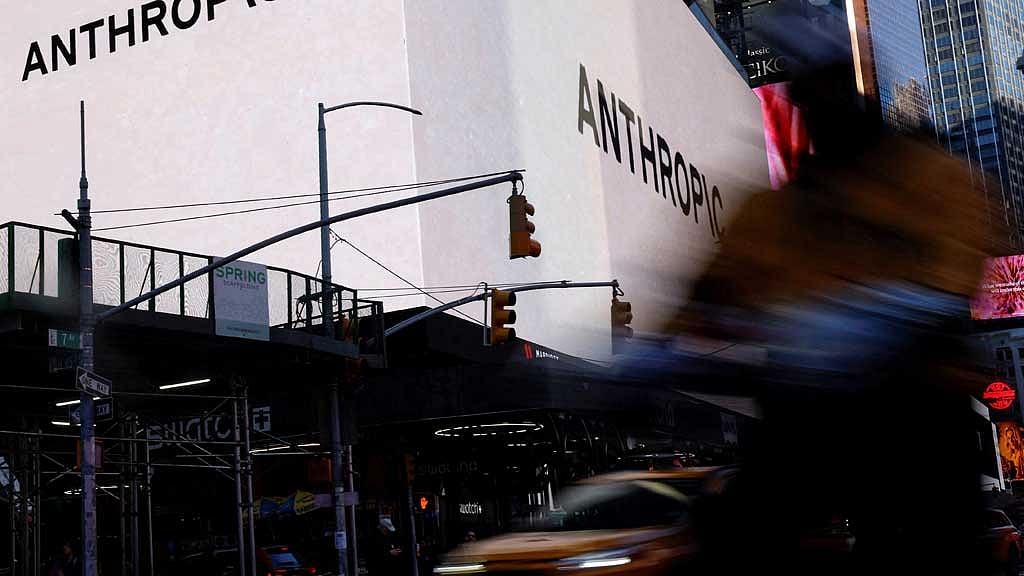
A mathematician at artificial intelligence company Anthropic has claimed to have proved the Riemann hypothesis, one of mathematics' most famous unsolved problems, with help from its Claude AI system.
The claim has yet to be independently verified, but the development has drawn attention from leading mathematicians.
On Friday, Levent Alpoge published a four-page note on his personal website, linking to computer code rather than a conventional mathematical paper to demonstrate the proof.
According to a The New York Times, the code is written in Lean, a language that allows mathematical arguments to be checked for logical errors. Researchers are examining it to establish whether the proof holds.
Oxford University mathematician James Maynard put the likelihood of its correctness at 98 to 99 percent, while cautioning that the verification must establish the result actually proves the intended hypothesis.
Cornell professor Steven Strogatz described the development as reaching the pinnacle of mathematical research, crediting Alpoge's guidance in exploring ideas with Claude.
Formulated by German mathematician Bernhard Riemann in 1859, the hypothesis concerns the distribution of prime numbers.
It is one of seven Millennium Prize problems, each carrying a $1 million reward for a solution.
Another mathematician, Alessandro Masullo, released an incomplete proof on Friday after nearly 12 years of work. His approach did not use AI.
His former doctoral advisor Brian Conrad considered the draft credible but criticised Alpoge for releasing a proof he did not fully understand.
Alpoge and New York University professor Tristan Buckmaster also unveiled a proof concerning a variation of the Navier-Stokes problem, which describes fluid flow.
The developments follow OpenAI's mathematical advances, including work on a related Riemann hypothesis variation in October.