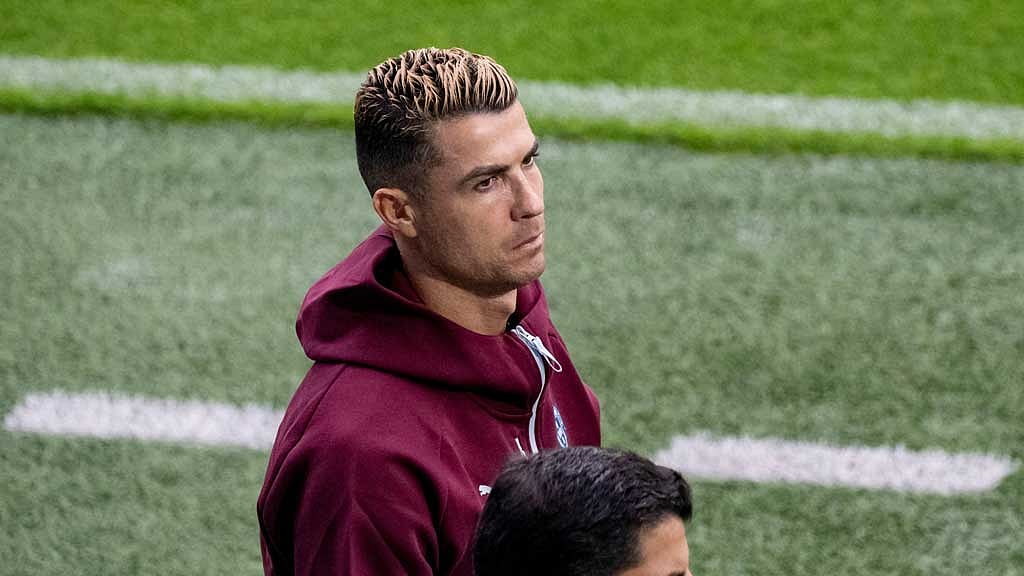
Published : 01 Oct 2026, 10:27 AM
Updated : 01 Oct 2026, 10:27 AM


Only a week ago, Cristiano Ronaldo had been adamant that status should count for nothing in Portugal's new era under coach Jorge Jesus.
"I'm always happy. If I wasn't happy, I wouldn't want to represent the national team," the 41-year-old captain told reporters before Jesus's first game in charge.
"As the manager said, and I agree with him: status counts for nothing."
Ronaldo also made clear that he would know when it was time to go.
"They count on me. I still believe that I'm able to help the national team," he said at the Portugal Football Summit.
"If the manager doesn't count on me, I can leave today – no problem at all... When I feel that I'm not doing anything here, that I'm not contributing on the pitch, not scoring goals, creating a bad atmosphere, or that they don't want me here, I'll be the first to pack my bags."
Seven days later, Ronaldo walked out of Portugal’s camp in Copenhagen, hours after Jesus publicly played down reports of a rift between them and said Ronaldo would train ahead of Thursday's Nations League match against Denmark.
Ronaldo instead left Parken Stadium without taking part in the session and later announced that he had decided to leave the camp after speaking to Portuguese Football Federation (FPF) President Pedro Proenca.
"Following the national team manager's press conference, and after a conversation with the President of the Portuguese Football Federation, I have decided to leave the national team's training camp," Ronaldo wrote on Instagram.
"In due course, I will tell all Portuguese people the truth about the reasons behind my departure from the national team, to which I have always been fully committed.
"Now is the time to wish Portugal and all my team-mates, without exception, the best of luck."
The FPF confirmed Ronaldo had left and said preparations for Denmark and Sunday's home game against Norway would continue with the remaining 24 players.
It did not explain why the captain had gone.
What happened between Ronaldo and Jesus remains only partly resolved in public. But the coach's statements over the preceding days, Ronaldo's response and reporting from inside the Portugal camp offer a clearer picture of how a disagreement over his role escalated into a potentially defining moment of his international career.
The Norway Flashpoint
The first visible signs of tension came around Portugal's 2-1 win away to Norway on Sunday.
Ronaldo had started Jesus's first match three days earlier, playing 65 minutes in a 1-0 victory over Wales before being replaced by Goncalo Ramos.
Jesus said afterwards that the substitution was tactical, explaining that he wanted fresh legs and a forward with more speed to press Wales's centre-backs.
Ahead of the Norway game, Jesus suggested Ronaldo's involvement would depend on how he had recovered.
"Today I already spoke to him. He played 65 minutes and I'll see how he is, whether I start him or whether he goes to the bench," Jesus said on Sept 26.
"Cris, whether we like it or not, isn't Joao Neves. Joao Neves is 20 and can perhaps play two consecutive games three days apart."
Jesus added that the training session would help him decide.
Ronaldo started on the bench in Oslo but never came on.
Afterwards, Jesus said his original plan had been to use Ronaldo during the second half but that the course of the match made him change his mind.
"My idea was for him to play in the second half, but given what was happening with the score I felt it wasn't the moment to put him into the game, and I didn't," he said.
"That doesn't mean that now, against Denmark, he won't be the one playing."
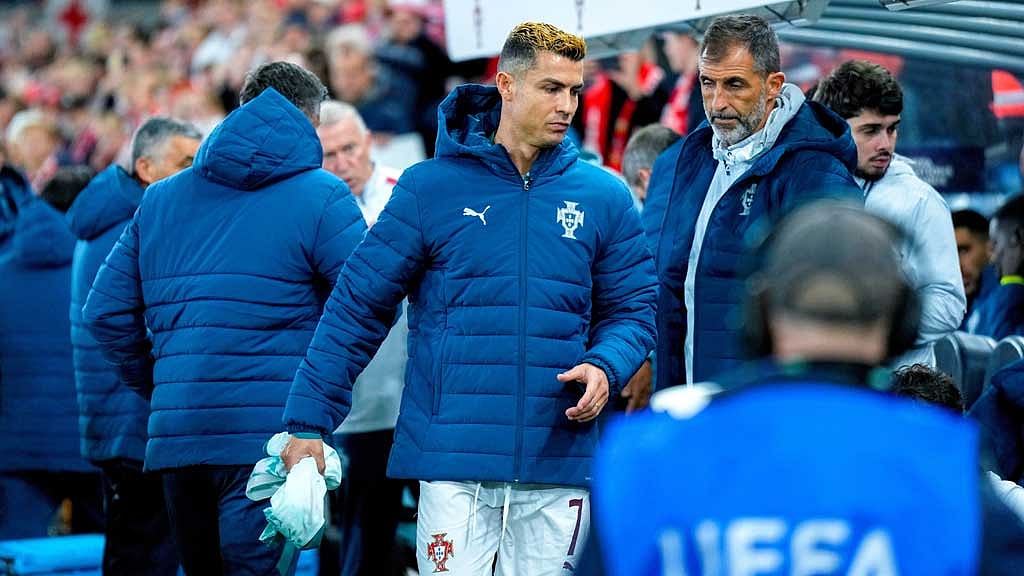
Ronaldo went straight down the tunnel after the final whistle instead of joining his teammates as they acknowledged the travelling Portugal supporters.
The Athletic subsequently reported, citing sources speaking on condition of anonymity, that Ronaldo was irritated at not playing at all. It was only the third time in his Portugal career that he had been an unused substitute.
Different Explanations
At his pre-match press conference in Copenhagen on Wednesday, the Portugal coach said he and Ronaldo had drawn up a plan under which the forward would play neither against Norway nor Denmark.
"It is true that I agreed with him – and not only with him – we created a plan, as I also did with Bruno Fernandes, and I told Cris that he wouldn't play in the Norway game and the Denmark game," Jesus said.
Jesus said his decisions were based partly on his familiarity with Ronaldo's physical condition after coaching him for the previous year at Al-Nassr.
"I worked with Cris for a year. I didn't just meet him three months ago with the national team," he said. "I know his physical condition very well."
Jesus said Ronaldo had rarely played every three days during their time together in Saudi Arabia and normally did not train during the first two days after a match.
That explanation appeared difficult to reconcile with what the coach had said publicly before and immediately after the Norway match.
On Sept 26, Jesus had said he would assess whether Ronaldo should start or go to the bench, adding that Ronaldo "knows his body better than I do".
On Sept 27, he said his plan had been to introduce Ronaldo during the second half and explicitly left open the possibility of playing him against Denmark.
On Sept 30, he said Ronaldo had already been told he would play neither match.
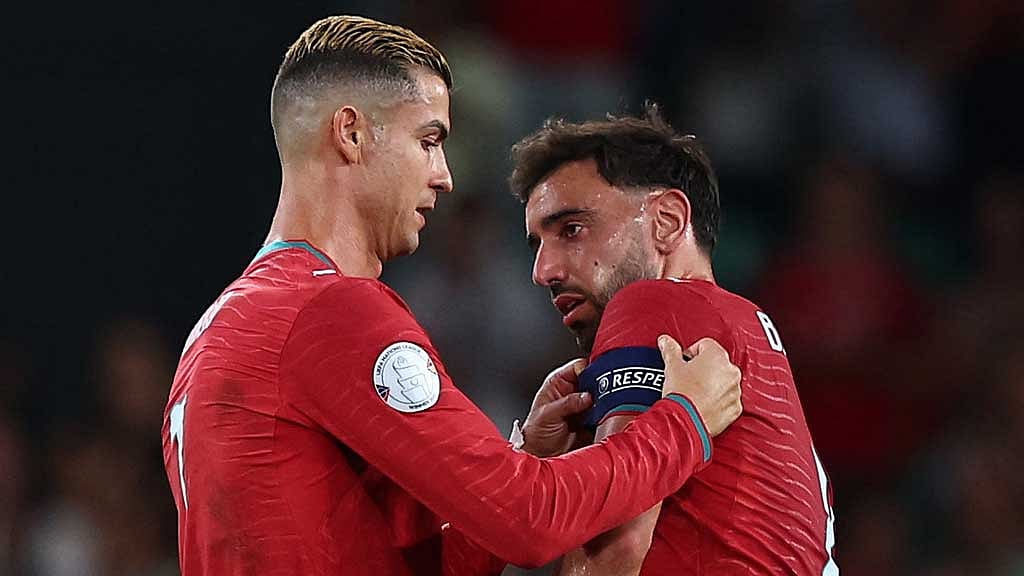
Training Separately
Ronaldo also stopped training with the rest of the squad after the Norway match, but there has been no indication that he simply refused to train.
Reuters reported that he worked alone in the gym on Monday and Tuesday despite not being injured.
The Athletic also reported that Ronaldo did not train with the squad on either day and that the FPF had reported no injury or physical problem.
On Tuesday in Malmo, RTP reported that Ronaldo appeared before the session and spoke to Jesus before returning to the hotel, where the federation said he would carry out an individual gym session.
FPF President Proenca also travelled to Copenhagen as the disagreement intensified, but reports suggested that Jesus and Ronaldo met and resolved their disagreement before Proença arrived.
Whatever understanding had been reached, however, did not survive the following day.
'No Case'
Jesus began his pre-Denmark press conference by trying to limit the discussion about his captain.
"Ronaldo is not the main topic," he said, stressing that Portugal's match against Denmark should instead be the focus.
He said there was "no case" between them and denied Ronaldo had refused to train.
"There is no case at all," Jesus said.
"The status is one thing. The rules are the same for everyone."
Jesus also recounted a conversation in which, according to the coach, Ronaldo had accepted his authority over selection.
"He said, 'I'm here for you to decide. If you want me to play, I'll play. If you want me to go to the stands, I'll go'."
Jesus then confirmed that, if everything went normally, Ramos would start against Denmark.
Most significantly, he insisted Ronaldo would train that afternoon.
"He didn't refuse. He's going to train today," Jesus said.
"It's the fourth day, so he's going to train. And he didn't refuse to train. It's impossible. Do you believe that? Not Cris."
Minutes later, Ronaldo did not appear on the pitch.
RTP reported that he instead left Parken Stadium in a Portugal vehicle, despite Jesus having said only shortly beforehand that he would take part in the session.
'Ronaldo Was Angry With Me'
Jesus's description of the disagreement also shifted during Wednesday.
In subsequent television interviews, he acknowledged that Ronaldo had been unhappy over what happened against Norway.
"Ronaldo was angry with me, but as far as I'm concerned, that's water under the bridge," Jesus said, according to Reuters.
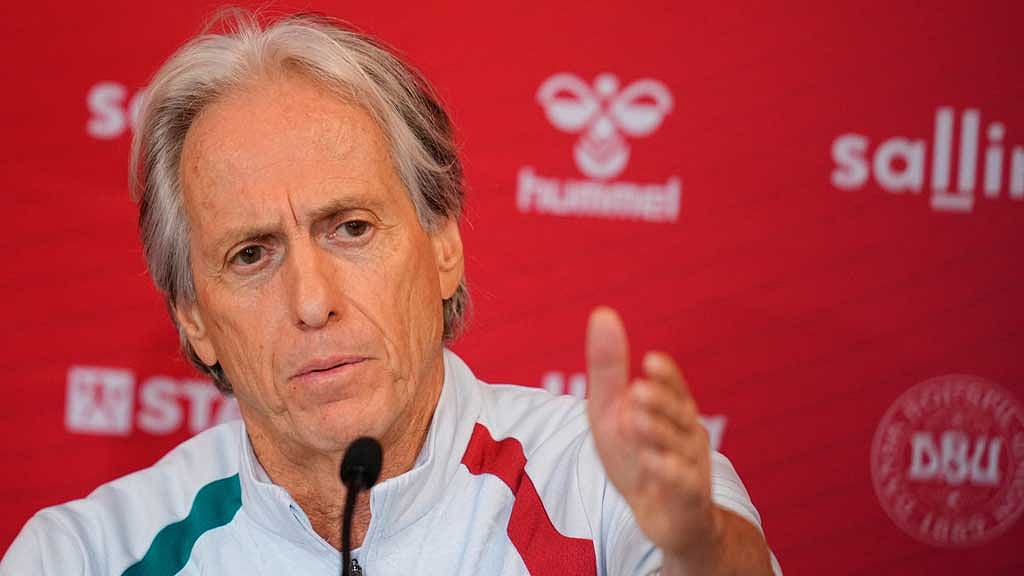
Jesus also said that no great player would enjoy not being selected.
By then, however, Ronaldo was on his way out.
Reuters' subsequent report described Jesus as having acknowledged tension with his captain while continuing to deny that Ronaldo had refused to train.
The 'Truth' Still to Come
Ronaldo's statement later that evening raised more questions than it answered.
He specifically said his decision had come "following the national team manager's press conference" and after a conversation with Proenca.
He did not say he was injured, nor did he announce his retirement.
And he did not identify which of Jesus's remarks had prompted his decision.
Instead, he said he would eventually tell Portuguese supporters "the truth about the reasons" for his departure.
The FPF's statement was similarly limited.
It confirmed Ronaldo's exit and said preparations would continue "as planned, with the remaining 24 players", adding that the delegation remained fully focused on the coming fixtures. RTP reproduced the federation's statement but reported no explanation for Ronaldo's departure.
Portuguese newspaper O Jogo has since reported that Ronaldo has decided not to play for Portugal again, describing the decision as "irreversible" and saying the Sept 24 match against Wales would prove to have been his final international appearance.
That remains O Jogo's reporting rather than an established fact.
Ronaldo himself has not announced his international retirement, and the FPF has not said his Portugal career is over.
His sister Elma Aveiro has also weighed in publicly, resharing a social media post arguing that Ronaldo deserved more respect and criticising his treatment in Portugal.
However, there has so far been little attributable comment from Ronaldo's formal representatives beyond his own statement.
A Relationship Put to the Test
The speed of the rupture is particularly striking because Ronaldo and Jesus arrived at the national team with an established relationship from Al-Nassr.
Jesus had coached Ronaldo throughout the previous season in Saudi Arabia, where they won the Saudi Pro League title together. The relationship went beyond the usual player-coach dynamic - Jesus has said Ronaldo played a significant role in persuading him to return to Saudi Arabia and take charge of Al-Nassr.
When Jesus was appointed Portugal coach in July, he described Ronaldo as "easy to work with" after their year together and said the captain would never be a problem for him or the national team.
Ronaldo, in turn, publicly backed Jesus when they were reunited with Portugal. Before the Wales game, he endorsed the coach's insistence that reputation alone would not determine selection.
He also said conversations with the FPF and Jesus had helped persuade him to continue with Portugal after considering his international future following the World Cup.
Ronaldo had made clear that if he felt he was no longer contributing or no longer wanted, he would be the first to leave.
One week later, he left the camp following a dispute centred on how Jesus intended to use him.
Whether the departure marks the end of a record-breaking international career remains unanswered.