Published : 27 Sep 2026, 07:54 PM
Updated : 27 Sep 2026, 07:54 PM


Mention Rui Pinto's name to Manchester City fans outside the Etihad Stadium and many may not recognise it. But his work has had a profound impact on the club and the wider football world.
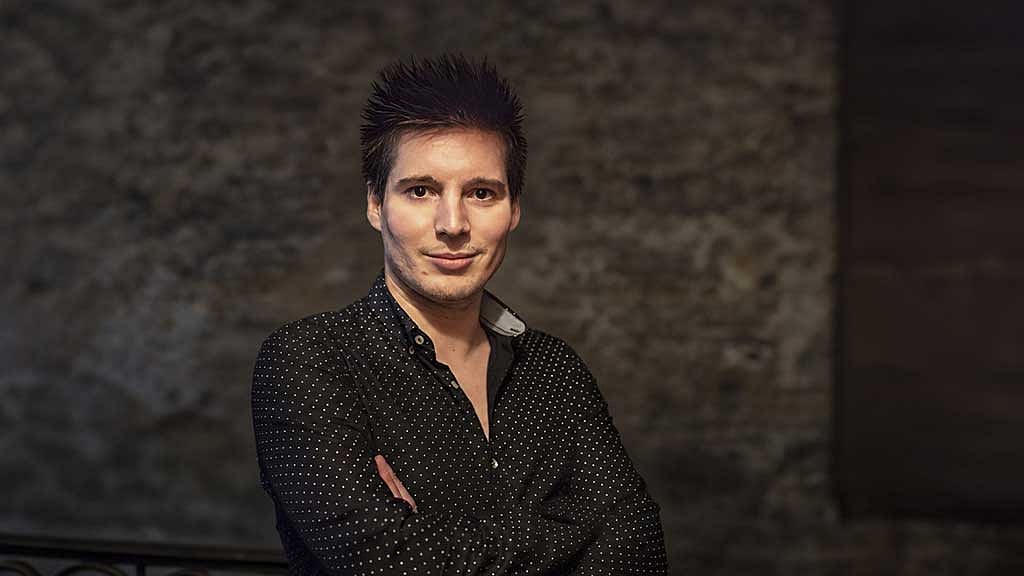
Pinto, a Portuguese computer hacker, founded Football Leaks in 2015 with the stated aim of exposing "the hidden side of football".
Through the website, he published confidential club documents, including internal emails about sponsorship agreements and payments, as reported by BBC Sport.
The revelations eventually became part of the backdrop to the Premier League's case against Manchester City, which involved 115 alleged financial-rule breaches.
The club was found guilty of the majority of those charges in the decision announced on Friday.
But Pinto remains a deeply divisive figure.
To some, he is a criminal who illegally obtained information. To others, he is a whistleblower who exposed the darker side of the sport.
BBC Sport travelled across Europe to explore the life and legacy of the mysterious figure behind Football Leaks, speaking to one of his former teachers, journalists who worked with the leaked material, a Portuguese politician who has campaigned for him to receive whistleblower protection, and a former Manchester City financial advisor.
A Gifted Student from Portugal
Pinto grew up in Vila Nova de Gaia, across the Douro River from Porto. He was raised modestly.
His father Francisco worked in a shoe factory before becoming an antiques dealer, while his mother died when Pinto was 11.
His former geography teacher Mario Falcao remembers him as an ordinary but sociable pupil with distinctive spiky hair.
"Rui was a perfectly normal pupil. He was nice, with his spiky hair, he was quite sociable but not extroverted," Falcao told BBC Sport.
Pinto was good with computers and performed well when he applied himself, although he often missed classes.
Falcao recalls him as a young man who went to the gym and McDonald's with his friends.
His school, Escola Secundaria Almeida Garrett, was well regarded locally and nicknamed "the university".
Falcao said teachers were shocked when Pinto was identified in 2019 as the founder of Football Leaks.
He suggested Pinto's actions might have been influenced by youthful excess, his computer skills, his support for FC Porto and perhaps "the need for justice that young people very often do feel".
From Football Leaks to Millions of Documents
Football Leaks launched in 2015.
Portuguese journalist Antonio Varela was the first journalist Pinto contacted, initially communicating with him under the pseudonym "John".
Varela remembers receiving an email at Portuguese sports newspaper Record and discovering a website containing information he had never seen before.
Although journalists knew the material had been obtained illegally, Varela said publishing it could still be justified by public interest.
"It was ethically complicated," he said, but the information provided a view of football that could not simply be ignored.
Football Leaks initially published revelations involving Portuguese clubs, including Benfica and Pinto's supported club, FC Porto.
Its reach later expanded to some of the biggest names in world football, including Cristiano Ronaldo, Lionel Messi and Neymar.
Pinto eventually established contact with Rafael Buschmann of German magazine Der Spiegel.
After gaining Pinto's trust, Buschmann received tens of millions of documents.
A team of journalists in Der Spiegel's Hamburg headquarters then examined the material, producing a series of major investigations.
Data journalist Christoph Winterbach was part of the team.
He recalled the initial experience as being "like a child in a candy store", describing the opportunity to see internal emails and documents showing how the football industry operated behind the scenes.
But he stressed that the material had to be authenticated and cross-checked before publication, with journalists also assessing whether individual revelations were in the public interest.
Pinto supplied more than three terabytes of information to Der Spiegel and other organisations within the European Investigative Collaborations consortium -- equivalent to about 3,000 copies of the Encyclopedia Britannica.
Winterbach eventually met Pinto in person in 2019 while he was being held in prison in Lisbon.
He later interviewed him again at a secret, high-security location while Pinto was under witness protection.
He described Pinto as friendly, warm, focused and idealistic, calling him "one of the most important whistleblowers that we have in Europe or maybe the world".
Hero or Thief?
Pinto's reputation varies sharply depending on whom you ask.
Former Portuguese politician and diplomat Ana Gomes has testified on his behalf and argues that he should be protected rather than prosecuted.
"What he has exposed is very important. In Portugal, he is definitely by far the most important whistleblower," Gomes told BBC Sport.
She believes Pinto should work alongside judicial and criminal investigators because information he supplied helped authorities in other European countries pursue alleged corruption and criminal activity.
Asked about Manchester City, whose emails were hacked, Gomes said: "I couldn't care less. If they have nothing to hide, what's their problem?"
Retired journalist Jose Carlos Freitas offered a different assessment, saying most people regard Pinto as a thief. Some, he acknowledged, see him as a Robin Hood-like figure because of what he exposed, but he said that view was not shared by the majority.
Portuguese journalist Varela occupies a position somewhere between the two.
He accepts that Pinto obtained information illegally, but believes the material gave society an important insight into European football.
"He did a job for society illegally," Varela added.
Six Years of Extraordinary Legal Consequences
Pinto's life has been far removed from normal since his arrest in Hungary in 2019 and extradition to Portugal.
He has spent periods in solitary confinement, under house arrest and in witness protection.
At his first Portuguese trial, Pinto was convicted in 2023 of attempted extortion, illegal access to data and breach of correspondence. He received a four-year suspended sentence.
A separate case in France resulted in a six-month suspended prison sentence several months later.
His latest trial began in Lisbon in January last year.
At the opening hearing at the Central Criminal Court, Pinto arrived with members of his witness protection team, two of whom remained inside the courtroom. Armed police were also present.
He wore a blue long-sleeved top, jeans and brown boots and had his trademark spiky hair and some facial hair. He was largely expressionless, occasionally shrugging or glancing towards his protection team.
He could not give his address when asked because of security concerns.
Journalist Miguel Dantas said security had been reduced compared with Pinto's first trial, when he wore a bulletproof jacket and snipers were positioned on rooftops.
Rui Patricio, a lawyer representing Benfica, described Pinto in court as "no more, no less than a burglar", arguing that he had obtained information through illegal and condemnable methods and that the ends did not justify the means.
Outside court, Patricio was equally unequivocal: "He's a hacker, period."
Pinto's lawyer Francisco Texeira da Mota accepted that his client was "not a hero and not a saint", but argued that his actions had brought "advantages for society".
The Manchester City Case
The effects of Football Leaks are still being felt a decade after the website was launched.
The Premier League's case against Manchester City is one of the biggest and most significant financial investigations in the history of English football.
Pinto has closely followed the case while living under witness protection since the Premier League brought its charges in February 2023.
His lawyer said the outcome mattered to Pinto because he had lived a difficult life, largely in hiding, after making revelations about football, including Manchester City.
"It would be important for him to feel vindicated that it was useful, that something happened," Texeira da Mota said.
Before the Premier League decision was announced, former Manchester City financial advisor Stefan Borson said the case had potentially significant implications for the club.
He said the core allegations, if proven, could affect the legacy of the Sheikh Mansour era and lead to far-reaching consequences.
But Borson rejected the idea that Pinto should be regarded as a "warrior for freedom".
"We know that what he carried out was a criminal act and he's been prosecuted for it," he said, adding that once hacked documents enter the public domain, it is for authorities to act.
A Lasting Impact
The argument over Rui Pinto is unlikely to disappear.
For his critics, he illegally accessed private information and committed crimes that cannot be excused by the revelations that followed.
For his supporters, the information he exposed revealed practices and relationships within football that might otherwise have remained hidden.
What is beyond dispute, according to BBC Sport's investigation, is the scale of his impact.
From a computer in Budapest, one Portuguese man triggered a chain of events that reached some of the biggest clubs and players in world football, generated international investigations and became intertwined with one of the Premier League's most consequential financial cases.
A decade after Football Leaks first appeared, Rui Pinto remains caught between two descriptions: criminal hacker and whistleblower.
His story, and the debate surrounding it, has become part of football's own history.