Published : 15 Oct 2026, 06:22 PM
Updated : 15 Oct 2026, 06:22 PM


A 150-million-year-old fossil unearthed in southeastern China is rewriting what scientists thought they knew about the earliest birds -- and it turns out one of them may have preferred running to flying.
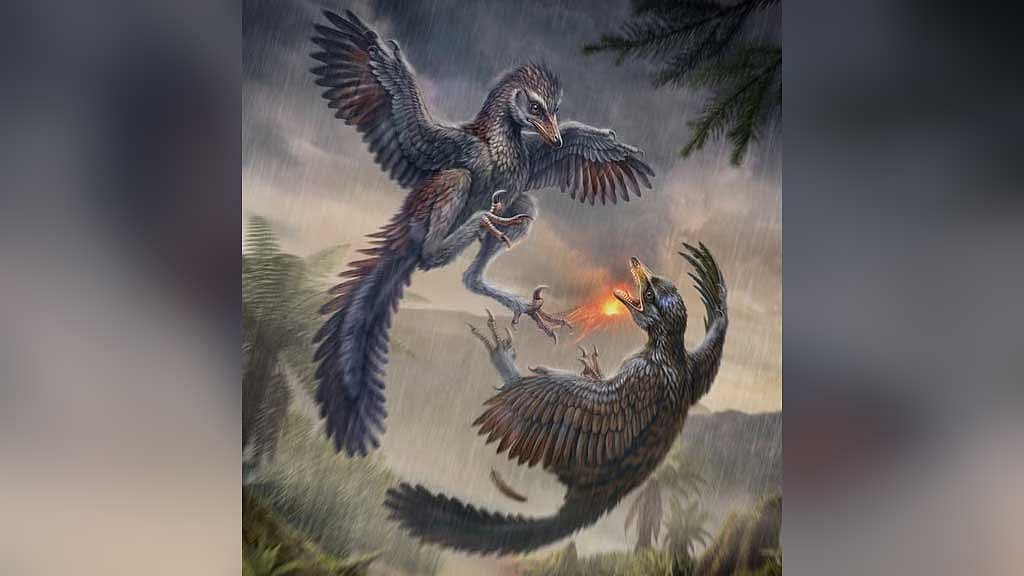
The newly identified species, named Yuezhuornis yangyuanensis, dates to the Jurassic Period and ranks among the oldest-known birds alongside Europe’s celebrated Archaeopteryx.
But unlike its contemporaries, Yuezhuornis appears to have already scaled back its flying ability in favour of ground movement -- more roadrunner than sparrow, The Independent reported.
Its wings, while fully formed, were roughly a third shorter than its legs -- far too small for sustained flight. Comparisons with 377 living bird species found its limb proportions most closely resembled those of ground-dwelling birds such as pheasants.
“Yuezhuornis challenges the traditional paradigm that the avian body plan evolved almost exclusively under the selective pressures of flight,” palaeontologist Min Wang of the Chinese Academy of Sciences’ Institute of Vertebrate Paleontology and Paleoanthropology, who co-led the study published in Nature, told The Independent.
The crow-sized creature, weighing an estimated 800 grams, was a study in contradictions -- sporting bird-like cranial bones and a bird-like pelvis alongside distinctly dinosaurian features: serrated teeth, a long bony tail, and a sickle-shaped claw on its second toe similar to those of Deinonychus and Velociraptor. Wang suggested it may have competed for prey with small non-avian dinosaurs.
Yuezhuornis is believed to share a common ancestor with Archaeopteryx, though it is also possible it represents a separate evolutionary experiment altogether -- one that branched off from the main avian lineage.
University of Edinburgh palaeontologist Steve Brusatte, who was not involved in the study, said the discovery raises as many questions as it answers, adding that Yuezhuornis appears to be a genuine member of the bird evolutionary lineage.
“It surprises us,” Wang said.