Home
+
Published : 11 Jan 2022, 06:35 PM
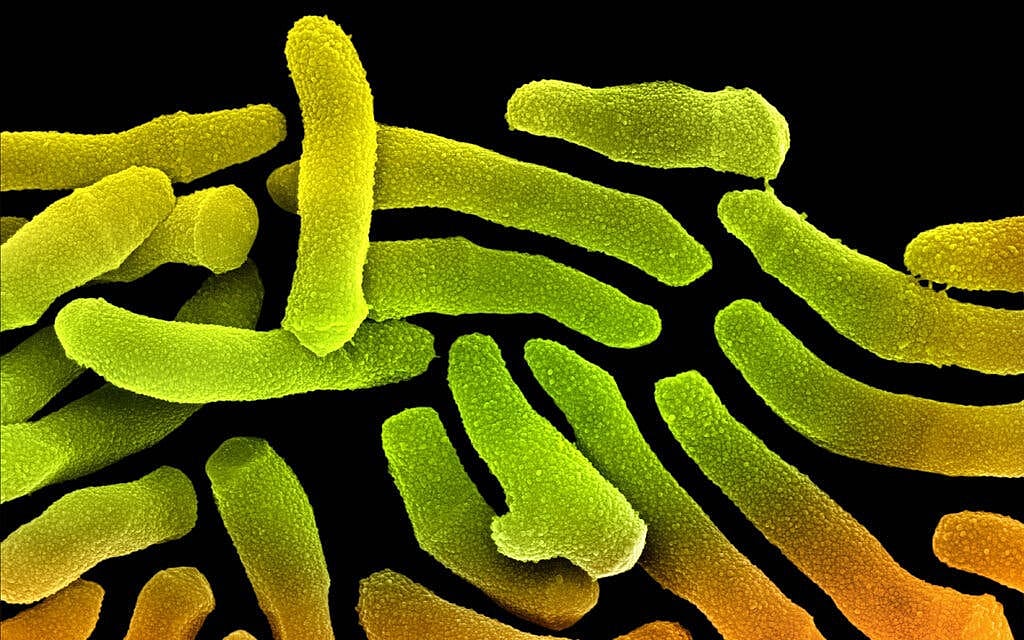
C acnes is naturally occurring, and the most abundant bacteria on skin. Its link to acne, the skin disease, is not clear, said Tami Lieberman, a professor at the Massachusetts Institute of Technology and an author of the new paper. If biologists want to unpack the relationship between your face’s inhabitants and its health, it will be an important step to understand whether varying strains of C acnes have their own talents or niches, and how the strains are distributed across your skin.
To collect their samples, Lieberman and her colleagues used commercially available nose strips and old-fashioned squeezing with a tool called a comedone extractor. They then smeared samples, each a bit like a microscopic glacial core, from within pores on Petri dishes. They did the same with samples from toothpicks rubbed across the surface of participants’ foreheads, cheeks and backs, which picked up bacteria living on the skin’s surface rather than in the pores. They allowed the bacteria to grow, then sequenced their DNA to identify them.
Each person’s skin had a unique combination of strains, but what surprised the researchers most was that each pore housed a single variety of C acnes. The pores were different from their neighbours, too — there was no clear pattern uniting the pores of the left cheek or forehead across the volunteers, for instance.
What’s more, judging from the sequencing data, the bacteria within each pore were essentially identical.
“There’s a huge amount of diversity over 1 square centimetre of your face,” said Arolyn Conwill, a postdoctoral researcher who is the study’s lead author. “But within a single one of your pores, there’s a total lack of diversity.”
What the scientists think is happening is that each pore contains descendants of a single individual. Pores are deep, narrow crannies with oil-secreting glands at the bottom, Lieberman said. If a C acnes cell manages to get down there, it may proliferate until it fills the pore with copies of itself.
This would also explain why strains that don’t grow very quickly manage to avoid being outcompeted by speedier strains on the same person. They’re not competing with each other; they’re living side by side in their own walled gardens.
Intriguingly, these gardens are not very old, the scientists think. They estimate that the founding cells in the pores they studied took up residence only about one year before.
What happened to the bacteria that previously lived there? The researchers don’t know — perhaps they were destroyed by the immune system, fell prey to viruses or were unceremoniously yanked out by a nose strip, clearing the way for new founders.
Lieberman said the finding has implications for microbiome research more broadly. Taking a simple swab of someone’s skin would never hint at the complexity uncovered in this study, for instance. And as scientists consider the possibility of manipulating our microbiomes to help treat disease, the patterns uncovered in this study imply the need for information about the location and arrangement of microbes, not just their identities. In the future, should doctors hope to replace someone’s current skin inhabitants with others, they may need to clean out their pores first.
And could it be that another inhabitant on our faces plays a role in how each pore’s bacteria comes and goes?
“We have mites on our faces that live in pores and eat bacteria,” Lieberman said. What role they play in this ecosystem, as far as the maintenance of gardens of C acnes, has yet to be determined.
©2022 The New York Times Company