


Published : 01 Apr 2016, 10:50 PM
Updated : 19 Oct 2022, 05:11 PM


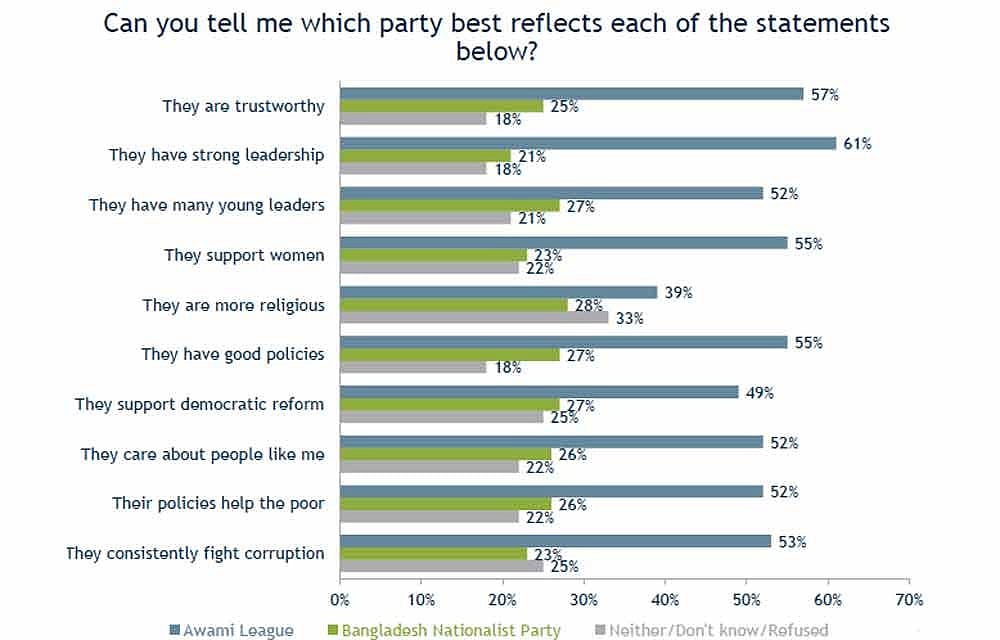
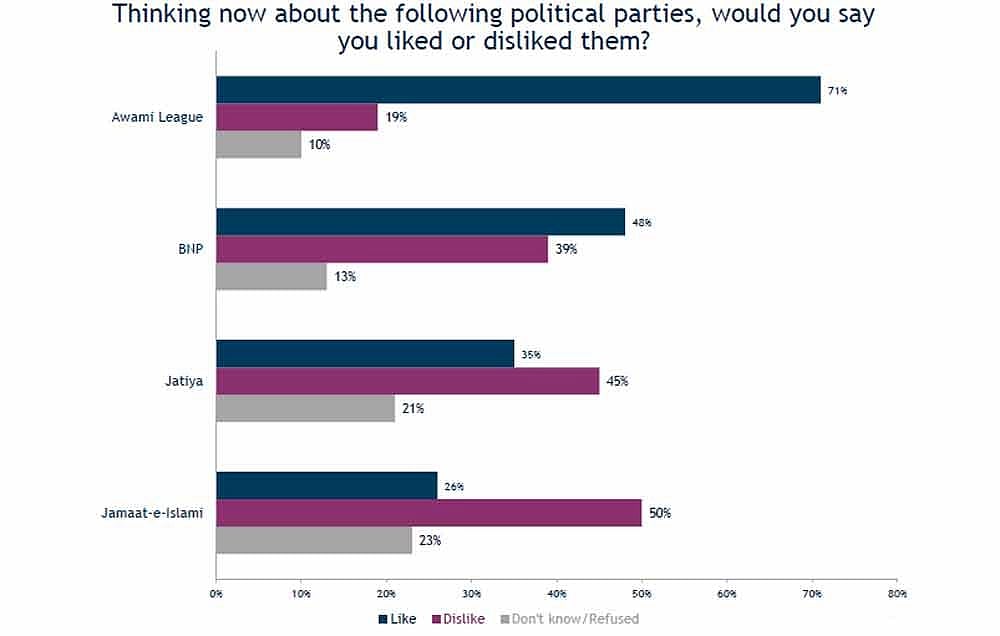
As per the survey, 73 percent of Bangladeshis feel the country is going in the right direction, marking a nine percentage point increase since November 2015 and a 38 point increase over the last two years.
Nielsen-Bangladesh carried out the survey at the behest of US-based International Republican Institute (IRI).
Many consider IRI as the unofficial arm of the right-wing part of the US government and the Republican Party headed by John McCain.
It took the opinions of 2550 respondents, aged 18 and older.
According to the survey report released on Wednesday, overall 83 percent of respondents said the security situation in Bangladesh was very good or somewhat good and 77 percent felt the country was politically stable.
“Respondents were optimistic about the country’s future, including 72 percent who believe their personal economic situation will improve in the coming year, and 65 percent who believe the country is becoming more politically stable,” said the survey report.
It said Bangladeshis listed the economy and security as their country’s biggest problems.
The percentage of respondents, who listed corruption among the most important problems, dropped from 18 to nine percent since November 2015.
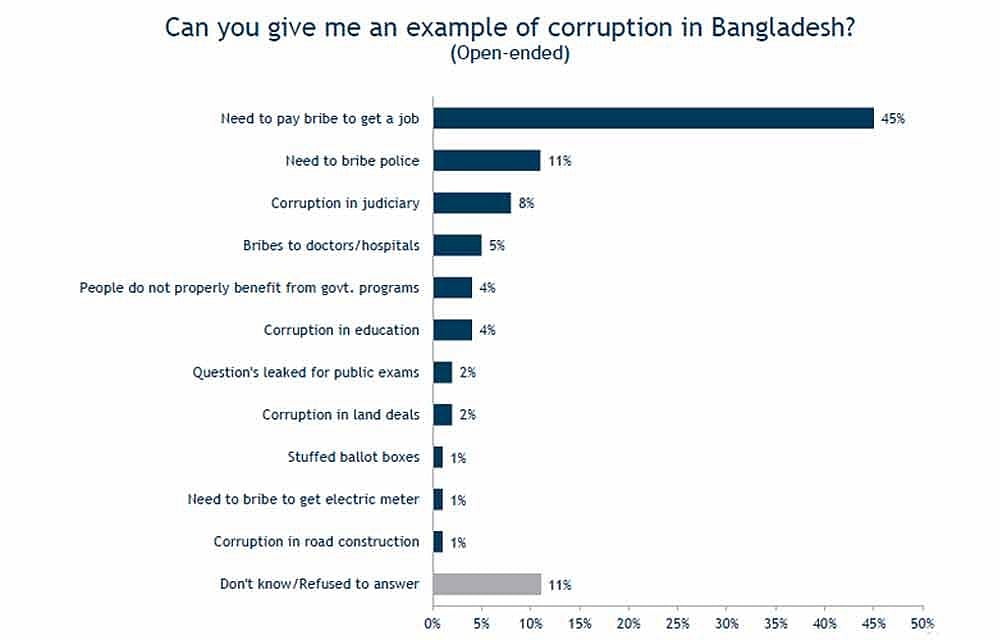
According to IRI’s findings, the top example of corruption in Bangladesh – cited by 45 percent of respondents – was paying a bribe to secure a job.
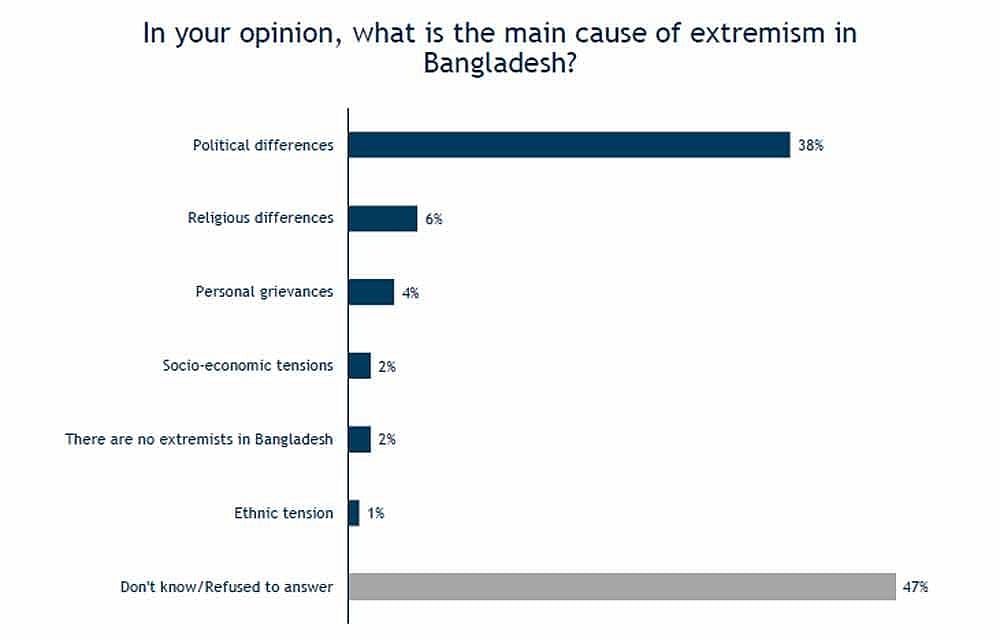
Fifty-three percent of respondents reportedly told the survey that they felt political extremism was a very big problem in Bangladesh while 44 percent felt it was religious extremism.
According to the report, only one percent of respondents said the use of violence was justified while 93 percent said violence was never justified.
The IRI claimed the report was compiled in accordance with international standards for market and social research methodologies.













