


Published : 20 Dec 2019, 03:24 AM
Updated : 17 Oct 2022, 11:50 AM



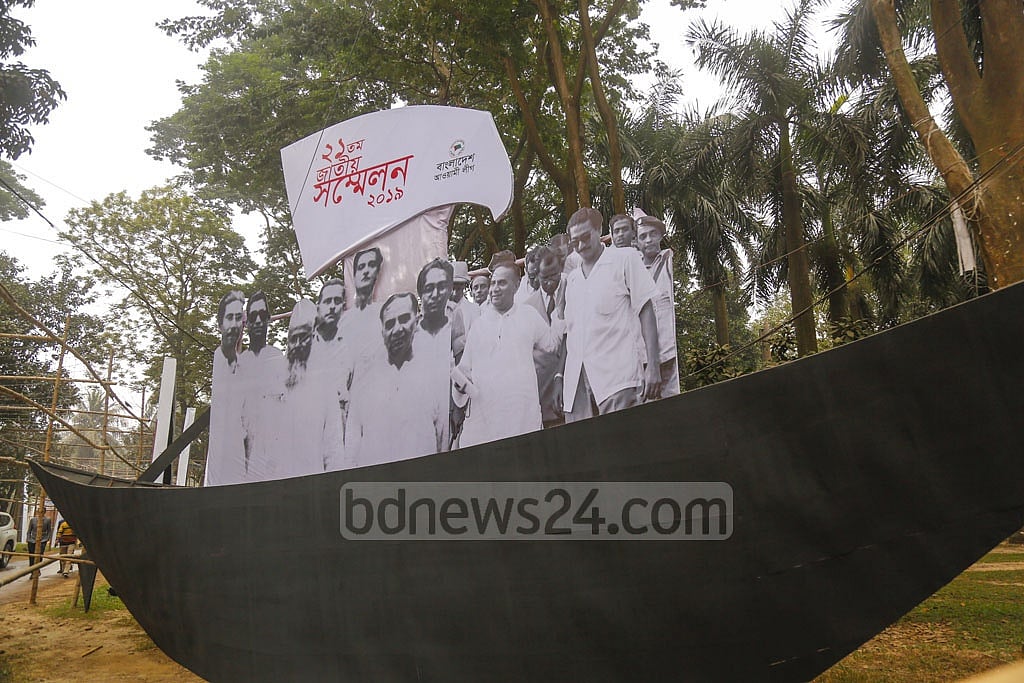
Having spearheaded the 1971 Liberation War, it has been governing Bangladesh for nearly 11 years in a row.
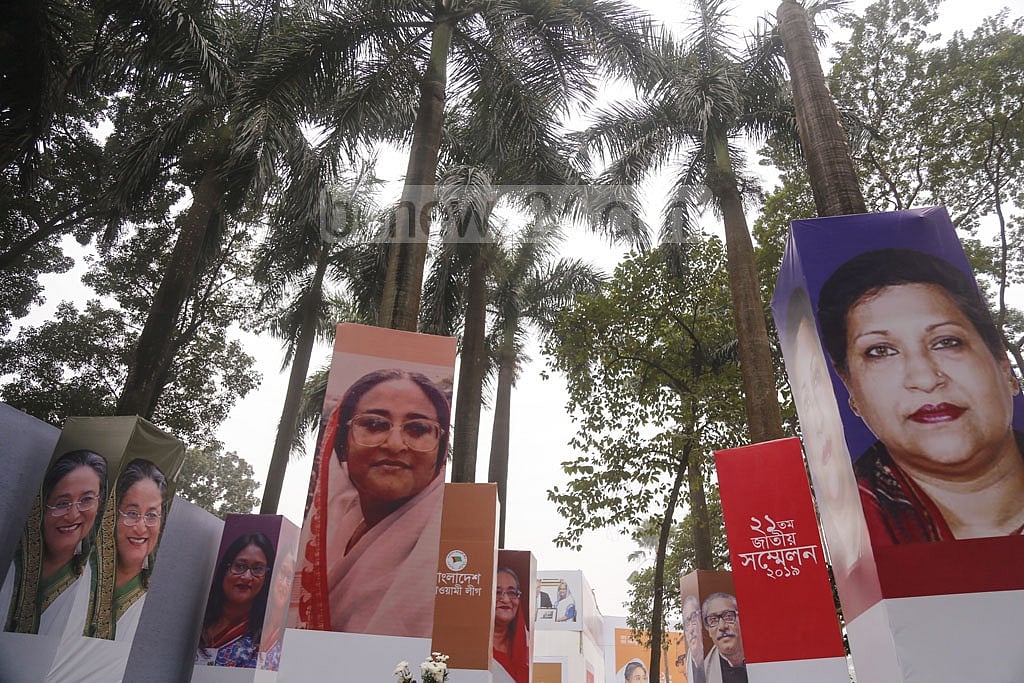
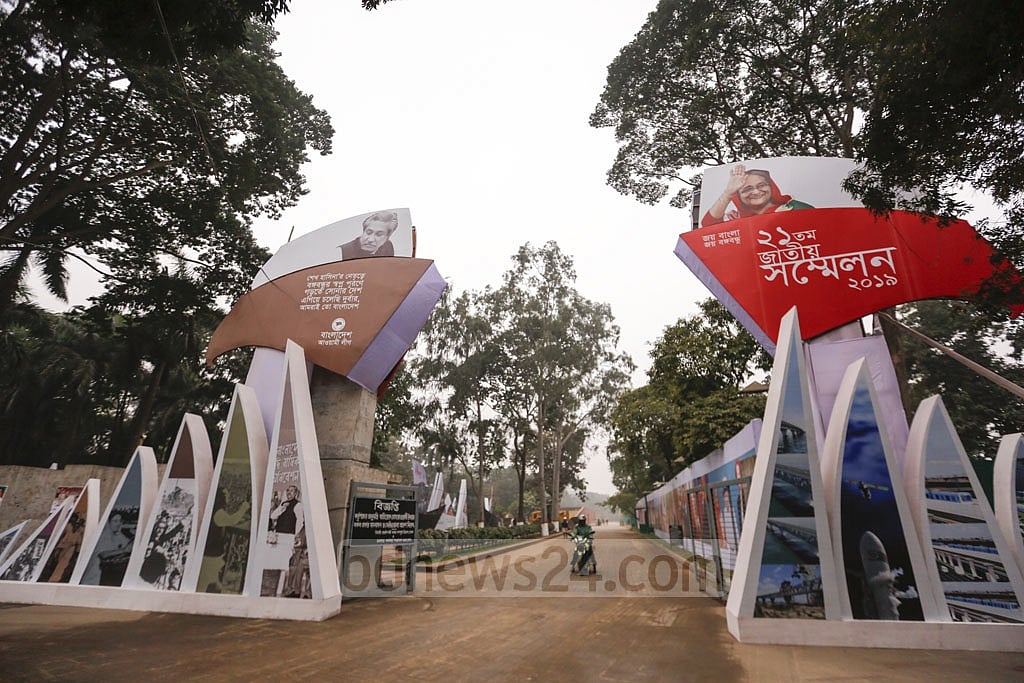
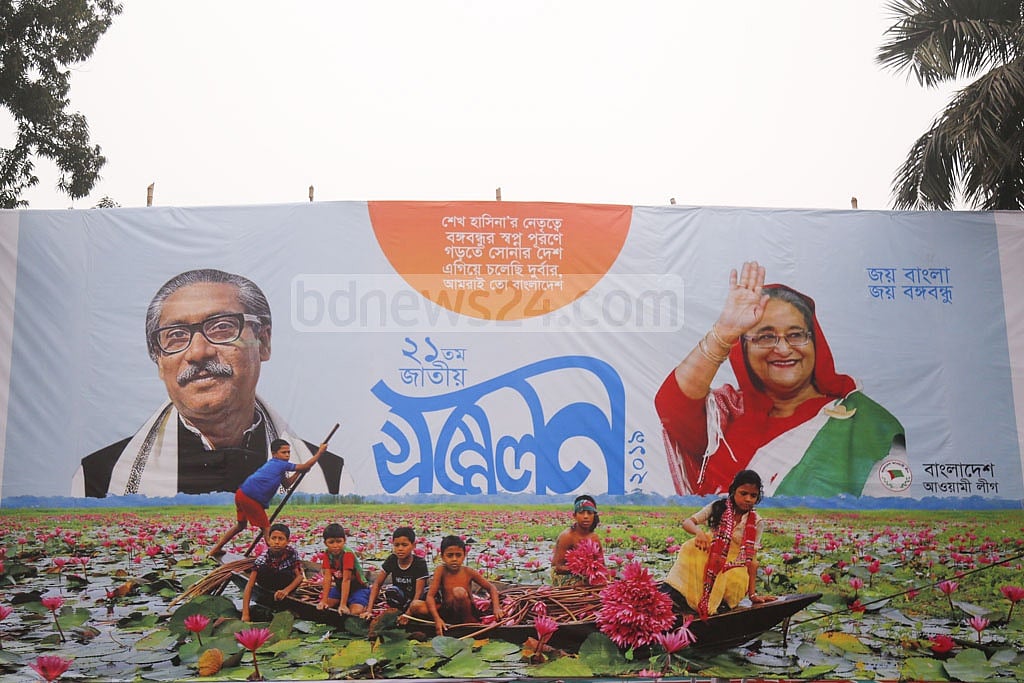
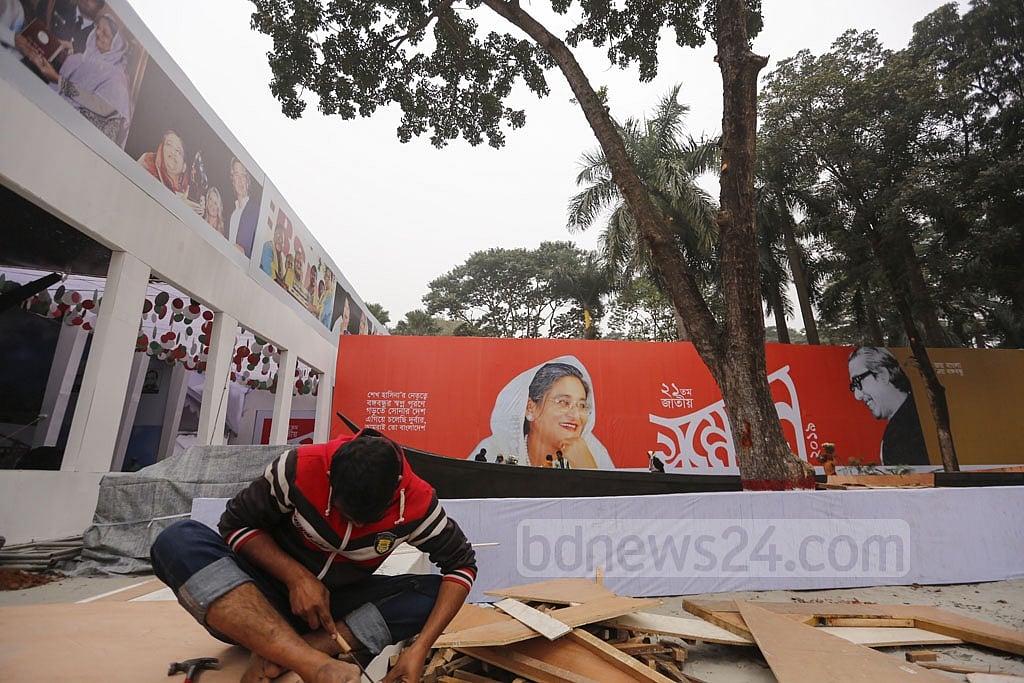
Leaders and activists from up and down the country will gather at the Suhrawardy Udyan in Dhaka on Friday for their 21st National Council.
With no major political rivals in and outside parliament, the party faces the battle of reviving its image in the council as its top leaders have vowed to free it from infiltrators and corrupt members after many senior leaders of its affiliates have been shunted out in a clean-up operation.
The leaders maintain that there is still no alternative to Bangabandhu Sheikh Mujibur Rahman’s daughter Hasina, who has been heading the party for nearly four decades.
She will open the council at 3pm on Friday while the new leaders will be named in Saturday’s council. The councillors are relying on her as well for picking up their new leaders.
Like the previous councils, the general secretary’s post has taken the centrestage again as the leaders and activists are discussing whether Hasina will replace Obaidul Quader.
Quader himself has no clue about it having been in the position for three years.
“Only Allah and the leader (Hasina) know about it. I know nothing,” he said when asked.
The 70 years old party will prioritise bringing up new leaders as per its electoral pledge, Quader said while speaking about the council’s goals.
“Taking the party forward as a force capable of realising our leader’s vision by striking a fine balance between its old and new, tradition and technology, following the agenda she had presented to the country and the nation in the last election will be the main target of this council,” he said.
Quader, who is the road transport and bridges minister as well, believes the Awami League needs to be a strong ruling party besides to fulfil its electoral pledges.
So, it is working to gather strength and be well organised, he said.
“We will present the Awami League to the people as a modern, smart party,” the general secretary remarked.
When The Awami League held its last council in 2016, two years after securing power for another term through an election boycotted by the BNP, Quader was one of the many leaders brought to the fore.
Now after last year’s landslide victory, the party is hit by the casino scam and clean-up operations as many leaders, including its affiliates, have been named in investigations into illegal gambling, tender rigging, extortion, corruption and many other charges while it made a list of thousands of its members identified as “infiltrators” who had joined the party for personal gains only through irregularities.
The leaders taking charge in this council will be given the unenviable task of completing the celebrations to mark the birth centenary of Bangabandhu and the golden jubilee of independence successfully.
The grassroots leaders of the party, who have come to the capital from different parts of the country to join the council, want such leadership that will value the grassroots and stand by them, according to Manikganj Awami League Joint General Secretary Qazi Enayet Hossain Tipu and Chattogram North unit General Secretary Sheikh Ataur Rahman.
“We want leaders with organisational skills who can polish the image of the party and make it dynamic” Tipu said.
In Ataur’s words, the new leadership must be able to continue the development, build on other achievements of the government and frustrate all sorts of conspiracy against the country.
Shamsul Islam Bhuiyan, the president of Sonargaon Upazila unit in Narayanganj, thinks prioritising former leaders of its student wing Bangladesh Chhatra League will give the party a strong base in future.
Dinajpur district unit Joint General Secretary Farukuzzaman Michael expect Hasina to transfuse “new, pure blood” into the party.
The biggest change the Awami League is planning in this council is scrapping the posts of assistant secretaries to the sub-committees of the central leadership as grassroots have been complaining for a long time against those holding these posts.
In the new committee, the central divisional sub-committees will have a president, a member secretary, and five members.
The number of members in the Advisory Council will be increased to 51 from 41.
Asked how much successful the outgoing committee has been, Quader admitted they have failures as well.
“The Awami League workers, moreover the people of the country, will review our successes and failures,” he said.
“We will start a new journey through this council by learning lessons from past mistakes.”
The Awami League was formed on Jun 23 in 1949 at Rose Garden in Old Dhaka's KM Das Lane. Among those instrumental in its formation were Moulana Abdul Hamid Khan Bhashani, Huseyn Shaheed Suhrawardy and Shamsul Haq.
Throughout the 1950s, a young Sheikh Mujibur Rahman, who would come to be known as Bangabandhu, carried the party's organisation to every nook and corner of erstwhile East Pakistan.
Bhashani left the party in 1957 to form the National Awami Party.
Following the death of Suhrawardy in December 1963, Sheikh Mujib revived the Awami League, which had become part of the National Democratic Front after the imposition of martial law in Pakistan in October 1958.
In 1966 the Awami League announced the Six-Point programme for regional autonomy.
Bangabandhu was put on trial, along with 34 others, in the ‘Agartala conspiracy case’ in June 1968 but was released after a mass uprising in February 1969.
Under Bangabandhu’s leadership, the Awami League won a majority of seats, 167 out of a total of 313, in Pakistan’s first general election in December 1970.
Prevented from assuming power by the Yahya Khan military junta, the party was forced into an armed movement for independence by a brutal military crackdown in March 1971.
Afterwards Bangabandhu was arrested and flown to West Pakistan to stand trial on charges of waging war against Pakistan.
The War of Independence, led by Acting President Syed Nazrul Islam and Prime Minister Tajuddin Ahmad, culminated in the emergence of a sovereign Bangladesh in December 1971.
Bangabandhu returned from Pakistan in January 1972 and took over as prime minister.
He was killed with most of his family in a brutal military coup on 15 August, 1975.
Until Hasina was elected leader of the Awami League in May 1981, the party was divided into three factions, with no single powerful figure to lead it out of the doldrums.
Her arrival reunified the party and it went on to wage a long struggle against military dictatorships until December 1990.
The Awami League returned to power in 1996 after 21 years. After the five-year term, it lost the 2001 polls but returned to power with a huge majority in Dec 2008.
The party is now ruling the country for a third successive term after winning the December 2018 polls.













