Published : 30 Apr 2020, 12:20 PM
Updated : 17 Oct 2022, 11:06 AM


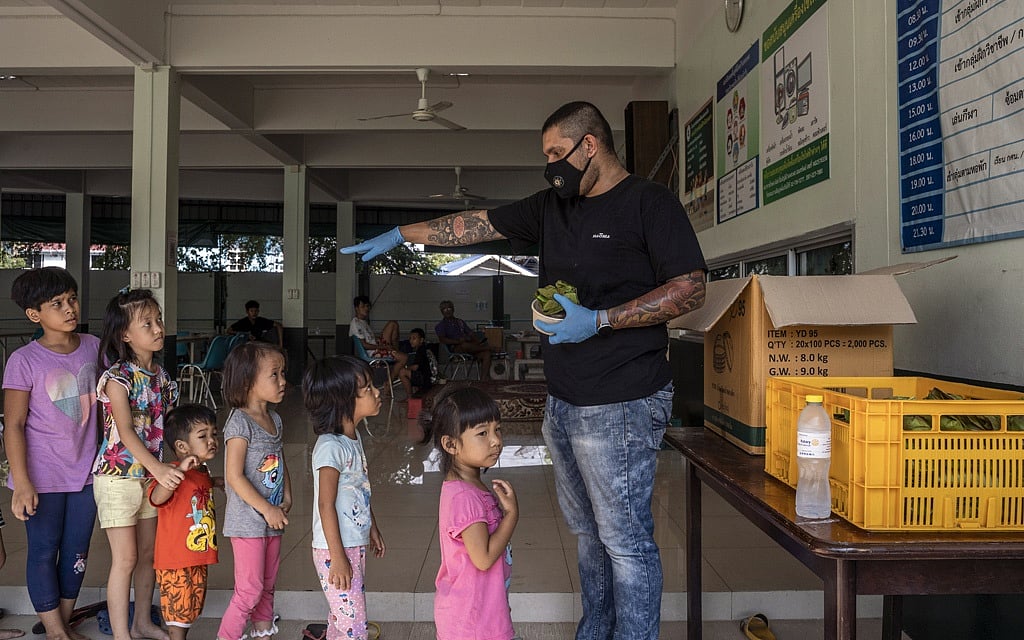
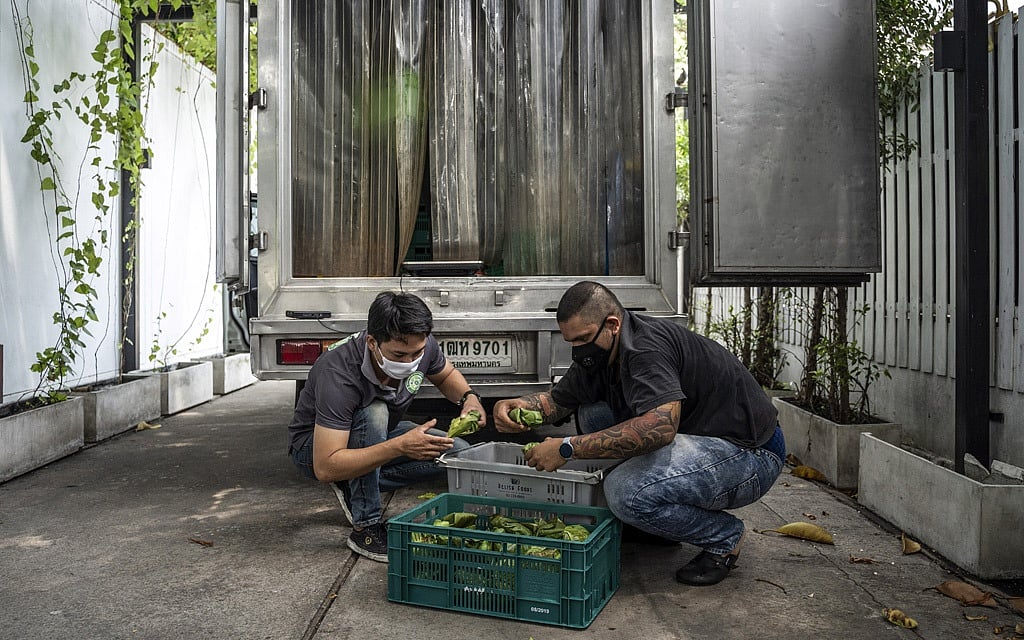
Deepanker Khosla kept cooking, too, but he has eschewed the foams, emulsions and other flourishes of molecular gastronomy that normally flavour his cuisine. Instead, his kitchen, staffed largely by migrants from Myanmar, is turning out hundreds of banana-leaf packets of rice and vegetables spiced with ginger and turmeric to enhance immunity.
Every day, hundreds of Khosla’s rice bundles are delivered to Bangkok residents who are out of work and, sometimes, out of food.
“This isn’t the time for caviar and champagne,” he said. “People are struggling to survive.”
Across the world, the devastation of the coronavirus is felt not only in intensive care units but also among vulnerable populations that have been propelled below the poverty line by the pandemic.
While many in the restaurant business have been impoverished by forced closures, a band of high-end chefs have capitalized on their celebrity to bring food to those who need it. In the United States, José Andrés, whose non-profit helped feed people in hurricane-ravaged Puerto Rico, is trying to sustain American children who depended on school lunches that are no longer being served because of the coronavirus lockdown.
Like many other chefs, Khosla, who was born and raised in India, depends on migrant workers to peel potatoes, wash fish knives and apportion servings of duck mousse with cumin leaf at his high-end restaurant, Haoma.
In mid-January, Thailand was the first country to confirm a case of the coronavirus outside China — a tourist from Wuhan, the city where the outbreak is thought to have begun. When a lockdown began two months later amid an uptick of cases imported from Europe, Japan and the United States, Thailand’s tourism sector, responsible for more than 10% of the country’s gross domestic product, was devastated.
The first to be let go from restaurants, bars and hotels were migrants, who have no protection from social safety nets and can be fired more easily. In the food and beverage industry, many of these foreign labourers are from the Nepali ethnic minority in neighbouring Myanmar.
Khosla set up an online campaign for donations and switched from serving neo-Indian cuisine at his restaurant to the next day churning out meals for out-of-work migrants and, later, poor Thais as well.
Today, the restaurant, in a leafy warren of lanes in residential Bangkok, looks more like a food distribution station at a refugee camp than the native habitat of concassés and sabayons. Chilies dry on a tabletop, while bags of rice are stacked up near the entrance to the urban farm where Khosla nourishes herbs and salad greenery with recycled rainwater.
“Food is food,” said Vishvas Sidana, director of food and beverage at Haoma, who trained as a sommelier. “We cook what’s needed.”
Restaurants famously operate with unforgiving profit margins. But Khosla said an understanding landlord, who waived his rent, and generous customers, who donated to his online campaign, have shielded him from having to fire any of his staff of 32.
Each banana-leaf meal from his kitchen costs around 60 cents to make and distribute. To guard against the tropical heat, the food contains chilies and other aromatics that act as natural preservatives, he said. He avoids meat, which spoils easily.
Khosla, 30, grew up in the multifaith city of Prayagraj, formerly known as Allahabad, in north India, where his family found shelter after having fled what is now Pakistan during the tumult of the partition of South Asia in the late 1940s.
“I grew up with stories of refugees,” he said. “We’re all migrants.”
His mother fed him well, as mothers often do. After graduating from high school, Khosla planned to join the armed forces, but his knocked knees foiled him. He went to culinary school instead.
“Being a chef is a low-grade job in India,” he said. “There’s no dignity.”
Moving to Bangkok, Khosla worked as an executive chef at a modern South Asian restaurant with sleek lighting and fancy kebabs. Then he started a food truck, driving around Indochina offering fish tikka tacos and lamb biryani quesadillas. He got a lot of tattoos, mostly of Hindu gods.
The chef of the high-end Haoma restaurant, Deepanker Khosla, right, packs meals with one of his Burmese migrant worker cooks, to be handed out to migrants impacted by the coronavirus outbreak in Bangkok on April 7, 2020.
Thailand had the widest wealth gap among 40 major economies surveyed by Credit Suisse, and its poverty rate was climbing even before the coronavirus hit. About 4 million foreign migrants fill some of the lowest-paying jobs, toiling in construction, the seafood industry and domestic work.
Tens of thousands of ethnic Nepalis from Myanmar, many of whose forebears migrated there during the colonial era as soldiers or laborers for the East India Company, work in the food and beverage sector in Bangkok. Most lack citizenship in Myanmar and subsist in a stateless netherworld where they lack rights both at home and in their foreign workplace.
Khosla employs 12 Nepalis, and he can communicate easily with them because of the linguistic similarities between Hindi and Nepali. Overnight, the lockdown in Bangkok left many in the migrant community without jobs.
Lachu Man, who has worked in Khosla’s kitchens for seven years, said that his father, who had a job as a kitchen hand, and his wife, employed as a nanny, both are now jobless in Bangkok.
“We are in big trouble,” Man said.
Khosla said his initial attempt to encourage others to join his meal charity, in a WhatsApp chat group for top Bangkok chefs, created barely a ripple.
“Just one ‘Oh, that’s a great idea,’” he said. “And then a big, fat silence from the rest.”
A few other high-end restaurants in Bangkok have now joined the initiative, called No One Hungry, and each day a local charity partner delivers around 400 meals to slums, orphanages and other places in need.
On a recent afternoon, Khosla, wearing a face mask that was soon saturated by sweat from the 97-degree heat, handed out banana-leaf bundles to a packed line of children whose migrant parents are in prison. The children brought their palms together and raised them to their foreheads in the prayerful Thai way. They took the packets. A few peeked inside.
“It’s good,” Khosla said. “It nourishes the soul.”
c.2020 The New York Times Company