


Published : 19 Dec 2019, 12:23 PM
Updated : 17 Oct 2022, 11:50 AM


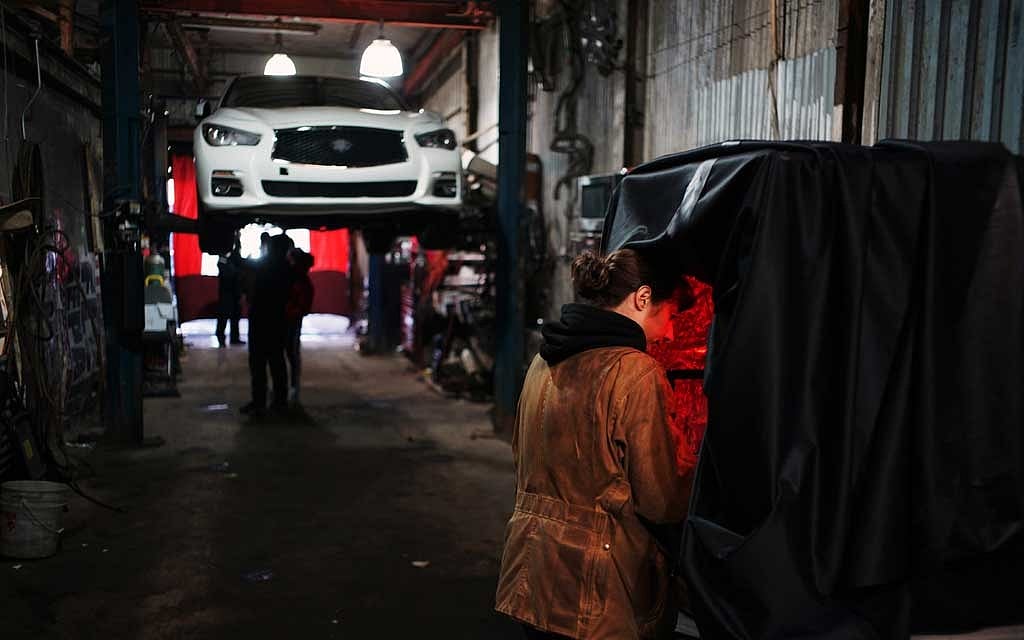
Mechanics delve deep under car hoods, and hawkers barrage drivers with quick, cheap repair offers. Pneumatic tools squeal over the banter of Spanish-speaking mechanics. The pungent aroma of epoxy wafts out of auto body shops and mingles with the savoury smells from Latin food carts that ply the muddy, puddled roadways.
“This kind of place doesn’t exist anywhere else,” said Rahat Khan, whose repair shop is squeezed into a row of similarly narrow hovels.
This is the obscure automotive shantytown known as Willets Point, the largest collection of auto and salvage shops in New York City, one that is flanked by far more prominent neighbours: Citi Field, La Guardia Airport and the tennis centre where the US Open is held each year.
City officials have long considered the grimy industrial area an eyesore and a waste of prime real estate with the potential to become New York’s next gleaming neighbourhood.
Their latest attempt is a megaproject first unveiled a dozen years ago but delayed by revamping, legal wrangling and bitter opposition from the many immigrant workers for whom the area has long been an insular, close-knit heaven.
But now, with work finally beginning, the curtain seems to be lowering at last on this wedge-shaped enclave nicknamed the Iron Triangle.
“Practically, we are in limbo. They have us cornered,” said Ever Rivera, 39, a Salvadoran immigrant with five children who works as a technician at a tiny outpost called Carlos Auto Electric.
Rivera’s arrival in New York, like other workers’, was eased by a job in Willets Point.
The area has been a vital source of blue-collar work, especially for newcomers who lack English skills, proper documentation and certification as an auto mechanic.
Instead of streets paved with gold, new immigrants find them lined with tire joints, junkyards, hubcap sellers, muffler shops, and brake and transmission specialists.
“It may not be pretty, but this place has always offered hardworking immigrants a shot at the American dream,” said Sam Sambucci, who owns an auto salvage company and the property under it.
The city has said virtually nothing about when it will buy and clear the rest of Willets Point to make way for later phases of the project on the northern expanse where the remaining shops sit.
So the several hundred workers there remain on borrowed time, watching anxiously as construction crews arrive every day to test soil on land that has been emptied, one of the first steps to preparing the area for the construction to come.
The city bought that section piecemeal from numerous property owners several years ago, resulting in the eviction of some 200 businesses and about 1,700 workers.
The roughly 75 remaining shops are mostly on month-to-month leases on privately owned parcels. The owners enjoy cheaper-than-average rents here, along with a synergy with neighbouring businesses that would be difficult to replicate.
Most are unsure where they would relocate to, including Khan, who pays a manageable $2,500 a month for a shop the width of a one-car garage. He would pay two or three times that elsewhere, he said.
“When they close this place,” he said, “I’ll probably just buy and sell cars to make money.”
Roberto Bolañoz, 57, an Ecuadorean immigrant with 27 years repairing cars in Willets Point, has his eye on a spot in New Jersey.
Arturo Olaya 58, a Colombian immigrant who runs an auto upholstery shop inside of a repurposed shuttle bus parked on the street, said he would try his luck in Florida.
As for the area itself, it will join other storied industrial hubs that have disappeared, including Printers Row, much of the garment district and the meatpacking district, all of them in Manhattan.
Willets Point has been home to auto repair shops since at least the 1930s and has long played a servile role in the city.
A century ago, it was a dumping ground for coal ash and was immortalised as the “valley of ashes” in F Scott Fitzgerald’s “The Great Gatsby.” It was also used as a base for metal works for the 1939 World’s Fair.
In the 1960s, business owners hired a young Queens lawyer named Mario Cuomo, years before he became the governor of New York, to stop a development led by master planner Robert Moses, who once described the area as an “eyesore and a disgrace to the borough of Queens.”
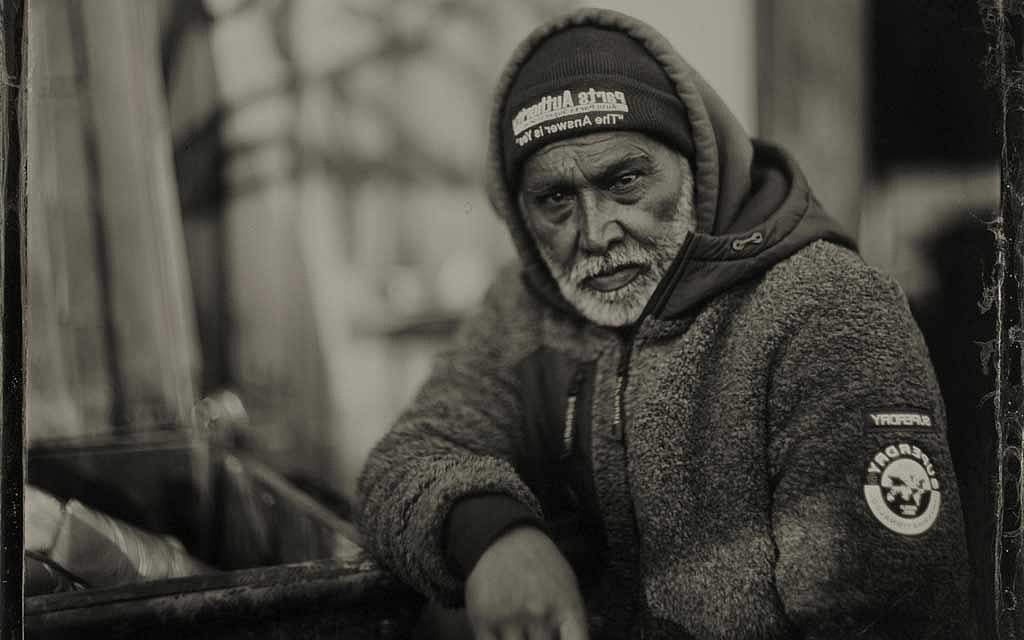
Rahat Khan, 61, a Pakistani immigrant, at his auto repair shop in the Willets Point neighbourhood of Queens on Nov 20, 2019. The New York Times
As developable land in the city becomes an increasingly rare and lucrative commodity, the prospect of change seems more undeniable for these 60 acres next to Flushing Bay that lie between bustling commercial areas in Corona and Flushing, where sleek new residential towers overlook Willets Point.
The streets, many unpaved, lack sidewalks, sewers and storm drains. They are potholed and littered with trash, discarded cars and auto parts. But those same streets also buzz with a workforce that is a brotherhood of hardworking men — along with a few female mechanics — who toil long hours in flimsy, open-air garages.
There is Rodrigo Ramos, 37, a shop owner who met his wife, Lina Tapia, 35, when she was selling food in Willets Point from a minivan. Both immigrants from Mexico, they now own a house in East Elmhurst where they are raising two children.
“It’s a small village here,” Ramos said. “Everyone knows each other.”
Tapia said shop owners and workers were like an extended family and customers were often referred to neighbouring businesses, making the area a self-contained mini-economy.
“Although other people are our competition, we are friends,” she said.
Here the sounds of mufflers being hammered into place vie with the squeals of pneumatic wrenches and, often, the roar of the crowd from a Mets game at Citi Field.
The few women who work here mostly sell food from carts and from the back of minivans, including homemade Latin dishes of oxtail stew, yucca, sweet plantains, and rice and beans.
Mechanics in grease-smudged jumpsuits grab lunch and sometimes kick a soccer ball around crumpled cars and feral cats as airliners droop overhead bound for La Guardia.
The shops are a far cry from the scrubbed look of franchises like Jiffy Lube or Pep Boys.
They rely on loyal customers who arrive with cash and hopefully some fluency in Spanish. The customers leave their good shoes at home and go from shop to shop along Willets Point Boulevard for a bargain repair price.
“This is the mecca for car repair in New York,” said Naqib John, 22, a college student from Queens who had just negotiated for a replacement side-view mirror for his 2014 Toyota Camry: $75 cash.
“It’s like a flea market for car repair,” he said, “so you can comparison shop for a much cheaper price.”
As Khan, 61, a Pakistani immigrant who lives in Woodside, Queens, said, “Everything is here in one location, so people can walk door to door.”
Customers tend to be yellow cab and livery drivers, other car dealers and repair shop workers, and people dropping off totalled cars to be stripped.
“It’s not Park Avenue, but anywhere else is going to charge you two or three times the price,” said Michael Nieto, 55, who sells auto parts out of his SUV.
But outside this self-sustaining world, Willets Point has long been coveted real estate.
In 2007, then-Mayor Michael Bloomberg announced a $3 billion project to transform Willets Point into the city’s “next great neighbourhood.”
It included 5,500 apartments, a convention centre and office space. But after the proposal was expanded to include a large shopping mall next to Citi Field, a lawsuit essentially ground the project to a halt two years ago.
Last year, Mayor Bill de Blasio announced an updated plan in partnership with the Related Companies and Sterling Equities, whose principals own the Mets.
The earliest phase includes 1,100 units of affordable housing and a new elementary school, followed by a larger phase that, under one possible outcome, would include a 25,000-seat soccer stadium, a hotel, retail space, residential buildings and a high school, said officials with the New York City Economic Development Corporation, which is overseeing the project.
Agency officials said plans were still unclear as to what might be built — or when — on the land where the remaining auto shops are. They noted that the city provided roughly $13.5 million in relocation assistance, job placement and counselling programmes for shop owners and workers on the portion already cleared for development.
Many workers left Willets Point several years ago as part of a relocation deal with the city to start an auto repair mall in the Bronx. The deal fell through, leaving shop owners stranded with major financial losses and no alternative places to set up their businesses.
This only deepened the workers’ long-standing mistrust of city officials. Relations worsened recently after city officials shut down several roads in the area to prepare for construction, hampering access to the repair shops.
Many complained that the street closures have confused customers and choked off much of their walk-in business.
Although the city attributed the closings to construction, some business owners suspect they were a deliberate tactic meant to lower property values and facilitate evictions and acquisitions for development.
“The city only closed the streets so we’ll lose business and run out of money to fight them,” said Irene Prestigiacomo, 76, who owns a parcel that is home to seven repair shops. “They’re pushing us against the wall by creating an environment where it’s impossible to keep fighting.”
The street closings have alarmed Carolina Velásquez, 42, a Salvadoran immigrant and an owner of a deli that has become difficult to reach. The detours started shortly after she put down a $30,000 security deposit to extend her lease. Business has died off so much that she often has trays of food she gives away to workers in the area.
“Our job is being thrown to the trash,” she said.
Rodrigo Sinchi, 52, whose transmission repair shop stood on what had been a busy thoroughfare, looked at a newly placed barricade that has essentially left his shop jammed into a dead end cluttered with junked vehicles.
“We’ve been waiting for the construction for a long time, and now that they’re starting, we have to plan our next move,” said Sinchi, an Ecuadorean immigrant who was rebuilding a transmission for a Lincoln Town Car.
“We know they’ll want this property next, so we have no future here,” he added.
In Sambucci’s view, the city has intentionally avoided installing basic utilities like sewers and storm drains in order to keep the area a no man’s land ripe for development, even while business and property owners continue to pay property taxes.
“They’ve always neglected this area so they can call it blighted and call this an urban renewal project,” said Sambucci, whose family bought land here in 1951 and set up a salvage business.
As for Rivera, he said workers were no longer relying on city officials to help, or even disclose the timetable.
“We are just simply waiting for what God says,” he said.
c.2019 The New York Times Company













