


Published : 23 May 2019, 09:02 PM
Updated : 08 Apr 2022, 02:11 PM


His brand of brawny Hindu nationalism and pro-business policies seem to have played stunningly well, despite concerns that he had not delivered on promises to create jobs.
With most of the votes counted, Modi was on track to be the first Indian prime minister to lead his party to majorities in Parliament in back-to-back elections in nearly 50 years.
Many Indians see Modi, 68, as a nationalist icon. He has confronted China, nearly gone to war with Pakistan and brought India closer to the United States. He calls himself India’s chowkidar — watchman — and his success mirrors the rise of right-leaning populist figures around the world.
While he has built a reputation as a crusader who speaks the common people’s language, his detractors say his policies are pulling India’s delicate social fabric apart. His commitment to giving more power to the country’s Hindu majority has struck fear in the Muslim minority and left the country increasingly polarised.
Under him, mob lynchings have shot up, Muslim representation in Parliament has dropped to its lowest level in decades, and right-wing Hindus have felt emboldened to push an extreme agenda, including lionising the man who shot to death the independence hero Mohandas K. Gandhi.
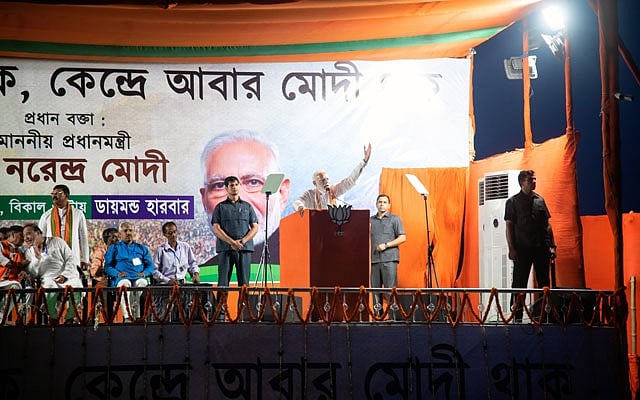
But in Indian politics today, there is no other figure who can approach Modi’s aura. His Bharatiya Janata Party, by far India’s richest and most aggressive, has built what critics call a personality cult around him, and in speeches he routinely refers to himself in the third person.
In contrast, Rahul Gandhi, the leader of the opposition Congress Party and the scion of a long political dynasty, is widely perceived, even by some supporters, as cultivating too gentle an image. And though his party cast itself as a unifying force, the results indicated that Congress, once dominant, had suffered a second consecutive disastrous loss.
The election turnout was one for the history books — the largest democratic exercise ever. In seven phases over 39 days, more than 600 million Indians cast ballots at 1 million polling stations, spread across densely populated megacities and far-flung villages.
Experts say the force of Modi’s personality, with many Indians intensely for him or against him, drove turnout to 67%, the highest this nation has ever seen.
© 2019 New York Times News Service













