


Published : 15 May 2020, 08:44 AM
Updated : 17 Oct 2022, 11:07 AM


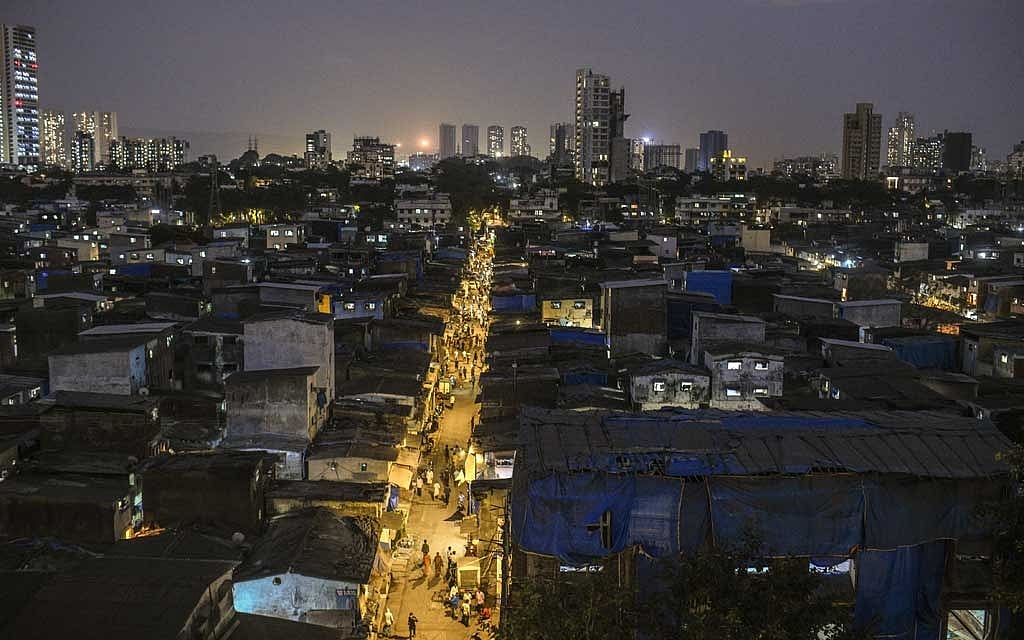
It is India’s most densely populated city, a scraggly peninsula framed by the Arabian Sea and other waterways, a metropolis of towering apartment blocks and endless slums, a city of oversize dreams and desperate poverty, all sandwiched together. This is where Asia’s richest man, Mukesh Ambani, built a 27-story single-family home. This is where “Slumdog Millionaire” was filmed and set. Indians call it Maximum City.
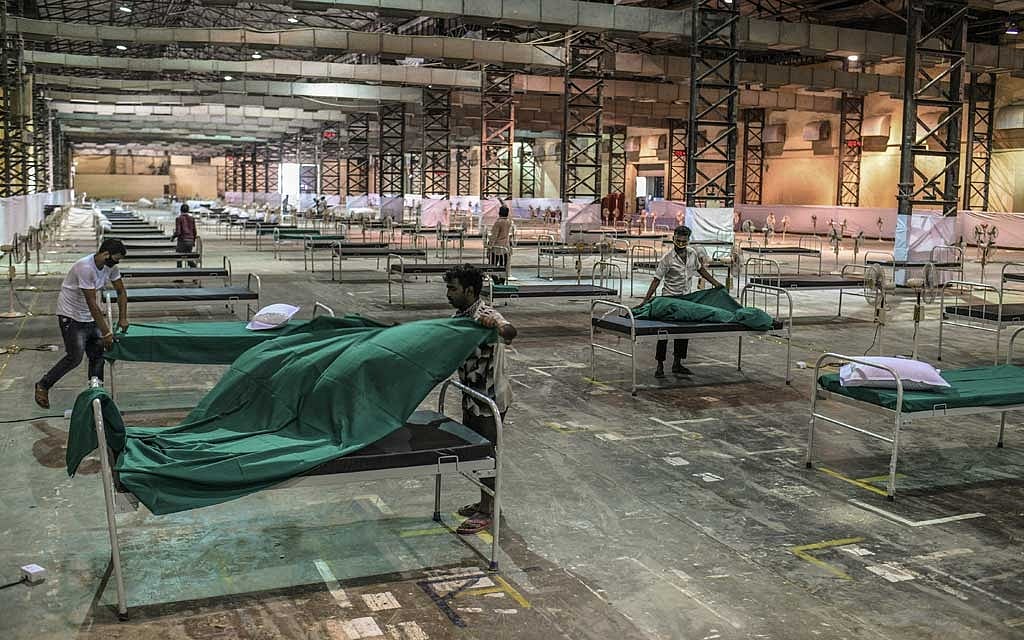
A quarantine center is prepared in Mumbai, May 6, 2020. The New York Times
Hospitals are overflowing with the sick. Police officers are exhausted enforcing a stay-at-home curfew. Doctors say the biggest enemy is Mumbai’s density.
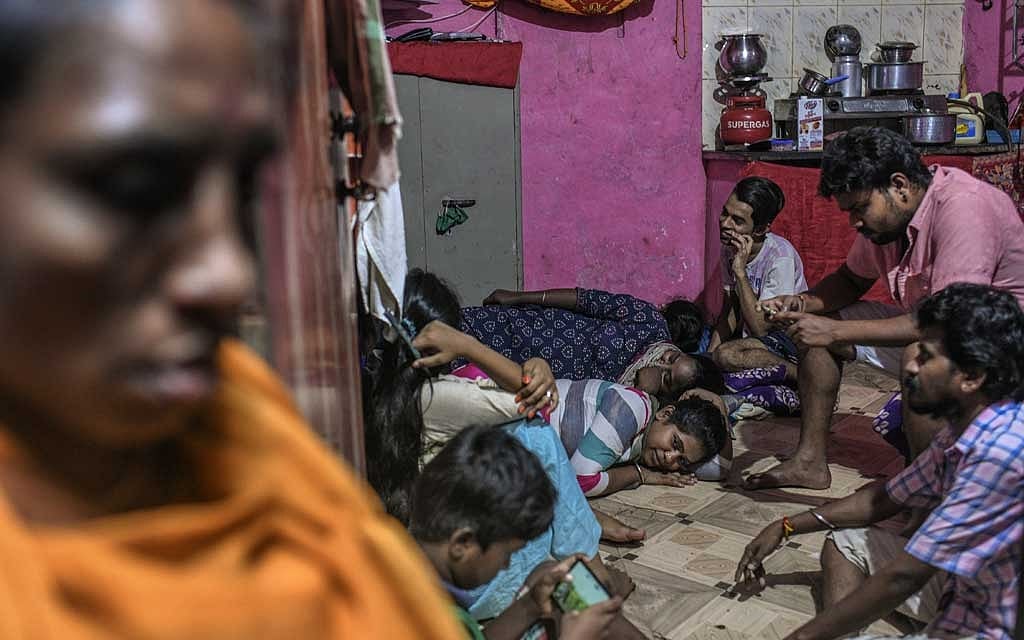
Particularly in the city’s vast slum districts, social distancing is impossible. People live eight to a room across miles and miles of informal settlements made of concrete blocks and topped with sheets of rusted iron. As the temperatures climb toward 100 degrees Fahrenheit, many can’t stand to be cooped up anymore and spill into the streets.
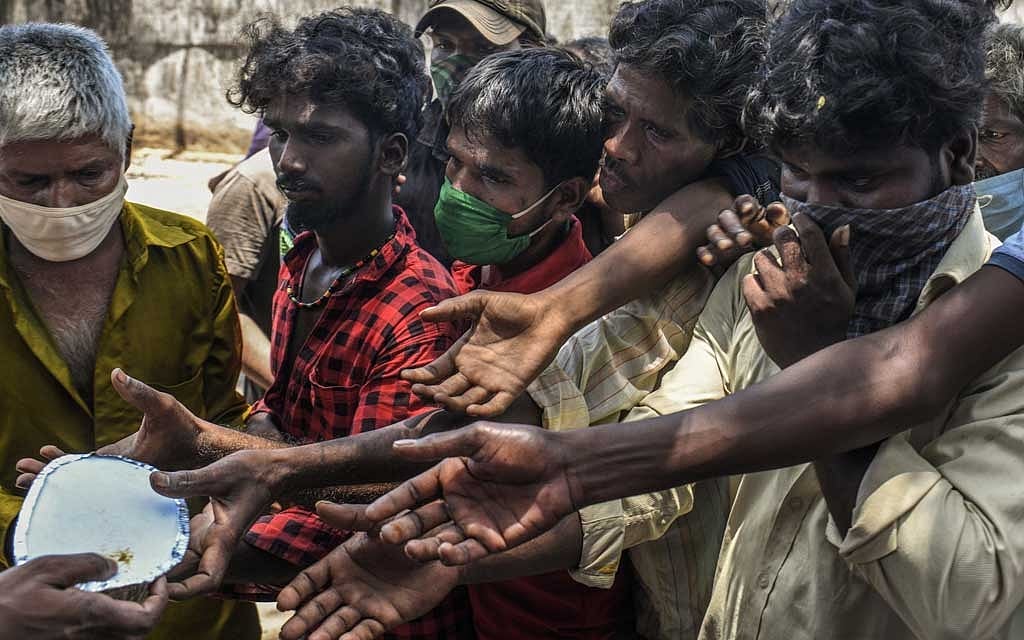
Migrant workers stuck in Mumbai because of a lockdown line up for food in the Dharavi slum, April 27, 2020. The New York Times
In Dharavi, Mumbai’s biggest slum, infections are exploding. Trying to trace contacts, health workers squeeze through tiny alleyways, some narrower than a pair of shoulders — you have to turn sideways to pass through. The health workers put a heavy-duty ink stamp on the hands of people who have been exposed to the virus and order them to stay indoors for two weeks.
Police officers prowl the main roads. Hundreds have tested positive for the coronavirus, and several have died. More than 70 Mumbai journalists have also tested positive.
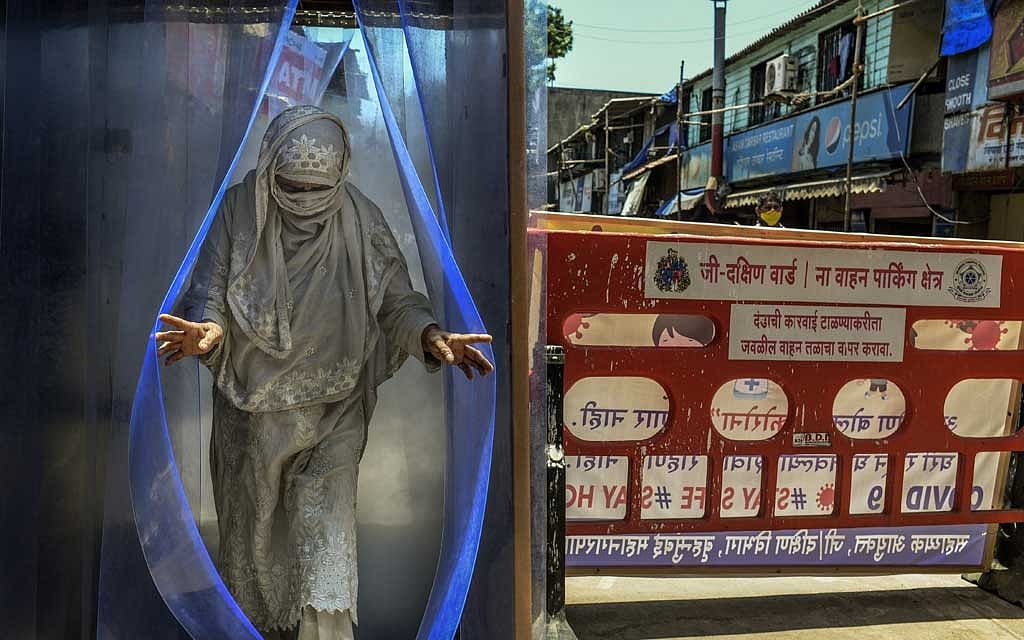
A woman passes through a sanitising tunnel in Mumbai, April 25, 2020. The New York Times
This nation of 1.3 billion people has been put under one of the world’s tightest lockdowns for the past seven weeks. That has kept reported coronavirus infections relatively low — around 78,000 cases reported so far. But India’s testing is relatively low, so many experts fear that the real number of infections is far higher.
People are allowed outside only if vitally necessary. In Mumbai, that means vegetable stands and markets are still crowded. Tempers are beginning to flare as residents argue with one another about standing too close. Many still don’t have masks.
The Dharavi slum, the largest in the city, in Mumbai, April 29, 2020. The New York Times
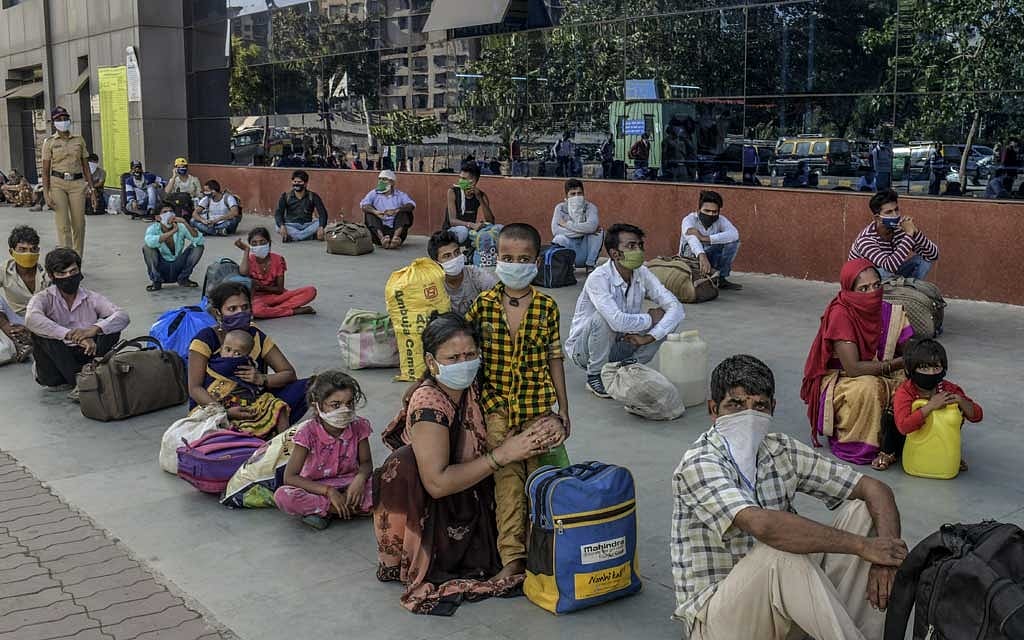
The monsoons are going to hit in a few weeks. That will bring a deluge of rain, then floods. Many out-of-work migrant labourers are fleeing the city. They are embarking on journeys hundreds of miles long, hoping to reach far-flung villages where they can rely on family.
Migrant families wait to board a train to their hometowns in Uttar Pradesh state at a station in Mumbai, May 8, 2020. The New York Times
c.2020 The New York Times Company







