Published : 06 Nov 2015, 11:58 AM
Updated : 23 Apr 2022, 01:15 PM


A two-member bench of Justice Ranjan Gogoi and Justice N Fali Nariman has set up the committee.
It will be headed by Union Home Ministry’s Border Management Secretary and include the Chief Secretary of Assam.
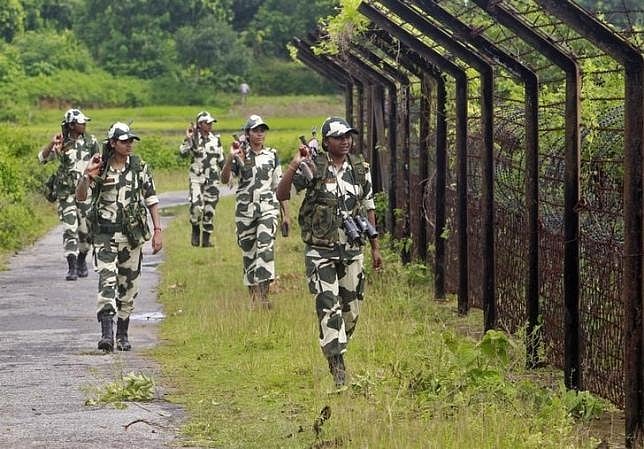
This committee will work out all issues related to border fencing. The committee will find out how to complete the fencing work within the stipulated timeframe. The court has asked the committee to report on Dec 1.
The apex court took the decision after the one-man committee of Upamanyu Hazarika, appointed by the court, had submitted its final report on border fencing.
“Yes, today I have submitted my final report on the border fencing work…while compiling the report I have found that there is a lack of coordination among different agencies for border fencing,” senior advocate of the Supreme Court Hazarika told bdnews24.com.
The one-man committee that was constituted by the court in July last had detected several gaps and loopholes in the border fencing work.
The committee has reportedly made several recommendations, including creation of a ‘sterile zone’ along the India-Bangladesh border.
Although the operational agency guarding the border on the ground is clearly in favour of creation of a sterile zone, a policy decision from the Central and State government is still awaited.
The committee in its report has reportedly exposed the threat posed by the unabated influx from Bangladesh.
During Thursday’s hearing, the Supreme Court also listened to the National Registrar of Citizen (NRC) issue.
The court has asked the Assam government to expedite the process and extend all help to the NRC state coordinator Pradeep Hazela.
“On Dec 1, NRC coordinator has to report to the court about the work progress, verification of documents and difficulties if any,” said NGO Assam Public Works (APW) President Abhijeet Sharma.
The APW had filled the petition in the apex court.
The updating process of NRC in Assam has been facing serious problems with people coming to the streets to oppose it.
Meanwhile, the All Assam Students Union (AASU) has also welcomed the decision of the Supreme Court.
“We welcome the decision of the Supreme Court. Even after three decades of signing the Assam Accord, influx from across the border is still going on…we hope the intervention of country’s highest court will definitely bring a change,” said AASU advisor Samujjal Bhattacharya.
In late 1970’s, AASU had started agitation to drive out illegal migrants from Assam.
More than 3,000 people, mostly Muslims of East Bengali origin, died during the six-year-old agitation.