Published : 25 Sep 2026, 04:44 PM
Updated : 25 Sep 2026, 04:44 PM


Nepal Prime Minister Balendra Shah has issued a sharp critique of a global system that he said moves weapons across borders more efficiently than food, fuel and fertiliser, naming Bangladesh and other South Asian countries among those bearing the fallout.
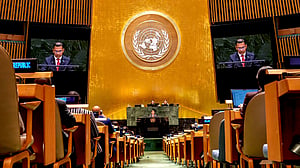
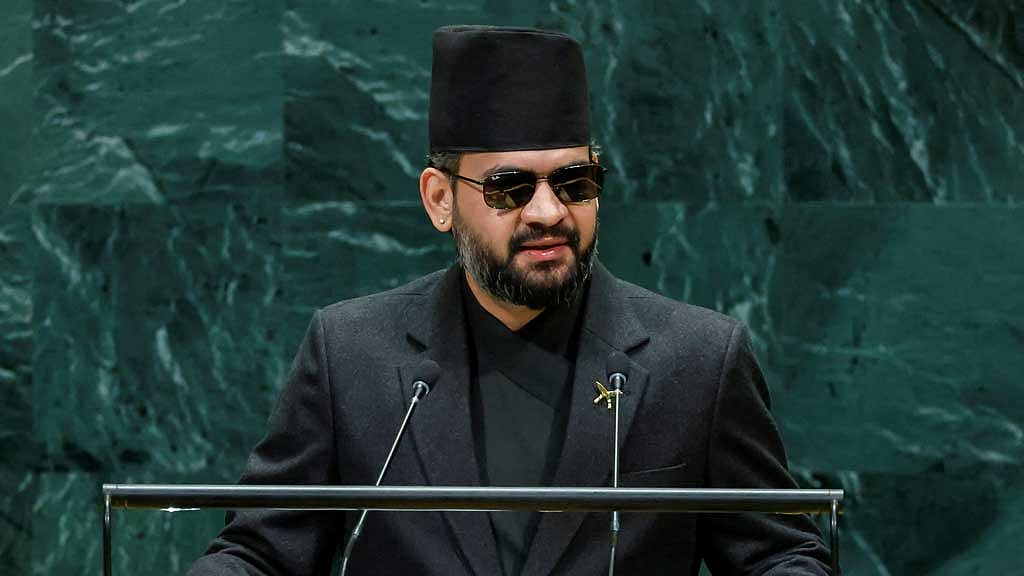
Addressing the United Nations General Assembly in New York on Thursday, Shah contrasted the speed of military supply chains with the shortages faced by ordinary people in developing countries.
“Inter-continental missiles arrive on time. Rifles and ammunition cross borders, clear every bottleneck, meet each deadline,” he said.
“But a peasant in Nepal cannot procure his fertiliser or fuel at market price at a time of need. We have built a world with flawless logistics for war and broken logistics for food.”
Shah said Nepal was far from alone.
“And this is not Nepal’s private misfortune. Ask Bangladesh. Ask Bhutan. Ask India. Ask the Maldives. Ask Pakistan. Ask Sri Lanka,” he told the General Assembly.
“Ask any other country in our region and you will hear the same account: hit by the climate we did not warm, and hit again by the wars we did not start.”
The remarks came as Shah used much of his first UNGA address as prime minister to focus on climate vulnerability, global inequality and the burden poorer countries face from disasters and geopolitical shocks they did little to cause. The Kathmandu Post described the speech as an attempt to turn Nepal’s recent flood disaster into a broader argument for climate justice, stronger regional cooperation and a more responsive multilateral system.
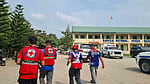
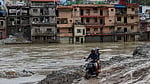
Four weeks ago, catastrophic flash floods swept through Nepal’s mountain communities in what Shah described as the Bhotekoshi-Trishuli disaster.
He said the event had been so severe that many had called it a “Himalayan Tsunami”.
Shah said at least 1,400 people had been confirmed dead and more than 6,000 remained missing, while rapid assessments put physical recovery needs at about 10 percent of Nepal’s gross domestic product.
Shah said Nepal contributes less than 0.1 percent of global greenhouse-gas emissions but is facing retreating glaciers, unstable mountain slopes, unpredictable rivers and increasingly destructive floods and landslides.
“For Nepal, climate catastrophe is not just a humanitarian event, but a development emergency,” he said.
He called for more grant-based climate financing and criticised what he described as a bureaucratic international system that forces vulnerable countries to spend years proving they need help.
“When the house is burning, we do not ask the family to complete fifty forms. We act,” Shah said.
The Nepalese prime minister also proposed a Himalayan Climate Resilience Mechanism led by Nepal, India and China, aimed at sharing satellite data and technical expertise, monitoring dangerous glacial lakes, strengthening early-warning systems and coordinating cross-border disaster assistance.
His wider argument was that climate shocks and geopolitical conflicts were exposing deeper weaknesses in the global economic order.
Shah said a country willing to pay should be able to buy essential goods, adding that a world capable of delivering a weapon anywhere within 72 hours had “no excuse” for leaving farmers without the means to earn a livelihood.
“This is why we need a United Nations in which the presence of small poor countries is felt, and we can work together towards just outcomes,” he said.