


Published : 03 Nov 2015, 03:04 PM
Updated : 23 Apr 2022, 01:14 PM


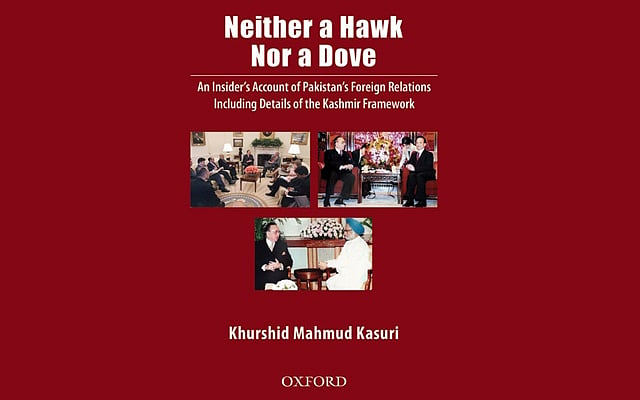
Kasuri's 850-page memoirs "Neither a Hawk nor a Dove" was recently released in India amid much controversy.
Kasuri claimed much progress in back channel diplomacy between India and Pakistan even over contentious issues like Kashmir when Pervez Musharaff was in charge and India had two successive prime ministers Atal Behari Vajpayee and Manmohan Singh who were keen on peace-making.
The Hindu militants of Shiv Sena attacked former BJP leader Sudheendra Kulkarni and blackened his face with ink for hosting Kasuri's book launch in Mumbai.
But the launch brought together veterans like BJP's LK advani and Congress' Manmohan Singh in Delhi.
Though the memoirs focuses much on Kasuri's own time as Pakistan's foreign minister under Musharaff, during which he claims much progress in peace-making, Kasuri has written about Bangladesh in the last chapter on Pakistan's foreign policy outreach.
"Bangladesh has done very well in many areas ... in women's empowerment, microfinance and family planning. It has become one of the world's largest exporters in garments. Pakistan could learn more effectively from the experience of Bangladesh," says Kasuri.
But then he worries over the intense political polarisation in Bangladesh.
"Those like me, who wish Bangladesh well, can only hope that the polarisation in Bangladesh is not further accentuated and that both Sheikh Hasina Wajed and Begum Khaleda Zia will show the required statesmanship and provide a healing touch to a situation that could deteriorate even further," says Kasuri (p.760).
He says that the executions of the 'war criminals' in Bangladesh could further polarise the situation in Bangladesh.
But he does not elaborate and only says the reactions in Pakistan to these executions has been 'predictable'.
Kasuri says he has been friendly to a number of top leaders and diplomats in Bangladesh including former foreign minister Morshed Khan.
He refers to one such occasion of feeling 'perfectly at home', when he travelled from Dhaka to Kuala Luimpur with then prime minister Khaleda Zia in her official jet.
"I am always keen to catch up with news coming from there (Bangladesh),” says Kasuri.
He says the day of separation between Pakistan's western and eastern wing is observed with 'great solemnity' in Pakistan every year.
"There is a deep sense of sorrow, including a widespread feeling that, were it not for the mistakes committed by some leaders of Pakistan, the country (Bangladesh) might have still been united."
Kasuri refers to 'back channel' negotiations between Pakistani leaders and 'some' Awami League leaders then based in Kolkata during the months of the Liberation War.
“There is a feeling of regret, even among those who blame India for taking advantage of the differences between the PPP and Awami League and not allowing enough time for back channel negotiations which were going on with ‘some’ of the Awami League leaders then based in Kolkata," says Kasuri.
But he does not specify who were these Awami League leaders in Kolkata and who in Pakistan were they negotiating with and whether any other foreign mission was involved in the process.
Kasuri does not provide details but says that a settlement may have been found given some more time.
He asserts that even General Yayha Khan had referred to Sheikh Mujibur Rahman once as the 'future prime minister of Pakistan'.
Whether Pakistan's unity could have been saved if power had been transferred to the Awami League after the 1970 elections?
To this question, Kasuri says: "Only after a long time, when passions have subsided, will history perhaps be able to provide a somewhat objective answer to this question.”













