


Published : 09 Sep 2015, 09:48 PM
Updated : 19 Oct 2022, 06:56 PM


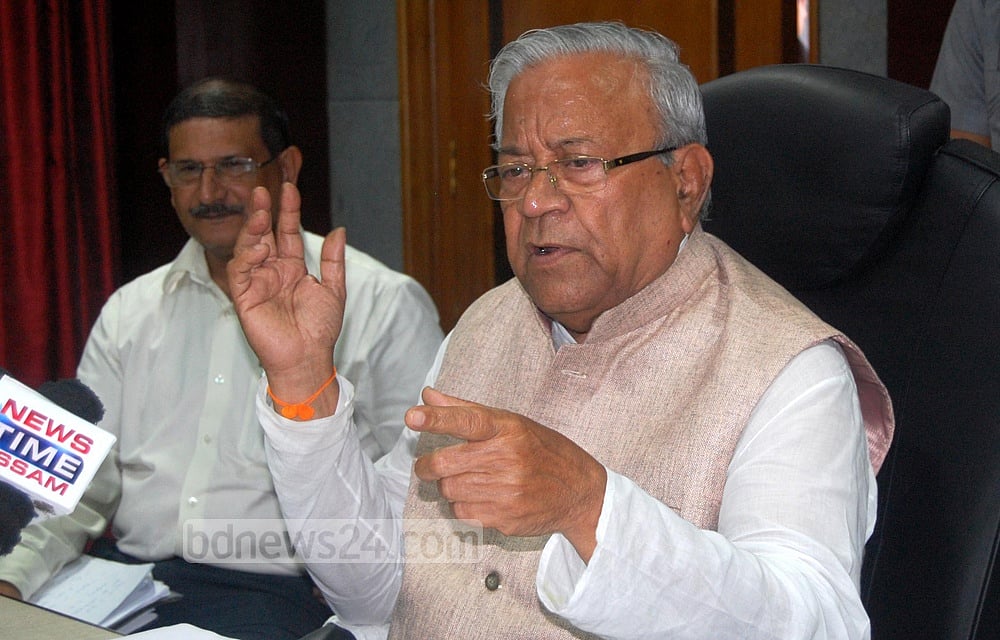
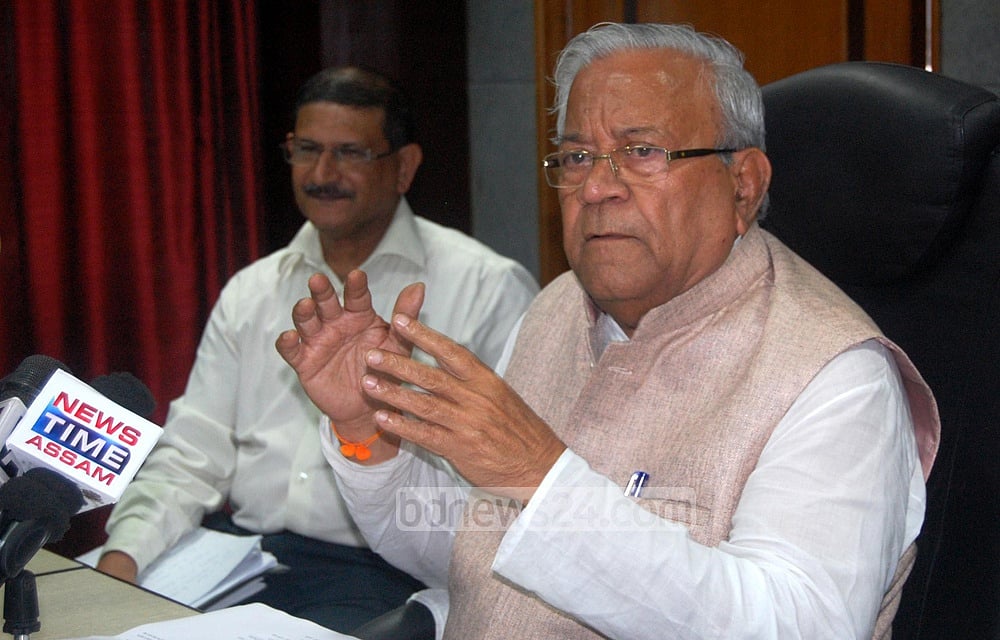
When asked about the Assam Accord, the governor said that national interest comes first. "When we review the situation, nothing is sacrosanct,” he said.
As per the Assam Accord, which was signed in 1985 after a six-year long anti-foreigner agitation spearheaded by the All Assam Students Union (AASU), all foreigners who entered the state after Mar 25, 1971 were to be deported irrespective of their religion.
Acharya made the comment on Tuesday at a press conference a day after the Indian home ministry decided to regularise the entry and stay of people belonging to the minority communities of Bangladesh and Pakistan.
But the issue of granting asylum to all non-Muslim immigrants in India has triggered a political storm in Assam and neighbouring north-eastern states.
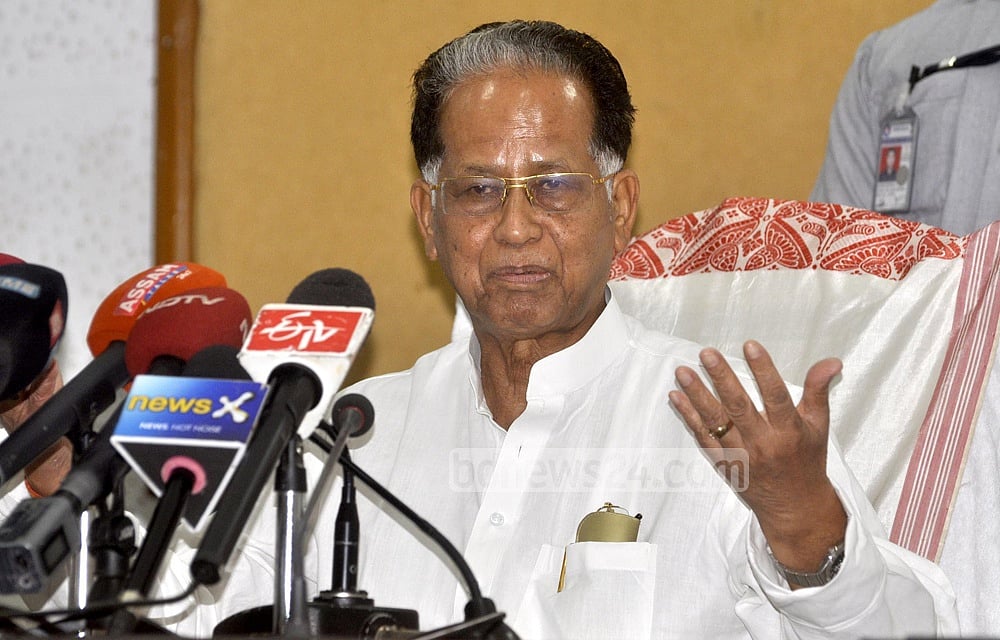
Assam Chief Minister Tarun Gogoi, however, welcomed the Central Government decision to allow minority refugees from Bangladesh and Pakistan to stay in the country even after the expiry of their visas.
At a press briefing in Guwahati on Wednesday, the chief minister claimed that it was he who had sent the proposal to the government to provide shelter to such immigrants on humanitarian grounds.
He said Bangladeshi Hindu migrants, who had been lodged in detention camps in Assam, would be automatically released following the execution of the order.
Several political and non-political organisations such as the All India United Democratic Front (AIUDF), State regional party Assam Gana Parishad (AGP), besides All Assam Student Organisation (AASU) and Krishak Mukti Sangram Samiti (KMSS) have opposed this government’s decision and threatened agitation.
The home ministry said in a notification that it had decided to exempt “on humanitarian considerations” Bangladeshi and Pakistani nationals belonging to minority communities who have entered into India on or before 31st December 2014 from the provisions of the Passport (Entry into India) Act, 1920 and the Foreigners Act, 1946.
The order would allow them to stay in India without such documents or even after their expiry.
According to Governor Acharya, "Hindus have the birthrights to get Indian citizenship and voting rights here.”
On the issue of illegal migrants, he said that since it would be difficult to push them back in large numbers, the government of India could think of giving them work permits.
But they should not be granted voting rights, he suggested.
Achariya claimed that after the National Register of Citizens (NRC) was updated all names of illegal voters would be deleted from the voters’ list.
AASU said it would not allow the Centre to legalise the stay of Hindu illegal migrants in Assam.
AASU President Dipankar Kumar Nath said, “The Centre may do whatever it likes for the other parts of the country, but for Assam, there is the Assam Accord which clearly states those foreigners who came to Assam after Mar 25, 1971 are illegal immigrants, be it Hindus or of any other communities.”
The AASU leader said that Assam had accepted the burden of refugees in the past.
However, a small state like Assam could not be made to shoulder the burden of any more refugees.
KMSS leader Akhil Gogoi said Assam alone would not bear the burden of Hindu Bangladeshis immigrants.
Akhil, while criticising Prime Minister Narendra Modi, dubbed the move as anti-Assam.
“If the Prime Minister feels so much for the infiltrators, then he should ensure that they are distributed equally among all the states of the country.”
The KMSS leader also said Assam would not alone bear the burden of the 15 to 20 lakh (1.5 to 2.0 million) Hindu Bengali Bangladeshi immigrants.
He, however, could not specify the source of the figures in quoted.
On the other hand, former state minister Himanta Biswa Sarma, who recently left the Congress to join the BJP, demanded the immediately release Hindu immigrants confined to detention camps and the dropping of cases against them.
At the police level, where notices are being sent to individuals, should be immediately stopped, he added.
Former leader of the AIUDF and a senior lawyer, Hafiz Rashid Ahmed Choudhury, however, questioned the legality of the home ministry notification, saying it could not override the law.
“An executive order, in this case a home ministry order, cannot override the law. The law excluded only those who entered India before Mar 25, 1971. So I will call this government decision, a mere eye-wash," he added.













