Published : 20 Jun 2023, 02:46 PM
Updated : 20 Jun 2023, 02:55 PM


India's stalled monsoon is likely to gain momentum in the next three to four days and could cover key rice, soybean, cotton and sugarcane growing regions in the southern, central and western states, weather officials said on Tuesday.
The monsoon, the lifeblood of India's $3 trillion economy, delivers nearly 70% of the rain needed to water its farms and recharge reservoirs and aquifers. It also brings relief from the worst of the summer.
Rains usually lash Kerala state, on India's southwest coast, from around Jun 1 and cover nearly half of the country by mid-June.
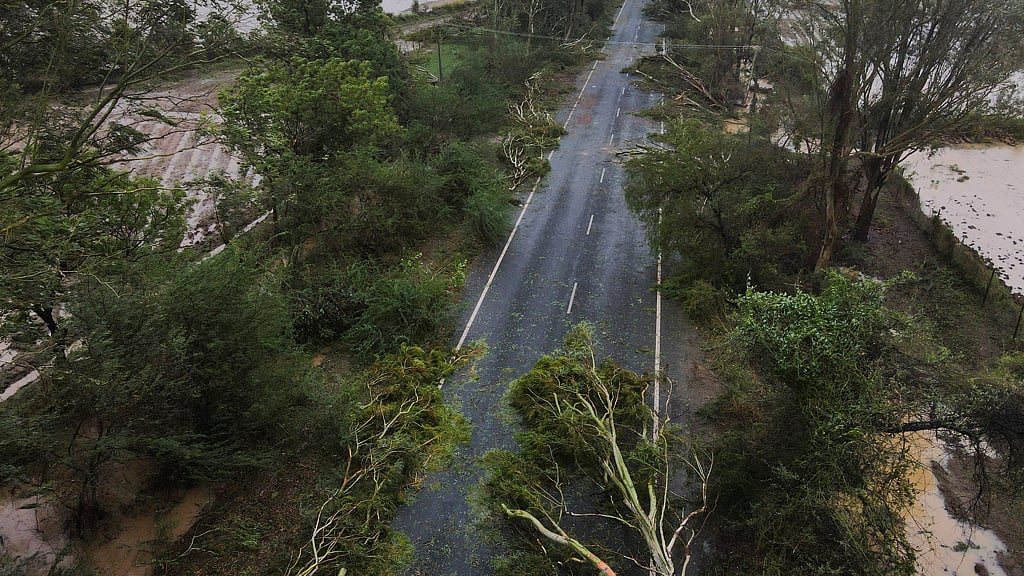
This year, the formation of severe cyclone Biparjoy in the Arabian Sea delayed the onset of monsoon and restricted its progress to just a third of the country so far.
"Conditions are becoming favourable for strengthening of the monsoon. It will progress quickly from this weekend in central, western and northern parts of the country," said a senior official at the India Meteorological Department (IMD).
Cotton, soybeans and pulses are mainly cultivated in central parts of the country, which is the biggest importer of vegetable oils and pulses, and the top cotton producer.
India has so far in June received 33% lower rainfall than normal, although in some states the deficit is as high as 95%.
"Based on the information that we have now, it seems that monsoon rains will be good this week," said IMD Director General Mrutyunjay Mohapatra.
The IMD has forecast below-average rains for June, with the monsoon expected to pick up in July, August and September.
However, for the entire four-month season, the IMD has forecast an average amount of rainfall despite the formation of a possible El Nino weather phenomenon.
A strong El Nino, marked by a warming of the sea surface on the Pacific Ocean, can cause severe drought in Southeast Asia, India and Australia, while drenching other parts of the world such as the US Midwest and Brazil with rain.
The emergence of a strong El Nino triggered back-to-back droughts in 2014 and 2015 for only the fourth time in over a century, pushing Indian farmers into extreme poverty.