


Published : 24 Jul 2021, 11:22 AM
Updated : 14 Oct 2022, 06:55 PM



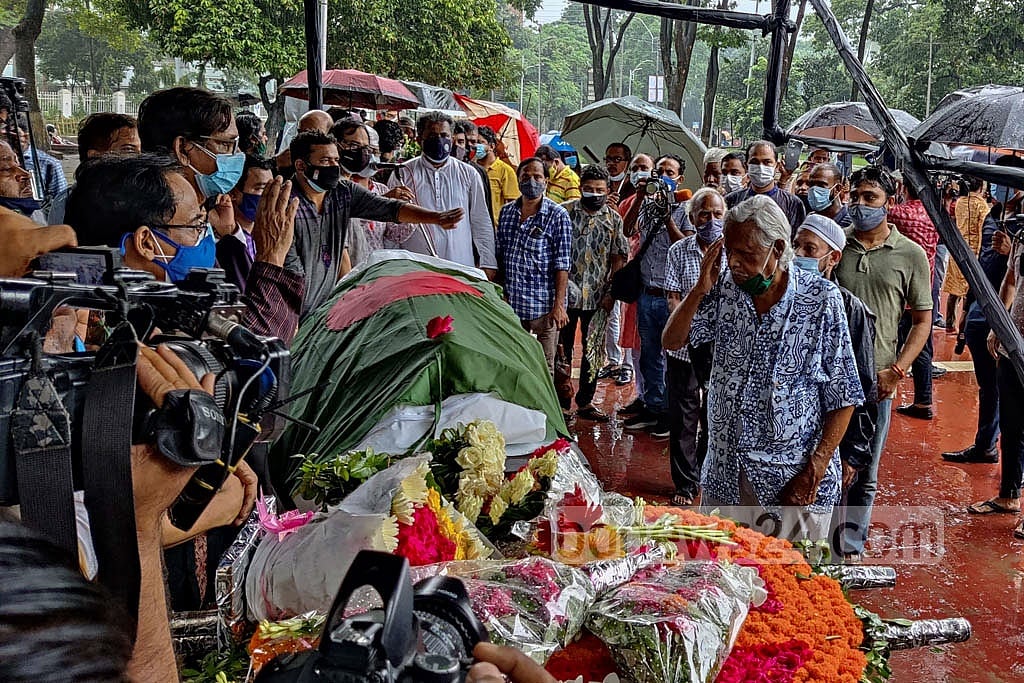
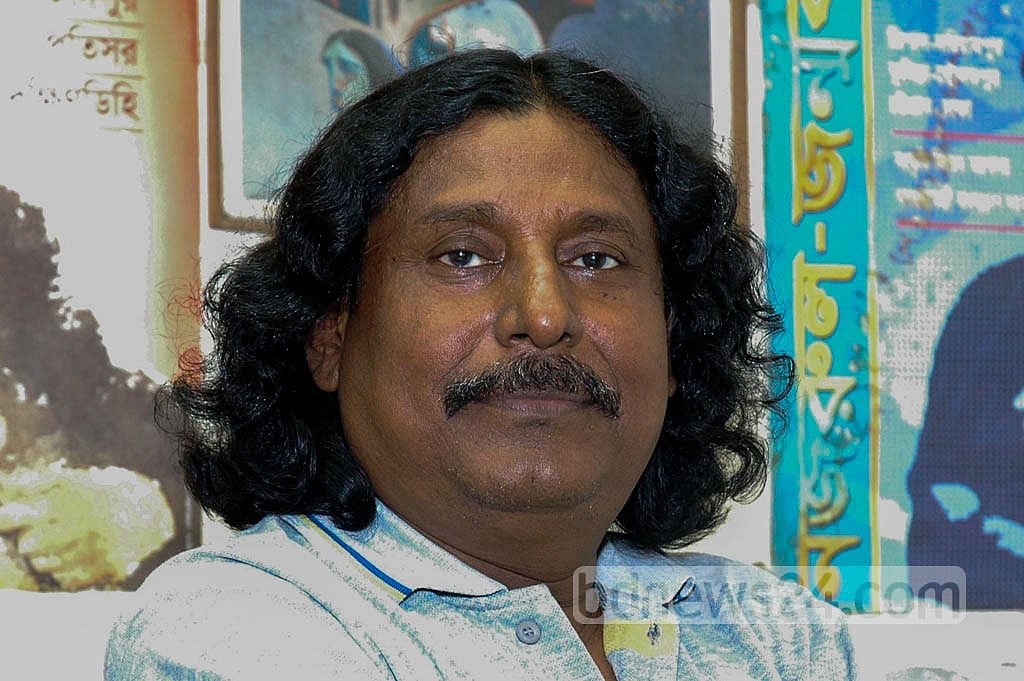
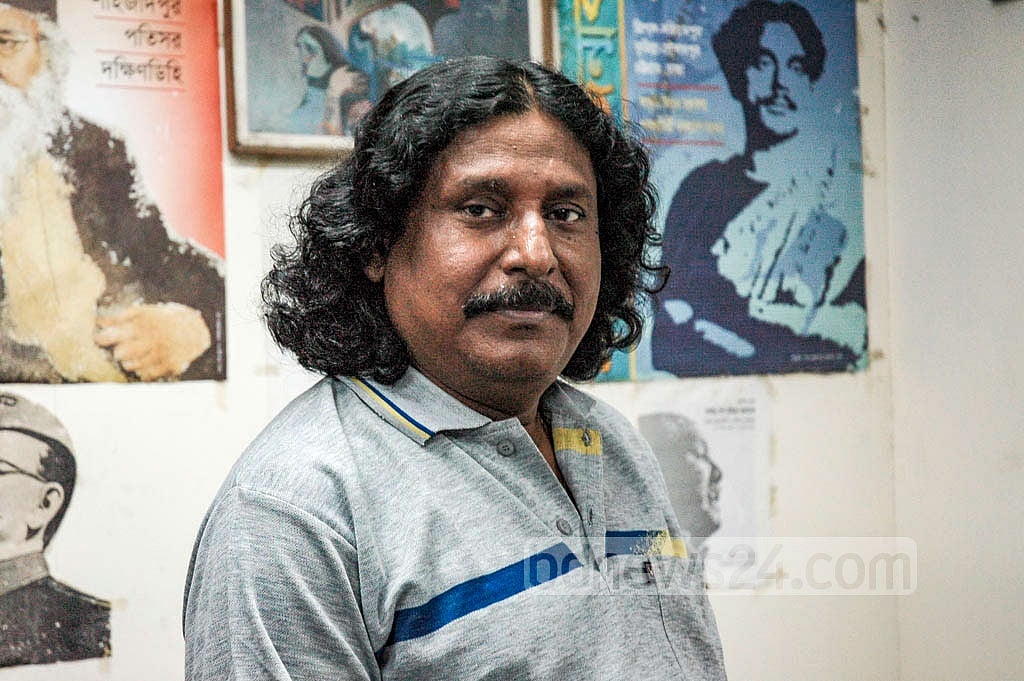


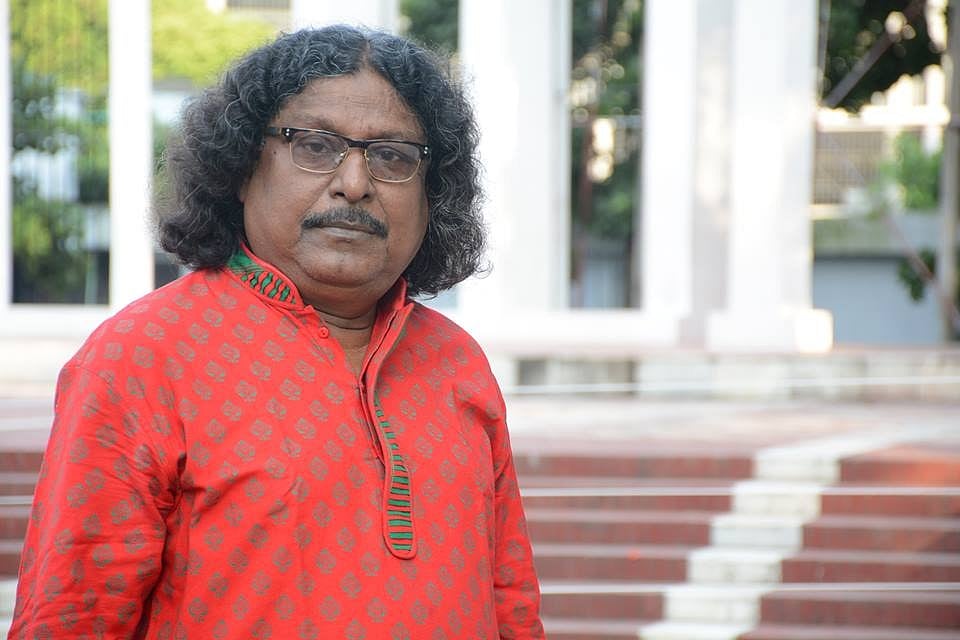
People from all walks have braved the coronavirus pandemic-induced lockdown to pay their final respects to freedom fighter and folk music icon Fakir Alamgir.
The mortal remains of Fakir were brought to the altar of the central Shaheed Minar at 12 pm on Saturday. But the commemorative event, organised by Combined Cultural Alliance, was delayed by half an hour due to the rains.
Members of various civic, political and cultural organisations led the tributes to the singer, who passed away at the age of 71 on Friday after contracting COVID-19.
Earlier in the day, Fakir received a guard of honour at Pallima Sangsad in Khilgaon for his contributions as a freedom fighter.
His first namaz-e-janaza or funeral prayer was also held at the Pallima Sangsad and it was followed by another one at the Khilgaon Matir Masjid (mosque) after the Zuhr prayers. He will later be laid to rest at the Khilgaon Taltala Graveyard, according to his family.
"Fakir Alamgir was not only a music artist but he was also worked as a freedom fighter in Bangladesh's struggle for independence. He has made an immense contribution to Bangladesh's folk music, creating many timeless songs," Information Minister Hasan Mahmud said after paying his respects.
“His name is famous in the world of folk music, not only in Bangladesh but also in the Indian subcontinent. He was an alumnus of Dhaka University and will always be remembered for his unique contribution to the music industry," said Prof Akhtaruzzaman, vice-chancellor of Dhaka University.
"He founded various artist groups and his songs made their way into the mind of the masses to bring many socio-cultural movements to its logical conclusion. He will live on in the collective mind through his songs and cultural activities.”
Fakir Alamgir's only regret was missing out on the Independence Award during his lifetime, according to his wife Suraiya Alamgir.
"I hope the prime minister bestows this medal upon him to put his soul at peace.”
Gonoshasthya Hospital's Trustee Zafrullah Chowdhury said, “Fakir Alamgir fought the Liberation War. During the war, his songs helped bring hope to the people.”
Alamgir had been involved with Gana Sangeet, or the music of the masses, since the 1960s. He joined the 1969 mass uprising as a member of Kranti Shilpi Goshthi and Ganashilpi Goshthi.
When the Liberation War began, he joined Swadhin Bangla Betar Kendra, the radio station run by the Bangladesh government in exile.
After independence, he played a role in the development of pop music by fusing Western music with Bangladeshi folk music.
In his long career, he sang a number of popular songs. His song ‘O Sokhina’ is sung and crooned by millions.
Written by Altaf Ali Hasu and composed by Alamgir, the song became a household hit after he sang it in BTV’s ‘Anandamela’ show in 1982.
The founder of cultural organisation Wrishijo Shilpi Goshthi was a former president of Gana Sangeet Shilpi Parishad.
Alamgir did his post-graduation at Dhaka University’s mass communication and journalism department.
He also penned several books. They include ‘Muktijuddher Smrity O Bijoyer Gaan’, ‘Gana Sangeeter Oteet O Bartaman’, ‘Amar Kotha’, and ‘Jara Achhen Hridoy Pote’.













