


Published : 27 Oct 2020, 07:21 PM
Updated : 17 Oct 2022, 11:15 AM



“I was the first person to see those results,” Oommen said. “It was a strange feeling to be in a quiet lab all by myself and yet feel this immense gravity of a brewing storm looming overhead.”
At the time, it was still unknown how contagious the virus was, so for everyone’s safety Oommen worked on a separate floor from his colleagues. Clinicians capped the specimen tubes so tightly that his fingers ached from prying them open.
Alone in the lab one night, filled with a sense of foreboding, he had an epiphany to make art from the sticky biohazard labels that surrounded him.
“To metabolise trauma and grief, I resort to the arts,” he said. “Because it’s a way to convert something intangible and make it into something that has form.”
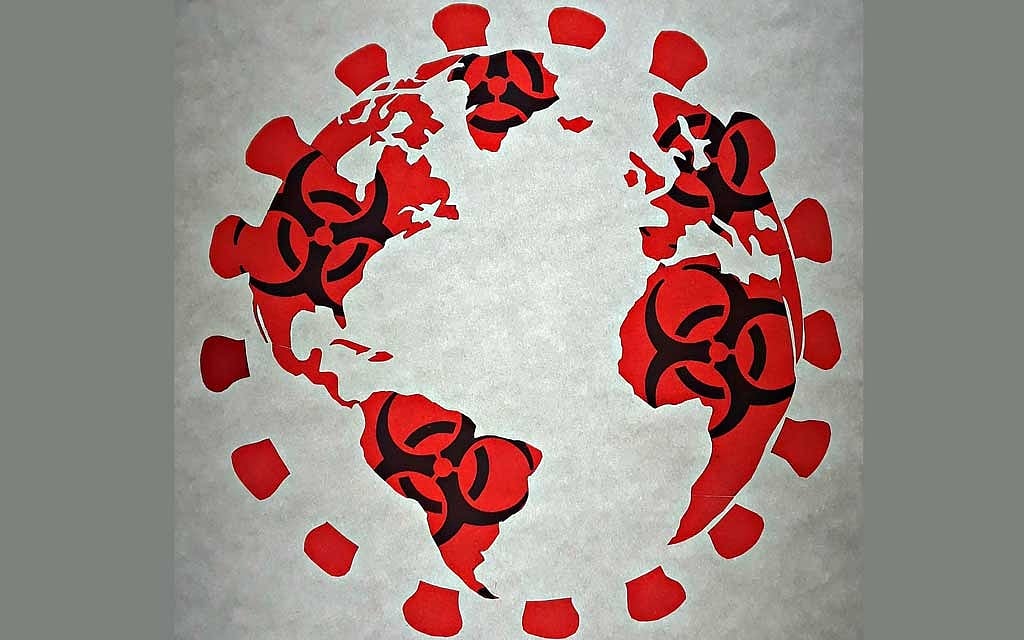
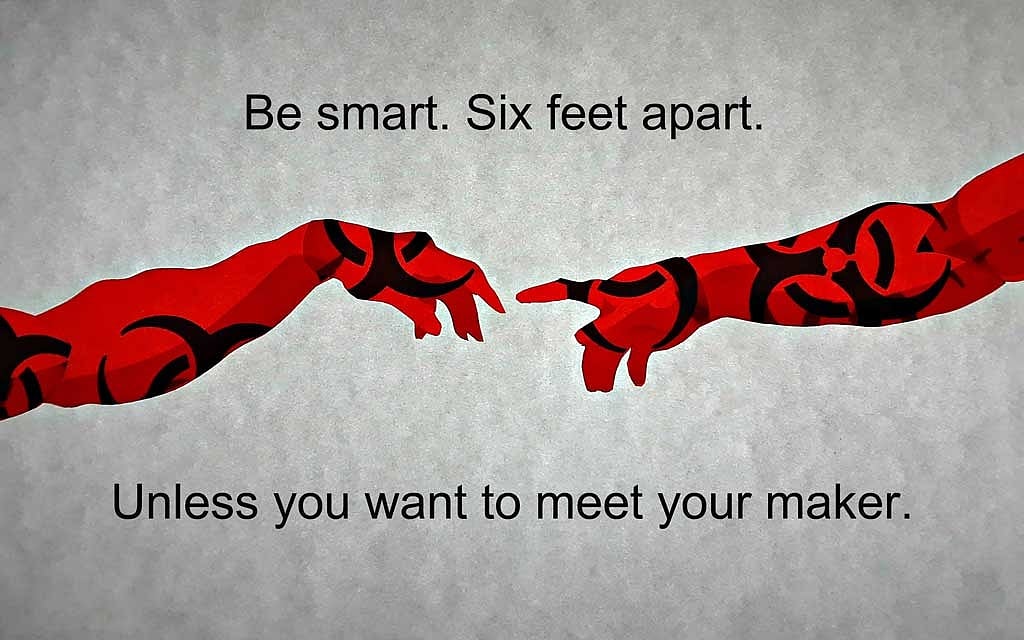
Oommen, 29, is a survivor of childhood trauma, who also lived with a seriously ill parent for 19 years; for him, creativity has been a critical component of healing. Since April, he has been deconstructing bright biohazard labels with scissors, then reconstructing them with surgical precision on the floor of his Manhattan apartment.
Ansel Oommen, a medical lab technologist, in his New York apartment, on Monday, Oct. 5, 2020. Oommen, an artist and medical lab worker, has turned biohazard labels into an outlet for pandemic grief and trauma. (Calla Kessler/The New York Times)
The alarming reds and oranges of the labels appealed to him. In nature, the colours can signal toxicity and danger to potential predators, a phenomenon known as aposematism. They also captured the toxicity of his own feelings. “Not that grief and trauma themselves are toxic,” Oommen said. “But they can lead to toxic situations if you’re not able to process it in a healthy way.”
Most people recognise that doctors and emergency medical technicians are on the front line of the pandemic. But medical technologists are too, Oommen noted.
“When you think about the pandemic, you think about EMTs and dead bodies in morgues,” he said. “But the lab is just as hectic. If you enter the lab, you wouldn’t feel it, but all these people’s lives are in the balance. We’ve been processing thousands of samples. We see it in a sheer volume.”
In a photo provided by Ansel Oommen, an artist and medical lab worker, has turned biohazard labels into an outlet for pandemic grief and trauma. (Ansel Oommen Biohazard Collection via The New York Times)
Oommen, an urban naturalist, is also training to become a horticultural therapist, helping patients engage in gardening or other plant-based activities for their physical and psychological well-being.
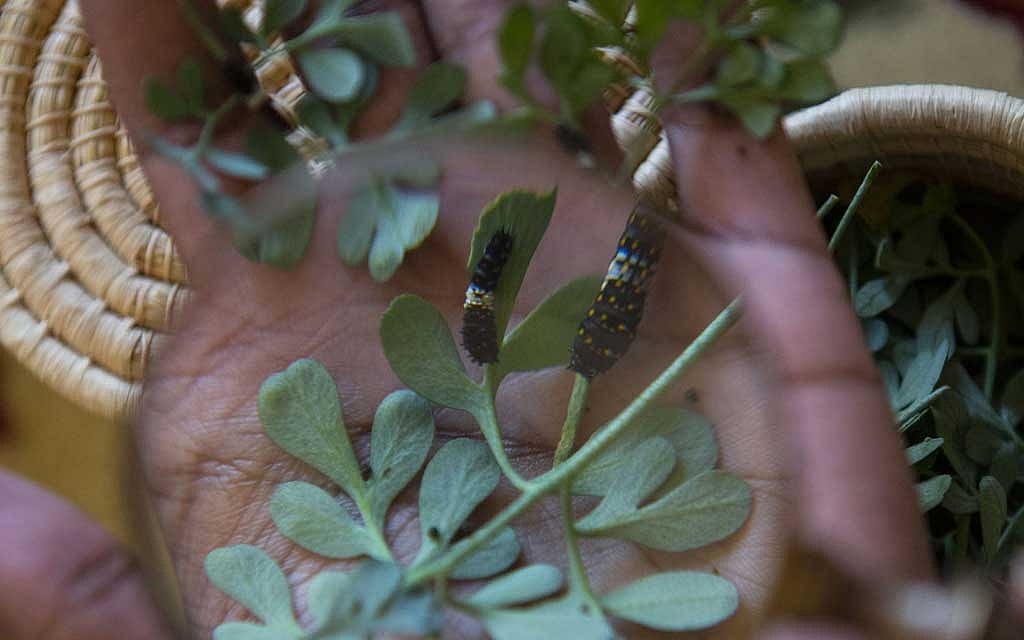
He also believes rearing butterflies and moths can have therapeutic effects. (Modern psychiatry and psychology are derived from the ancient Greek word “psyche,” whose namesake goddess is represented as a butterfly.)
“In the process of taking care of something small, you take care of yourself,” he said.
Transcending a traumatic experience, he said, is like an earthbound caterpillar that becomes an airborne butterfly: “It’s liberation. It’s freedom.”
In a photo provided by Ansel Oommen, an artist and medical lab worker, has turned biohazard labels into an outlet for pandemic grief and trauma. (Ansel Oommen Biohazard Collection via The New York Times)
“Somewhere within suffering is a profound understanding of what it means to be mortal,” Oommen said.
Thus far, Oommen has made a dozen pieces for “The Biohazard Collection,” which he plans to donate to the New-York Historical Society.
His latest work in progress is “Anaphylaxis,” a clinical term for a life-threatening allergic reaction that causes difficulty breathing. It shows the outline of a human figure and, inside, a pair of lungs resembling hornet nests and a hornet encased in a fractured skull.
“So much of my life revolved around being in a state of crisis, always on the lookout for the next storm on the horizon,” he said. “I just never expected this one, and yet, I am strangely prepared.”
©2020 The New York Times Company







