


Published : 17 Sep 2016, 01:19 PM
Updated : 19 Oct 2022, 05:28 PM


The similarity, however, ends there.
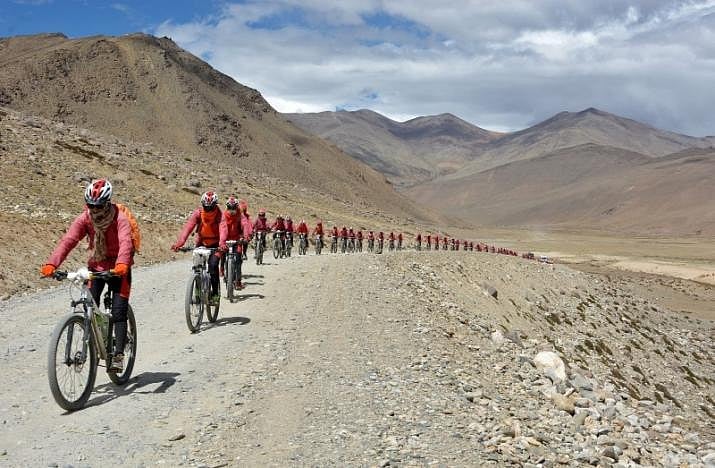
This journey is longer and tougher, the prize has no financial value or global recognition and the participants are not professional cyclists but Buddhist nuns from India, Nepal, Bhutan and Tibet.
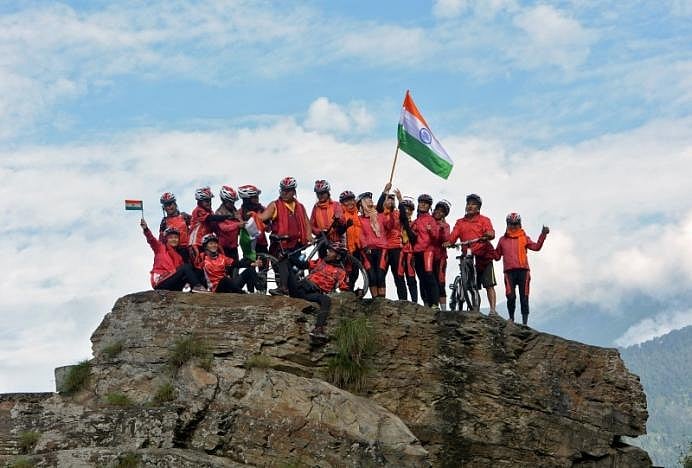
Five hundred nuns from the Buddhist sect known as the Drukpa Order, on Saturday complete a 4,000-km (2,485 mile) bicycle trek from Nepal's Kathmandu to the northern city of Leh in India to raise awareness about human trafficking in the remote region.
"When we were doing relief work in Nepal after the earthquakes last year, we heard how girls from poor families were being sold because their parents could not afford to keep them anymore," 22-year-old nun Jigme Konchok Lhamo told the Thomson Reuters Foundation.
"We wanted to do something to change this attitude that girls are less than boys and that it's okay to sell them," she said, adding that the bicycle trek shows "women have power and strength like men".
South Asia may boast women leaders and be home to cultures that revere motherhood and worship female deities, but many girls and women live with the threat of violence and without many basic rights.
From honour killings in Pakistan to feticide in India and child marriage in Nepal, women face a barrage of threats, although growing awareness, better laws and economic empowerment are bringing a slow change in attitudes.
'Kung Fu' nuns
The bicycle trek, from Nepal into India, is nothing new for the Drukpa nuns.
This is the fourth such journey they have made, meeting local people, government officials and religious leaders to spread messages of gender equality, peaceful co-existence and respect for the environment.
They also deliver food to the poor, help villagers get medical care and are dubbed the "Kung Fu nuns" due to their training in martial arts.
Led by the Gyalwang Drukpa, head of the Drukpa Order, the nuns raise eyebrows, especially among Buddhists for their unorthodox activities.
"Traditionally Buddhist nuns are treated very differently from monks. They cook and clean and are not allowed to exercise. But his Holiness thought this was nonsense and decided to buck the trend," said Carrie Lee, president of Live to Love International, a charity which works with the Drukpa nuns to support marginalised Himalayan communities.
"Among other things, he gave them leadership roles and even introduced Kung Fu classes for the nuns after they faced harassment and violence from monks who were disturbed by the growing shift of power dynamics," she said.
Over the last 12 years, the number of Drukpa nuns has grown to 500 from 30, said Lee, largely due to the progressive attitudes of the 53-year-old Gyalwang Drukpa, who was inspired by his mother to become an advocate for gender equality.













