Published : 24 Sep 2026, 01:34 PM
Updated : 24 Sep 2026, 01:34 PM


You shut the windows, turn off the lights and settle down for the night. Then the coughing starts.
A cold or allergy may seem the obvious culprit. But new research suggests air pollution could also play a role.
An international study using large-scale sleep-app data has found that short-term increases in fine particulate air pollution were associated with more coughing at night.
Across 32 cities on six continents, researchers estimated that every 10 micrograms per cubic metre increase in PM2.5 was associated with a 2.4 percent rise in nighttime cough frequency in a city-specific analysis.
And the association was not confined to heavily polluted air. Researchers detected it even at relatively low PM2.5 concentrations, including below the World Health Organization's 24-hour guideline.
The findings, published in Communications Health on Sept 15, add to evidence about the short-term respiratory effects associated with exposure to fine particulate pollution.
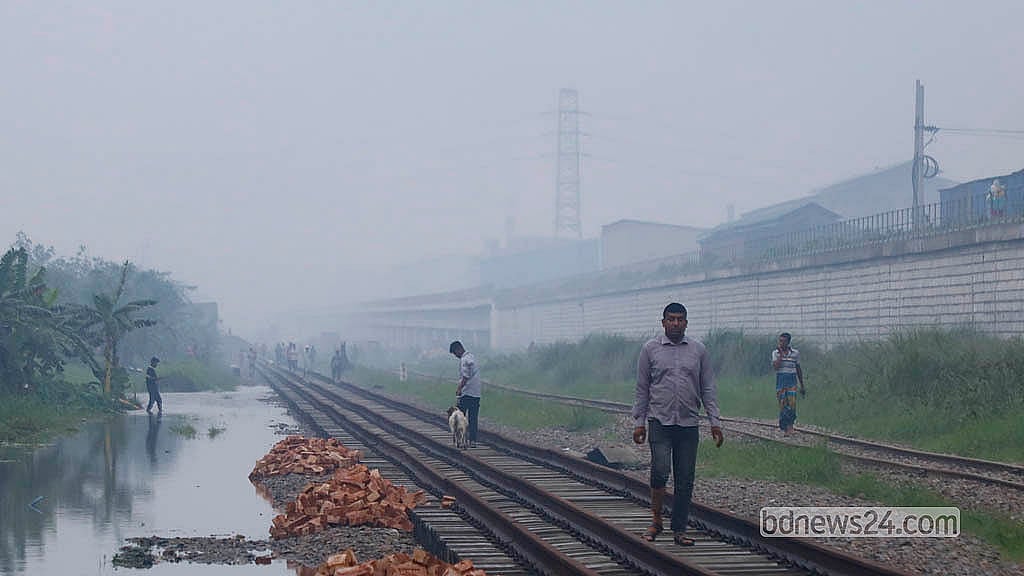
Dhaka was not among the cities included in the study, so the findings cannot show whether pollution is making residents of the Bangladesh capital cough more at night. But PM2.5 remains a major public-health concern in Bangladesh, while the capital has repeatedly experienced unhealthy air.
What Researchers Found
Researchers analysed around 500 consecutive days of nighttime data collected through the Sleep Cycle smartphone app.
The study covered 32 cities in Australia, Brazil, Chile, China, France, Germany, Italy, Japan, South Africa, Sweden, the United Kingdom and the United States.

Instead of asking participants to remember how often they coughed, researchers used an artificial-intelligence system built into the app to detect coughing in nighttime audio recordings.
Cough events were counted and aggregated at city level before researchers compared the patterns with daily PM2.5 concentrations while accounting for factors including weather and influenza activity.
PM2.5 refers to particulate matter measuring 2.5 micrometres or less in diameter. The particles are small enough to penetrate deep into the lungs and can enter the bloodstream.
The WHO recommends keeping average PM2.5 concentrations at or below 15 micrograms per cubic metre over 24 hours and 5 micrograms per cubic metre annually.
The city-specific analysis found that every 10 micrograms per cubic metre increase in PM2.5 was associated with a 2.4 percent increase in nighttime cough frequency.
A separate analysis examining exposure over several days produced a similar cumulative association.
Researchers also found an association with increased coughing at PM2.5 concentrations below the WHO's 24-hour guideline.
Because the research was observational, however, it cannot establish that PM2.5 caused the additional coughing.
What Happened During The LA Wildfires
The January 2025 Los Angeles wildfires offered researchers an opportunity to examine what happened when pollution suddenly surged.
Nighttime coughing increased around the period when wildfire smoke sent PM2.5 concentrations sharply higher.
During the episode, one analysis found that every 10 micrograms per cubic metre increase in PM2.5 was associated with a 9.9 percent rise in nocturnal coughing — substantially greater than the association seen in the wider multi-city analysis.
The researchers noted, however, that coughing had begun to increase before the most pronounced rise in PM2.5, meaning other factors, such as seasonal respiratory infections or other environmental exposures, may also have contributed.
They therefore described the wildfire analysis as supporting evidence for the short-term association between PM2.5 and nighttime coughing rather than proof that the wildfire pollution caused the increase.
Why Coughing?
Coughing is one of the body's mechanisms for clearing irritants and particles from the respiratory tract.
PM2.5 can penetrate deep into the lungs, and exposure has been linked to inflammation as well as respiratory and cardiovascular harm.
That makes coughing a potentially useful real-world indicator of how people's airways respond as pollution levels change.
Nighttime coughing is particularly interesting because the cough reflex is normally suppressed during sleep, especially during deeper sleep stages.
But the study did not establish that air pollution itself disrupted participants' sleep.
Researchers did not directly measure whether people woke more frequently, slept fewer hours or experienced poorer sleep quality as pollution increased.
The finding is narrower: higher PM2.5 concentrations were associated with more coughing during the night.
What Does It Mean For Dhaka?
Dhaka was not part of the study, but PM2.5 exposure is already a major public-health concern in Bangladesh.
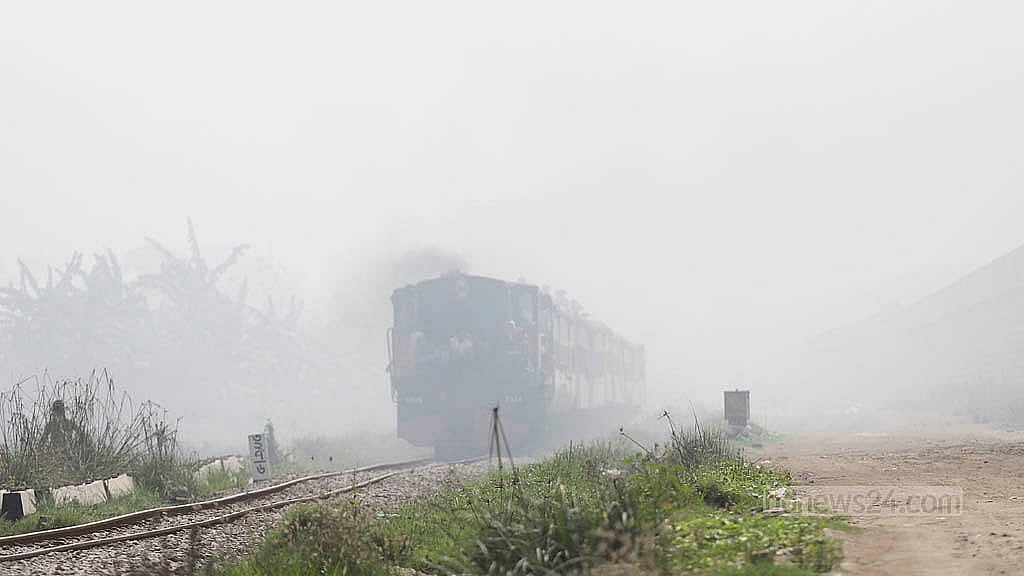
The capital's air quality has fluctuated considerably in recent days.
Dhaka recorded an Air Quality Index (AQI) score of 64 at 10:22am on Sept 24, putting its air in the "moderate" category. That marked a sharp improvement from an AQI of 165 on Sept 18, when the city's air was classified as "unhealthy", and 121 on Sept 19, when it was "unhealthy for sensitive groups".
The AQI is not itself a measure of PM2.5 concentration. It is an index used to communicate overall air pollution and associated health risks, calculated using several major pollutants including PM2.5.
Longer-term research paints a more troubling picture.
A study by Jahangirnagar University's Climate Change, Air Quality and Health Research Unit estimated that PM2.5 pollution was associated with around 88,240 premature deaths a year across Dhaka, Chattogram, Rajshahi, Khulna, Sylhet and Barishal.
Dhaka accounted for an estimated 68,703 of those deaths.
The research, based on data from 2013 to 2021, linked PM2.5 exposure with deaths from conditions including heart disease, stroke, chronic respiratory illness and lung cancer.
Dhaka's pollution also does not necessarily subside after dark.
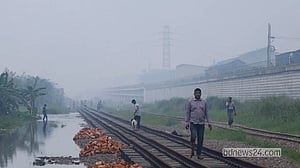
An earlier bdnews24.com analysis of IQAir data found that during the period examined, Dhaka's AQI typically ranged between 150 and 200 during the day before climbing to 200-300 after 10pm.
Experts cited late-night movements of trucks carrying sand and construction materials, along with emissions from factories operating after dark, among factors contributing to the increase.
In another episode documented by bdnews24.com, Dhaka's AQI remained above 200 after 10pm and at times exceeded 300.
A City-Level Picture, Not A Personal Pollution Monitor
The international study has important limitations.
Researchers matched aggregated coughing data against pollution measured at city level rather than measuring each person's actual PM2.5 exposure.
Sleep Cycle users are also not necessarily representative of the wider population, while coughing can have many causes.
The study focused on PM2.5 rather than the full mixture of pollutants people may encounter.
Two of the paper's authors are employees of Sleep Cycle AB, the company behind the app that provided the sleep-monitoring data. The remaining authors declared no competing interests.
The researchers say the findings highlight the potential for smartphone-based monitoring to track respiratory responses to air pollution across large populations, while future studies incorporating other pollutants and physiological sleep measurements could provide a fuller picture.