Published : 17 Sep 2026, 01:17 AM
Updated : 17 Sep 2026, 01:17 AM


A study of 200 children treated for measles in Chattogram, Cumilla and Cox’s Bazar has found that 59.4 percent contracted the disease at a health facility or hospital.
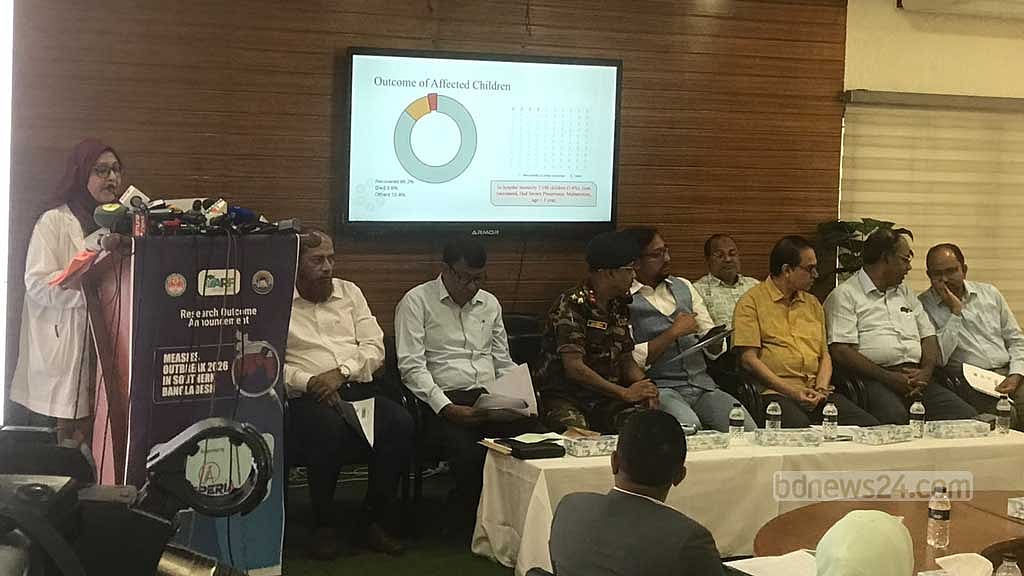
The findings were presented at a research event at Chattogram Medical College on Wednesday, where researchers also linked severe illness among the children to malnutrition and called for year-round vaccination and stricter isolation of measles patients.
The study, titled “Measles outbreak in southern Bangladesh: Disease spread, symptoms, genetic analysis and maternal-child antibody status”, covered 200 children treated for measles and 100 of their mothers at Chattogram Medical College Hospital, Chattogram Maa-O-Shishu Hospital, Cumilla Medical College Hospital and Cox’s Bazar Medical College Hospital.
The research was conducted by the Asperia Health Research and Development Foundation.
Rural Children More Affected
Of the 200 children in the study, 46 percent were younger than nine months, meaning they contracted measles before reaching the scheduled age for routine vaccination.
Among those infected, 148 children (75.5 percent) were from rural areas and 127 (64.8 percent) came from families with low socioeconomic status.
Chattogram Medical College’s associate professor of paediatrics Kamrun Nahar was the principal investigator.
She said a large share of the outbreak was linked to rural areas, showing that poor and marginalised communities faced a high risk of the virus.
The study found malnutrition was a major factor in severe measles-related complications and greater disease severity.
About 31 percent of the infected children suffered from severe malnutrition. Another 18.9 percent were being given foods other than breast milk, which the study said had weakened their immunity.
The report said vitamin A helps prevent severe complications from measles. But only 63 children, or 32 percent of those infected, had received a vitamin A capsule in the previous six months, indicating a major gap.
Nahar said 59 percent of children who had not received vitamin A developed severe or serious complications.
The study also found that breastfeeding alone was not enough to reduce the severity of measles, with other treatment and proper nutrition also essential.
The data showed that moderate or severe malnutrition, living in rural or slum areas, poverty, overcrowded homes and vitamin A deficiency substantially increased the risk of severe complications.
Among children whose mothers had no history of measles vaccination, 55 percent suffered severe complications after contracting the disease.
Infected Before Vaccination Age
Of the 200 children with measles, 167 had not received a measles vaccine. But 91 of them had not yet reached the age for vaccination.
Among them, 11 percent were younger than six months and 23.5 percent were aged between one and five years.
Overall, 46 percent of the children were younger than nine months.
The first measles vaccine is usually given at nine months, meaning many of the children were infected before reaching the vaccination age.
The ages of those in the study ranged from two months to 11 years.
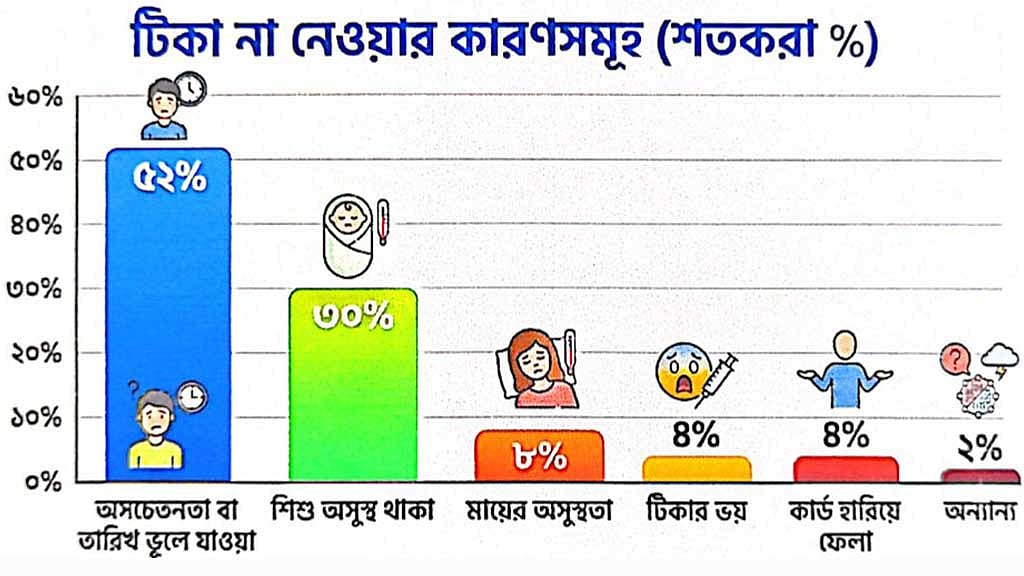
Among children who had not received the vaccine, 52 percent missed it because of a lack of awareness or forgetting the date, 30 percent because they were ill, 8 percent because their mothers were ill, 4 percent because of fear of vaccination and another 4 percent because they had lost their vaccination cards, Dr Nahar said.
Hospitals Linked To Transmission
The study found that 59.4 percent of infected children contracted measles at a health facility or hospital, pointing to gaps in infection prevention.
Nahar said overcrowding was contributing to transmission, with children sometimes sharing beds because of limited space.
Chattogram Medical College Hospital paediatrics head Md Musa Mia said undiagnosed measles patients were staying in general wards, exposing others to the virus.
A dedicated hospital could reduce transmission and ease treatment, he added.
Former medicine department head MA Hasan Chowdhury said one measles patient could infect 12 to 15 others, calling for strict isolation and health safety measures.
The study also found that 32 children, or 16 percent, had contact with someone who had measles. Nahar said 86 percent of participants had recovered and returned home.
No New Strain Found
Genomic sequencing of 17 samples found the B3 genotype in all cases. The genotype can be controlled through vaccination.
Dr Nahar said researchers had considered whether a new genotype had emerged because of the Rohingya population in the region, but found no new imported infection.
B3 was also detected by the Institute of Epidemiology, Disease Control and Research (IEDCR) and the International Centre for Diarrhoeal Disease Research, Bangladesh (icddr,b).
The paediatrician said the outbreak was linked to declining vaccination coverage and could be controlled by reaching 95 percent coverage.
Vaccination, Isolation Needed
Dr Nahar said unvaccinated children were almost twice as likely as vaccinated children to suffer severe complications. None of the vaccinated children in the study died.
The researchers recommended regular vaccination campaigns to reach 95 percent coverage, door-to-door vaccination for missed children, vitamin A supplementation and better nutrition.
They also called for rapid detection and isolation of children below the vaccination age, dedicated isolation facilities and adequate ventilation in hospitals.
Chattogram Medical College Hospital director Brig Gen Mohammad Taslim Uddin said measles patients were not being isolated as they were during the COVID-19 pandemic.
Strict isolation and 95 percent vaccination coverage could control the outbreak, he said.
The hospital had 193 measles patients admitted, with numbers rising and infections spreading within the facility, he said.
Chattogram City Corporation Mayor Shahadat Hossain blamed the situation on the failure to hold the 2024 vaccination campaign and shortcomings in previous years.
He called for vaccination and isolation, questioning why measles cases remained high despite vaccination exceeding the target.
Isolation was the immediate priority because measles was highly contagious, while mothers also needed proper nutrition, the mayor said.