Published : 26 Aug 2023, 01:36 AM
Updated : 26 Aug 2023, 02:11 AM


Souradwip, an SSC examinee from Dhaka’s Rajuk Uttara Model College who was identified with a single name, was admitted to Uttara’s Kuwait Bangladesh Friendship Government Hospital after being diagnosed with dengue infection.
The platelet count in his blood cells was alarmingly low at 25,000 per microliter, and the doctors asked his relatives to collect blood. But that proved challenging.
Souradwip’s brother Sajib said their desperate hunt for blood bags ended in futility. Later his friends let his college teachers know about the matter and grabbed a bag from a police hospital.
“If we hadn’t received their [police hospital] support, we might not have been able to manage blood at all.” The issue is compounded for those who require more than one bag of blood.
Abdullah Arpan, who completed his master's from Dhaka University’s Department of Zoology recently, has been admitted to Wari’s Shaheed Khalek-Ibrahim General Hospital with dengue.
His nephew Anisur Rahman said Arpan’s condition was critical as the platelet count dropped below 11,000.
“The platelets were over 48,000 even yesterday. We were asked to arrange for some platelets. We found a donor, but could not find any blood bags, not even after searching many places.”
“Later the Bangabandhu Sheikh Mujib Medical University Hospital authorities told us that they would provide us with a bag of platelets in exchange for four donors.”
The relatives complied and managed a bag of platelets.
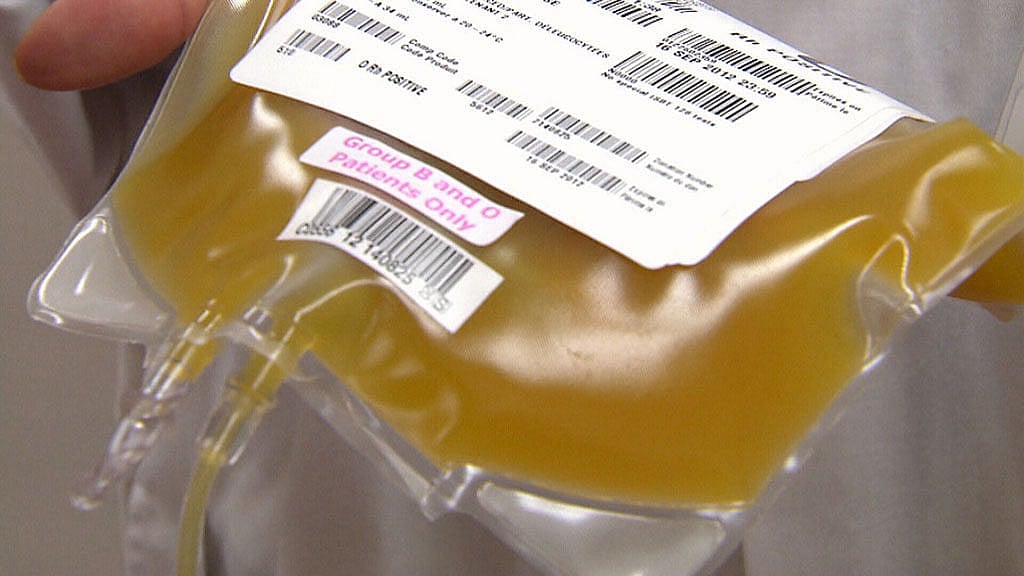
Amid a surging number of dengue patients, a shortage of blood bags, especially the double and triple ones, is compounding the situation for families and health workers trying to save the patients from the deadly virus.
The blood banks in Dhaka said the demand for bags has increased manifold.
The dengue caseload and death toll this year have surpassed all years before. Over 100,000 people got admitted to hospitals with the disease in eight months, with most of them being diagnosed over the past two months.
Doctors said most of the patients who are catching the disease this year had already caught dengue before. So, these cases are becoming more complicated.
The sudden drop in platelet count among these patients is worrying doctors, who resort to transfusion to prevent a tragedy.
Three types of bags – single, double and triple – are used for the transfusion.
Among these, platelets and plasma are transfused through double and triple bags.
‘NO BAG, NO BLOOD’
Professor Ashadul Islam, chairman of the BSMMU’s Department of Transfusion Medicine, said the lack of double and triple bags was causing issues with the treatment of the large number of patients.
“We have an acute scarcity of bags to draw platelets from donors. The importers are saying they’re not getting enough bags. When we don’t have bags, we are not able to transfuse blood or platelets as we need to.”
He said the daily demand for transfusion has increased from 5-6 bags of platelets to around 20 while the hospital can provide only 10-12.
Zahidur Rahman, in-charge of Red Crescent Blood Bank, said the demand for blood bags leapt four-five times since the uptick in dengue cases.
He said the situation was “dire” as they had no bags at all on Tuesday and had to send many patients back.
“We can give blood if the patients’ families can bring bags. If they can’t bring a bag, they don’t get blood.”
Zahidur said the crisis has been there for quite some time.
“We’ve not been getting triple bags at marketplaces for a long time. We thought maybe we’ll get them later. But now, we can’t even find the double bags which we use to deliver platelets.”
Zahidur said the big suppliers might be delivering these bags at higher prices to others.
PRICES SOARING
Shamima Nasrin, an organiser of Quantum Foundation Blood Bank Lab, said the high demand and low supply sent the prices of these bags soaring.
Azizullah, manager of Bangladesh Blood Bank, said they need at least 400-500 bags every month and they had bought some last month. “Otherwise the situation would’ve been even worse.”
Still the supplier charged Tk 450 per double bag, a rise from Tk 250 in normal times.
The price of triple bags increased to Tk 700 from Tk 320.
“Single bags of good quality which usually cost Tk 140 are now priced at around Tk 240-Tk 270, but these can be rarely found. There are bags of lower quality priced at around Tk 130-140. But those are simple, regular bags and it’s tough assessing their quality.”
Shakil, a salesman at Nahar Healthcare in Old Dhaka’s Mitford wholesale marketplace for medical essentials, said: “The market is changing everyday now. The chineses bags are being sold at Tk 96 today, and it might leap to Tk 120 tomorrow; on other days they’re just unavailable. We are selling Tk 145 JMS bags at Tk 210 now.”
Tapan Talukdar, owner of Nipa Drugs, said: “Maybe those who were importing the goods are not being able to do so or maybe they’ve run out of bags. So, double bags can’t be found anymore.”
At Mitford Hospital on Wednesday, single bags were being sold at higher prices but traders were saying that double and triple bags were out of stock.
DEPENDENCY ON IMPORTS
A trader, Imran Rahman, said single bags were always in stock because demand for those is always high. And the double and triple bags are usually low in demand, so fewer of those were imported at regular times.
“Double and triple bags are used for platelets, and we have none of those at the moment. The crisis occurred due to the sudden spike in dengue cases. Because these bags are not usually needed much, fewer of them are brought in.”
“The importers could not open letters of credit due to the dollar crisis at a time when they needed it. Authorisation from the drugs administration is also required and all these have created a crisis.”
The owner of IR Enterprise, Imran said that Japanese company JMC mainly supplies Bangladesh with the good quality blood bags. These are often imported from Singapore, but that door is also shut now.
“We’re not being able to supply the bags to those companies who used to take from us before. The relatives of patients come to us, cry and beg but we have no way to give them [the bags]. It makes us feel bad.”
Govinda Saha, a salesman at Healthway, said: “We’ve sold out all that we’d brought. It’s not possible to supply to so many people.”
Arshed Alam Pulok, convenor of Bangladesh Medical Equipment Importers and Suppliers Association, said: “We need authorisation from the Directorate General of Drug Administration and it’s a long process. Another matter is the dollar crisis. We're unable to open LCs. Prices have soared as well, which is making the process even lengthier.”
Red Crescent’s Zahidur was not happy with blood bags being brought in from abroad. “We’ve not been able to take effective steps for producing something as important as blood bags in 50 years. Now LCs are an issue, bringing them over is an issue and the products get stuck at the airport and they keep telling us different things.”
“I think we should begin preparing now so that issues with blood bags don’t occur anymore.”
Mohammad Mozammel Hossain, a director of the DGDA, held the traders responsible for the ongoing crisis, which he said was artificial.
“If the traders say that they’re not getting blood bags due to [lack of] authorisation, that’s completely wrong. We only keep an eye on quality. And then provide approval after checking out several other things.”
“We should’ve prepared for this before such a situation emerged.”
[Writing in English by Syed Mahmud Onindo; editing by Osham-ul-Sufian Talukder]