Published : 29 Jan 2016, 03:34 PM
Updated : 19 Oct 2022, 05:05 PM


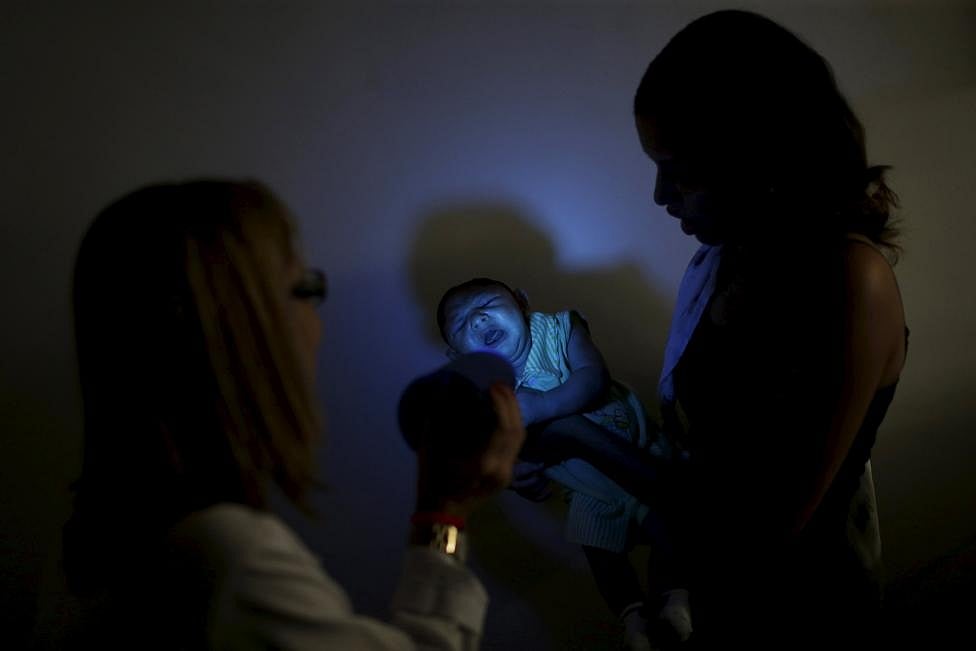

Half of the 135 babies being evaluated at a rehabilitation centre in the north-eastern Brazilian city of Recife have limited vision due to deformed optic nerves and retinas, and many are cross-eyed, ophthalmologist Camila Ventura said.
"Their eyes are scarred for life," said Ventura. "Between 40 and 50 percent of them have serious eyesight defects."
The babies are some of the 3,700 cases reported in Brazil since last year of newborns with a neurological condition called microcephaly that is associated with the mosquito-borne Zika virus sparking a health scare across the Americas.
The surge in cases of the rare condition is unprecedented and scientists have yet to prove categorically it is caused by Zika.
But they know the condition will handicap the development of the children who will have to struggle with learning disabilities and impaired motor functions.
A technician from Oxitec inspects pupae of genetically modified Aedes aegypti mosquitoes in Campinas, Brazil, January 28, 2016. Reuters