


Published : 25 Jan 2014, 10:19 AM
Updated : 19 Oct 2022, 07:21 PM


Also Read:
Measles–rubella vaccination driveThe target of the campaign is to immunise at least 52 million children aged between nine months and 15 years against two deadly diseases – measles and rubella.
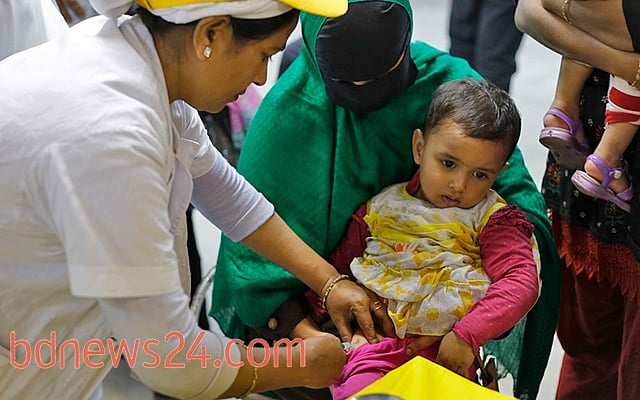
Dr Syed Abu Jafar Md Musa who oversees the Expanded Programme on Immunisation (EPI) told bdnews24.com that they had started injecting the combined (MR) vaccine in schools.
“First week children will get the vaccine injected in schools and from Feb 1 we will start the drive at the community level,” he said.
Prime Minister Sheikh Hasina will inaugurate the “biggest-ever” campaign, targeting over one-third of Bangladesh’s population, formally on Sunday morning, Musa said.
The immunisation drive will continue for three weeks.
The two highly contagious viral infections almost have similar symptoms – rashes and fever. But rubella can cause birth defects.
Infants born to mothers who contract rubella in the early stages of pregnancy are prone to being born with heart defects, hearing and vision impairment and mental retardation.
Musa said the last highest campaign target was in 2006 when nearly 35 million children between nine months and 10 years were administered measles-only vaccine.
He said the target age was set this time for the combined vaccine as they found children below 15 were more likely to get infected than others.
“It’s a huge task. We are getting GAVI (Global Alliance for Vaccines and Immunisation) support,” Dr Musa said.
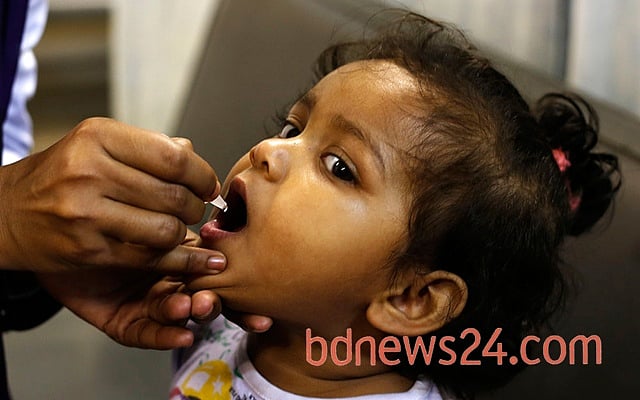
He clarified that oral polio vaccine would also be fed to children below five years during the campaign.
According to the EPI plan, they will reach more than 34 million children through 171,050 educational institutes across Bangladesh.
Rest of the target will be met at the community level outreach centres, at least 24 in each union.
The GAVI supports the campaign, in which Tk 2.4 billion was required only for buying vaccines.
Authorities have earlier assured of the vaccines safety so that parents ensure their children received this life-saving dose.
Bangladesh’s immunisation programme is widely acclaimed globally.
But a vitamin campaign last year amid political turmoil was marred by rumours of deaths after feeding vitamins.
Health Minister Mohammad Nasim, paediatric experts and EPI officials earlier sent out a crucial message through the media that the vaccine was ‘safe’.
Only on “rare occasion” could some problems occur, President of Bangladesh Paediatric Association Prof Md Ruhul Amin had earlier said.
“And that is very simple. When you take an injection, the injected spot sometimes swells up. Body temperature of the child might rise. That is usual.”
The EPI had instructed their healthcare providers to stay at least an hour more after the last delivery to address any problem a child might face.
The campaign would run from 8am to 3pm.
Bangladesh officially launched the combined (MR) vaccine in September 2012 as part of its routine immunisation campaign replacing the only-measles vaccine for children.
According to the EPI, the ‘extensive’ vaccine campaigns helped lowering the number of measles cases, but rubella cases have gone up belatedly.
Last year, nearly 3,000 rubella cases were confirmed after tests against only 211 measles cases.
Experts calculated the rubella prevalence at more than 19 in every one million people while measles cases stood at only 1.4 in a million.
“The effects are deadly, so once immunised, the vaccine gives life-long protection against these deadly diseases,” Prof Mohammad Shahidulla, a neonatologist at Bangabandhu Sheikh Mujib Medical University earlier had said.







