


Published : 11 Aug 2016, 10:56 PM
Updated : 19 Oct 2022, 05:24 PM


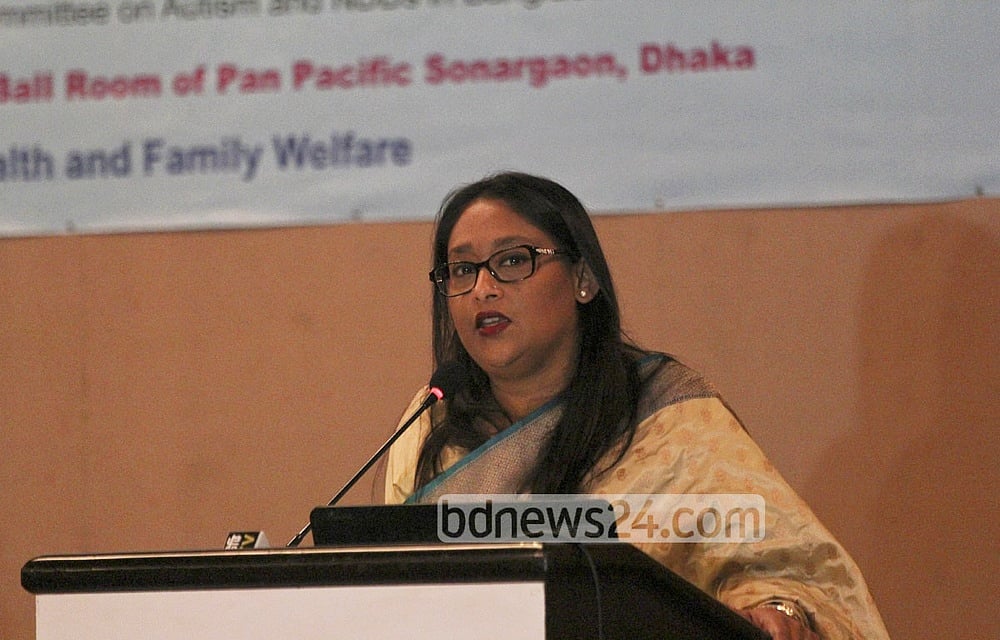
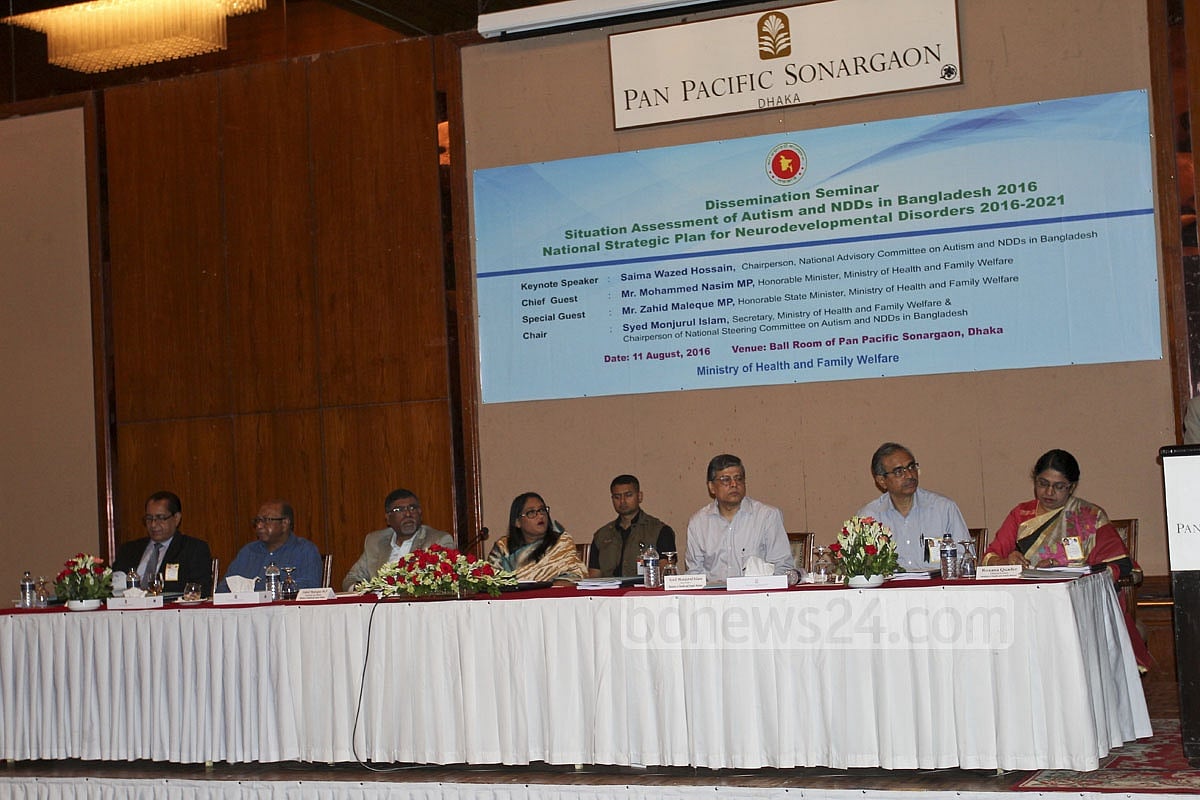
“Our vision is to provide ‘equitable’ opportunity for them and to include them as a contributing members of the society,” mental health expert Saima Wazed Hossain Putul, who led the process, said on Thursday at the dissemination of the plan.
She said Bangladesh became the first country in the developing world to have this plan with a detail current situation analysis and recommendations. Bangladesh is known globally for moving resolutions for the neurodevelopment disorders in the United Nations.
This strategic plan has outlined 112 objectives and highlighted 19O activities for the government to study and consider implementing from 2016 to 2021. It also explains how these objectives and activities are linked with each other.
Putul, Chairperson of Bangladesh’s National Advisory Committee for Autism & Neurodevelopmental Disorders, said coordination of all government branches and with the private sector and NGOs would be crucial for the implementation of the plan.
Daughter of Prime Minister Sheikh Hasina, she said the plan was not to make any new centre, it is to incorporate the persons with neurodevelopment disorders in the existing system.
“The approach will be very low cost and to maximise the use of existing resources,” she said.
Model for developing world
Autism and neurodevelopment disorder came to the public discourse in Bangladesh in 2011 when Dhaka hosted the first-ever regional meet.
A US-licensed school psychologist, Putul led that meet following which the UN adopted several resolutions on the disorder.
She had also received the ‘WHO Excellence Award for Public Health’ for her contribution to public health in the “national, regional and global levels” and been appointed as a member of WHO’s Expert Advisory Panel on Mental Health.
He told bdnews24.com on the sidelines of the dissemination seminar that this document was the “first step forward” before implementation.
Thomas particularly hailed the plan for its vision to ensure “equitable opportunity” which means they will be given what they need to be mainstreamed in society.
The document outlined the lifespan needs of the persons with neuro-developmental disabilities, dividing them in eight stages -- pre-birth, infancy, early childhood, childhood, adolescence, early adulthood, adulthood, midlife and late adulthood which is 51 years and above.
It also recommended their inclusion in education and employment.
‘We have political will’
Putul said all persons with neurodevelopment disabilities deserve to have ready access to the services and supports they need to be safe, educated, healthy, productive and able to pursue happy and fulfilling lives.
“It’s human rights.”
She said they have the “political will” to implement the strategic plan, but “successful” implementation would require the government to understand the lifespan needs and to ensure coordination among different government agencies.
“It’s a very detailed document.”
She said when she speaks on education she means “inclusive education” for them so that children can go to the neighbourhood schools.
“It’ll not only make positive impact on those children, it’ll also have positive impact on all other children.”
“Mothers always know if there is something not right with their children. This clue can lead to early screening and identification of such disorders.”
She said services should be brought to the community where there are persons with neurodevelopment disorders.
The Institute of Community Inclusion of the University of Massachusetts-Boston and Shuchona Foundation of which Putul is the chairperson developed the strategy with the support of the government.
Based on the global prevalence rates, the government says, there may be more than 2.8 million persons with neurodevelopment disorders in Bangladesh who need rehabilitation, livelihood opportunities and social supports for a meaningful lives.













