


Published : 23 Dec 2013, 09:21 AM
Updated : 20 Oct 2022, 03:43 PM


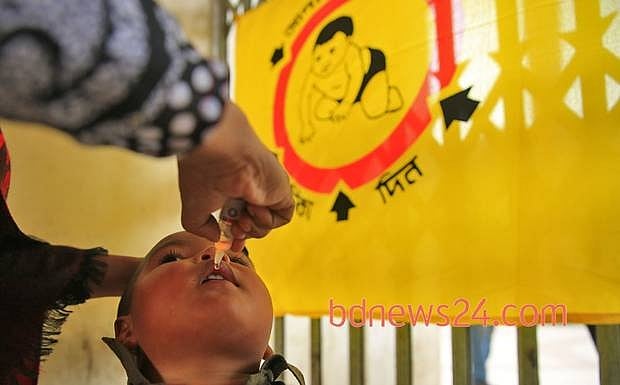
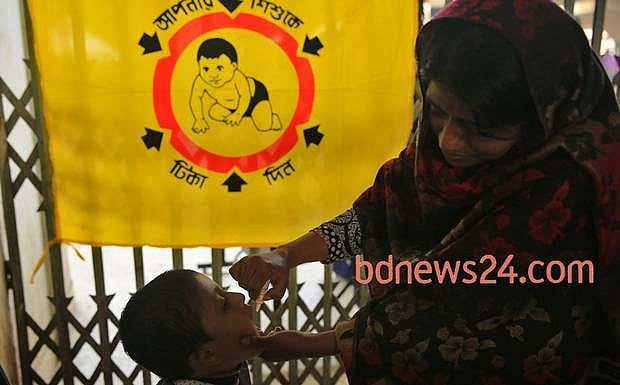
After stock taking, they have found that the coverage this time on it was at least one percent higher than usually seen in such campaigns.
“We could cover 96 percent of our targets,” Dr Syed Abu Jafar Md. Musa, Line Director of the Expanded Programme on Immunisation (EPI) that spearheaded the campaign, told bdnews24.com after collating reports from more than 140,000 outreach locations.
Bangladesh is internationally acclaimed for its child immunisation rate and EPI usually covers about 95 percent of target children during anti-polio campaign, locally called National Immunisation Day.
This year's target was to administer the anti-polio oral vaccine to about 22 million children less than five years of age to immunise them from the highly infectious, incurable disease that can paralyse a child within hours.
The disease has been wiped out in many parts of the world.
Bangladesh enjoys polio-free status since 2006.
There have been apprehensions before the campaign that the outreach may suffer due to the difficulty of movement caused by the Opposition blockades.
The United Nations Children Fund (UNICEF) and World Health Organisation (WHO) had urged politicians to help children get the vaccine despite the political conflict.
In a joint statement they called on all to ensure that the children had ‘full access’ to immunisation efforts.







