Published : 16 Oct 2026, 01:16 AM
Updated : 16 Oct 2026, 01:16 AM


The Sundarbans is changing from the ground up. More than half its seedlings died between 2010 and 2020, while those that survived grew rapidly.
Beneath the world’s largest mangrove forest, a quieter shift is under way: as rising salinity and dwindling freshwater take their toll, Gewa and Kankra are gaining ground while the once-dominant Sundari struggles to hold its place.
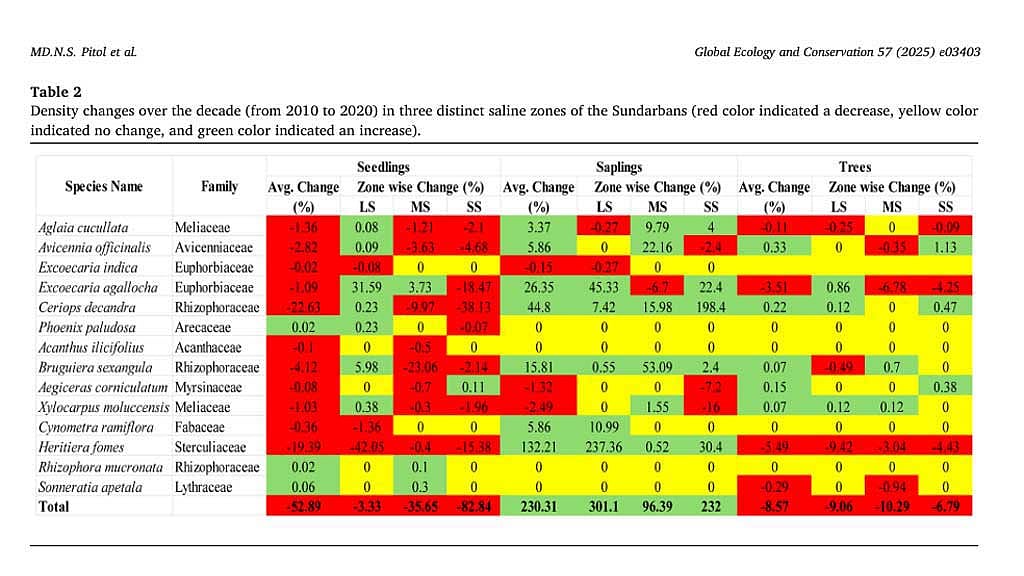
A study titled Ecological Influences on Regeneration Dynamics in the Sundarbans, Bangladesh: Exploring Biotic and Abiotic Factors Across Time and Space, published in January 2025, found that 52.89 percent of seedlings died between 2010 and 2020. In the 1990s, the average seedling mortality rate was 40 percent.
The losses were starkly different across salinity zones. Seedling mortality stood at 3.33 percent in areas with low salinity, 35.65 percent in moderately saline areas and 82.84 percent in highly saline zones.
Yet surviving saplings grew at a rate of 230.31 percent, offering a measure of hope for the forest’s regeneration.
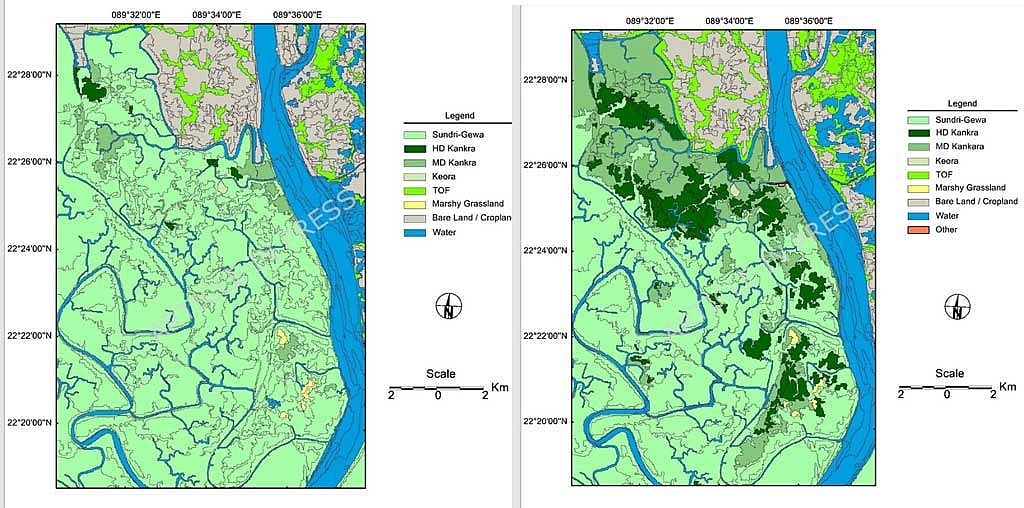
A separate study, Detection of Kankra Tree Expansion in the Northern Sundarbans, published in August, analysed satellite images and found that the area dominated by Sundari and Gewa in the Chandpai Range shrank from 17,032 hectares in 1988 to 12,022 hectares in 2022.
Over the same period, the area with a high density of Kankra trees expanded from 121 hectares to 2,016 hectares.
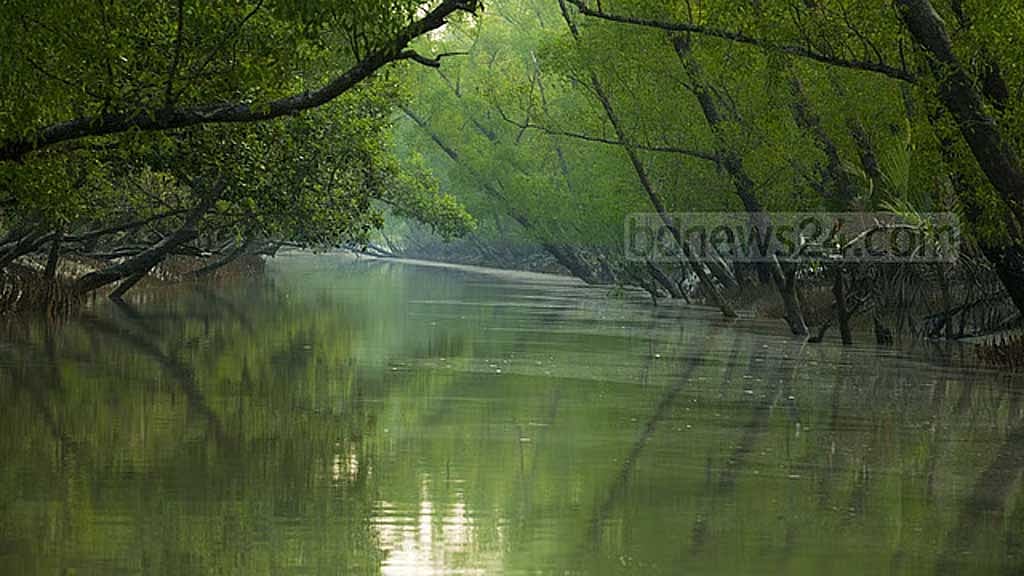
Bangladesh’s portion of the Sundarbans spans 6,017sqkm across Khulna, Bagerhat and Satkhira districts. Alongside Sundari and Gewa, its trees include Pasur, Dhundul, Garan, Bain, Kankra and Keora.
Salinity Takes a Toll on Regeneration
The first study was conducted by researchers from the Mangrove Silviculture Division of the Bangladesh Forest Research Institute: Mohammad Najmus Sayadat Pitol, Mominul Islam Nahid, Md Akramul Islam, Sheikh Md Mehedi Hasan and Sheikh Mohammad Robiul Alam.
They examined seedlings from 14 species across 10 families, saplings from 10 species across seven families, and trees from 10 species across eight families.
Garan recorded the highest seedling mortality, at 22.63 percent, followed by Sundari at 19.39 percent, Kankra at 4.12 percent and Gewa at 1.9 percent.
Sapling growth varied across salinity zones. It rose by 301.1 percent in low-salinity areas, 96.39 percent in moderately saline areas and 232 percent in highly saline areas.
The study classified areas with salinity of 5-15 parts per thousand (ppt) as low-salinity zones, 15-25ppt as moderate and 25-30ppt as highly saline.
Nahid, a senior research officer at the institute’s Mangrove Silviculture Division in Khulna, said the forest was under continuous monitoring.
“We assess the health of the Sundarbans through our 55 permanent sample plots. We look at how much regeneration is taking place, and whether it is increasing or decreasing,” he said.
Researchers track how many seedlings emerge, how many develop into saplings, how many survive and how many eventually become mature trees. They also monitor sudden changes in the forest.
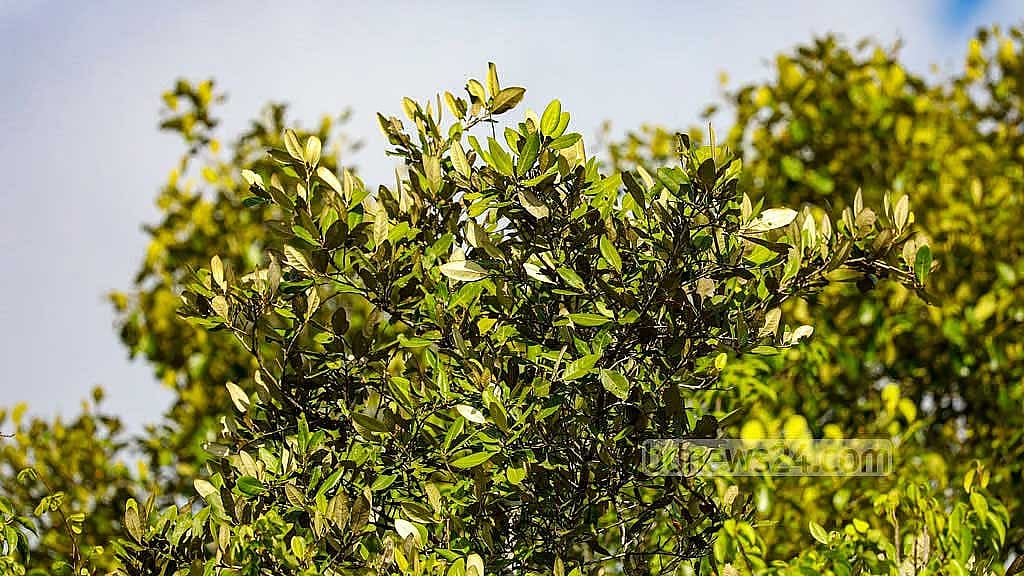
“Garan and Gewa are now more common in salt-tolerant areas, while Sundari is still more prevalent in mildly saline areas. Overall, Gewa has increased somewhat across nearly all areas of the Sundarbans,” Nahid said.
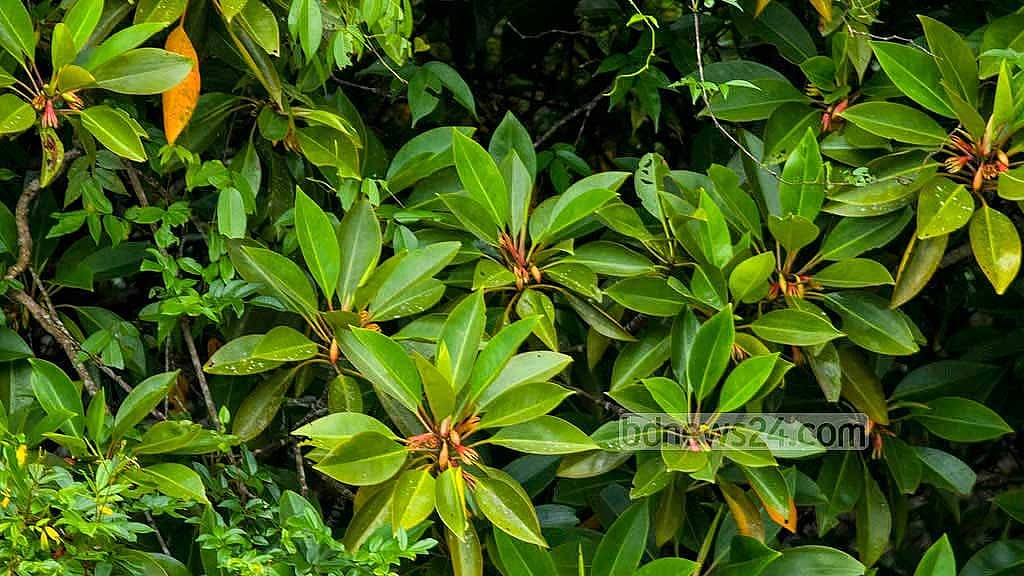
He cautioned against interpreting the findings as evidence that Kankra was replacing Sundari throughout the forest. Kankra was found in moderately saline areas, particularly around Dhangmari in the Khulna Range, but its overall expansion was limited.
“Overall, Kankra has not increased much in the Sundarbans. Gewa and Garan have increased. Sundari is still found in the forest, but mainly in less saline zones. In areas with strong salinity, Garan has greater influence. Gewa is now more common across the forest, while Sundari remains the main dominant species in less saline areas,” he said.
Nahid said mangrove ecosystems naturally change over time, but climate change, rising sea levels and reduced freshwater inflows were altering the conditions in which different species could thrive.
“When freshwater cannot reach the forest, saltwater moves further inland. Salt-tolerant trees then receive more favourable conditions and nutrients, allowing them to spread. Trees that depend on freshwater or can survive only in low or moderate salinity are struggling as dominant species take over their space,” he said.
A Shift Concentrated in Chandpai
The second study, led by Md Mahmudur Rahman of the Bangladesh Space Research and Remote Sensing Organisation (SPARRSO), found that Sundari and Gewa accounted for about 62.32 percent of the tree cover in the Chandpai Range in 1988. By 2022, their share had fallen to 43.99 percent.
Kankra’s share in areas of high tree density rose from 0.44 percent to 7.38 percent over the same period. In moderately dense areas, its share increased from 1.97 percent to 12.5 percent, with the area expanding from 539 hectares to 3,418 hectares.
Mahmudur stressed that the findings applied to a specific part of the forest, not the entire Sundarbans.
“The Sundarbans covers nearly 6,000 square kilometres. Chandpai Range accounts for only 272 square kilometres, and this is a localised picture from an area where Kankra is more common. It does not represent the entire forest.”
He said Kankra had spread from a small area into a wider region over several decades, but reversing the change would not be easy.
“It is better to let the Sundarbans’ natural ecosystem continue as it is. We need to maintain water flows as they were before, rather than trying to direct the forest ourselves.
“We can monitor whether freshwater is reaching the forest from upstream, or whether other factors are affecting it. Reversing these changes will not be easy,” he said.
Co-researcher Md Kamruzzaman, a professor in the Forestry and Wood Technology Discipline at Khulna University, said remote-sensing data showed that Kankra was increasing while Sundari had been declining for years.
Sundari trees have long suffered from top-dying disease, which damages their upper branches and can kill them.
Kamruzzaman said several factors could be contributing to the decline, including reduced freshwater flows after the Farakka Barrage, fungal attacks and increasingly unsuitable growing conditions.
“The decline in Sundari indicates that this habitat is no longer suitable for it. Tidal flows may have weakened, salinity may have increased, or other factors may be at play. We are not taking preventive measures,” he said.
He recalled an initiative around 1998-99 to cut trees affected by top-dying disease, which also resulted in healthy trees being felled. While conservation policies now prohibit tree cutting, he said further research could explore replanting or restoring Sundari.
Experts Warn of Mounting Human Pressure
AKM Saiful Islam, a professor at the Bangladesh University of Engineering and Technology’s Institute of Water and Flood Management, said salinity was rising gradually through a combination of natural and human-driven processes.
“Sea levels are rising and salinity is increasing. There are also human-caused processes. Water is being withdrawn upstream through barrages and dams, and we are disrupting rivers in various ways. Riverbeds have filled up,” he said.
“Freshwater flow is declining. Meanwhile, ice and glaciers are melting, and sea levels are rising. In the interaction between freshwater and saltwater, freshwater is losing ground and saline water is moving further inland.”
He said species unable to tolerate the changing conditions would gradually die out, allowing more salt-tolerant trees to spread. But human interference was compounding the pressure.
“Freshwater flow is declining, so species that grew in freshwater will gradually die. There have also been incidents such as oil tankers and coal-laden ships sinking. Human interventions are causing greater damage to the Sundarbans,” he said.
Shaikh Faridul Islam, state minister for environment, forests and climate change, offered a more optimistic assessment.
He said the worst phase of Sundari top-dying disease had passed and that the trees were regaining their resilience, including their ability to tolerate saltwater.
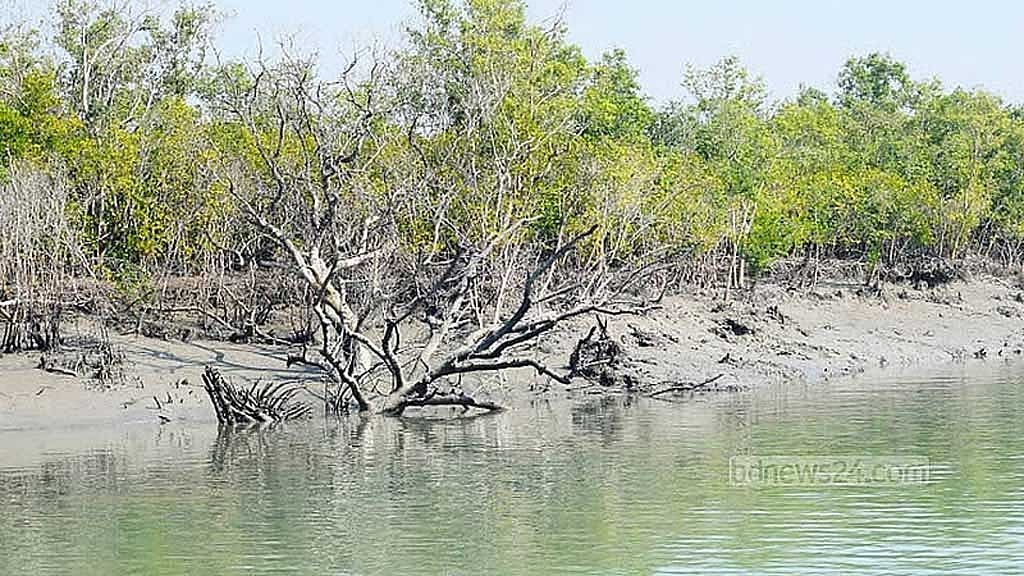
“Some trees have been damaged by top-dying disease, but the growth and spread of smaller trees are increasing,” he said, citing a recent seminar at the Forest Department attended by researchers and academics.
The minister argued that coverage of the Sundarbans often relied on old data, overlooking newly formed land and changes in wildlife and vegetation.
He said fresh research was needed to assess the forest’s changing extent and regeneration.
He acknowledged that the ecological balance had been disrupted by rising sea levels and the loss of freshwater inflows, but said a proposed Padma Barrage project could help increase freshwater flow into the forest.
Despite the conflicting assessments, the research points to a forest in transition, where the survival of individual species increasingly depends on how much freshwater reaches the mangroves and how far rising salinity reshapes their habitat.