Published : 16 Oct 2026, 01:37 AM
Updated : 16 Oct 2026, 01:37 AM


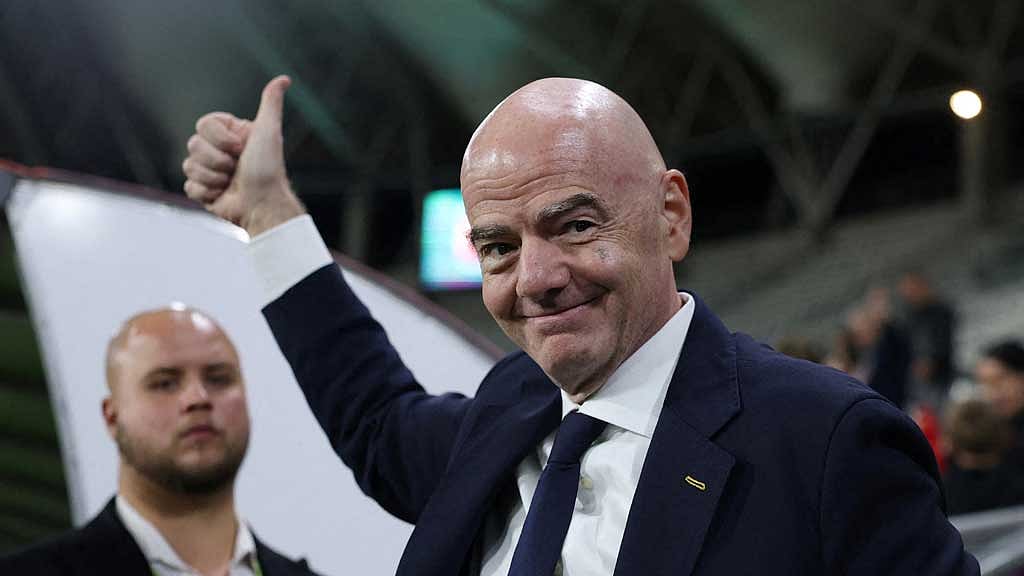
Gianni Infantino apologised to the FIFA Council on Thursday, but English and German football chiefs said they remained unconvinced he was fit to continue as president of football’s world governing body.
Infantino said he had apologised during the closed meeting for mistakes in communicating and consulting over the now-abandoned FIFA Forward Enterprise (FFE) project, but stressed that it had been only a proposal and “in no way a done deal”.
"First of all, I apologised for the mistakes that we made in relation to the communication and consultation process related to the FIFA Forward Enterprise project, which then led to many consequences," Infantino said in a video published by FIFA.
"But what is important to remember is that it was a proposal, so in no way a done deal."
The FFE plan involved creating a company to run the commercial interests of FIFA competitions, including the World Cup, and selling a minority stake to private investors. Infantino said it was intended to generate additional funding for FIFA’s 211 member associations.
While Infantino appeared to retain strong support among African officials, opposition from some of Europe’s most influential football associations remained pronounced.
German FA president Bernd Neuendorf called for a "complete restart" at FIFA, saying the governance reforms the organisation needed could not be delivered with Infantino in charge.
"The first thing is we need reforms. That's true. And everyone knows that," Neuendorf said. "The old administration has to be reformed, and the whole governance has to be reformed. But I'm pretty clear here that this is not possible with Gianni.
"So we need a complete restart, I think, a political restart."
English FA chair Debbie Hewitt said Infantino needed to provide answers to questions raised by FIFA Council members and warned that failure to do so would make him unfit to remain president.
"I think the man has to answer those questions," Hewitt said. "And if he doesn't answer those questions, no, he's not fit to be FIFA president."
Neuendorf questioned the extent of Infantino’s apology, saying he believed it related primarily to the failure to consult the council rather than to the FFE project itself.
"I didn't have the feeling that this apology was because of the FFE project in total," Neuendorf said. "My impression was it was just because it wasn't brought forward to the council and no one was involved."
Neuendorf said council members had learned about the project through the media rather than from FIFA's leadership and that representatives from other confederations had also complained about the lack of consultation.
"When it came to the FFE project as such, I have the impression that this still was not included when he apologised," he said.
Questions Unanswered
Hewitt said Infantino’s apparent regret over not consulting the council strengthened the case for releasing the relevant FFE documents to its members.
"You have an obligation. We all have an obligation, a fiduciary responsibility to answer the questions that have been put forward," Hewitt said.
"He told us to submit those questions. There were so many of them, and now it's up to him to do that and do that in the open way.
"If there's nothing to hide, then share (the FFE documents) with us... if you regret it that deeply, please share it with us."
The meeting also dealt with calls for reform at FIFA, but Hewitt said meaningful changes could not be made until members understood how the decisions at the centre of recent controversies had been reached.
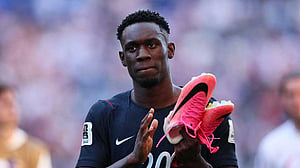
She cited FFE, the decision to suspend the automatic one-match ban imposed on United States forward Folarin Balogun after his World Cup red card, and the FIFA Peace Prize awarded to US President Donald Trump as issues requiring greater scrutiny.
"Unless we understand what happened, either it was a massive failure in governance because it wasn't followed or actually the governance was followed, but there was something else that got to what we all felt was the wrong decisions," Hewitt said.
"So we must understand what happened in order to be able to review it. Otherwise we're guessing."
The criticism, however, was not unanimous.
Ahmed Yahya, the president of the Football Federation of the Islamic Republic of Mauritania (FFRIM), defended Infantino, saying his leadership had helped develop football around the world, pointing to increased funding for national associations and the expansion of the World Cup to 48 teams.
"We (the African nations) believe Gianni is the right person to continue leading football," Yahya said.
Asked whether most people wanted Infantino to remain president, he added: "I'm certain. The majority want Gianni to stay."